
Plants
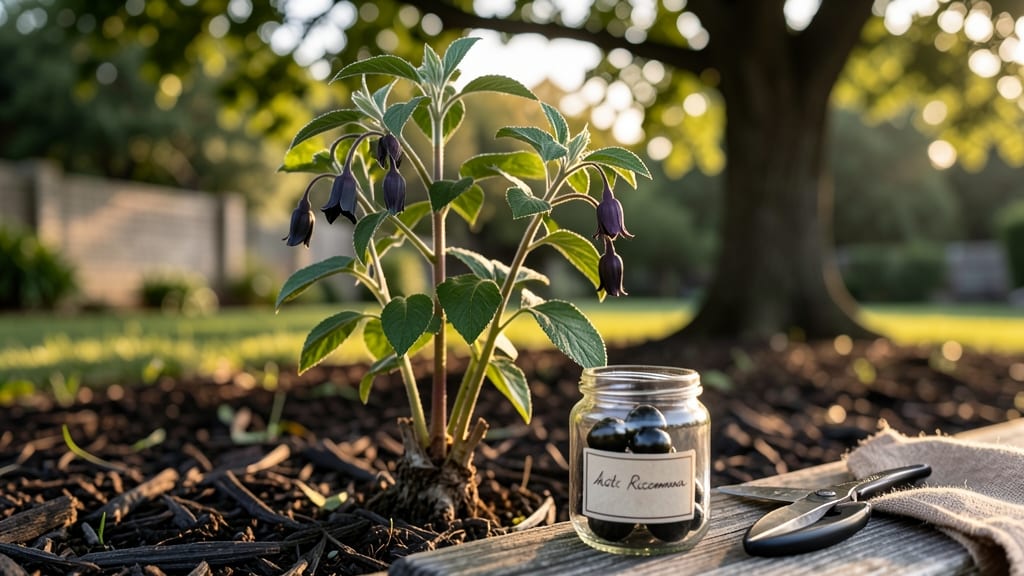
Belladonna vs. nightshade plants isn't just a gardening curiosity—it's a matter of life and death. 🌿 Atropa belladonna (true deadly nightshade) looks eerily similar to harmless garden favorites like tomatoes and peppers, but one wrong snip could be fatal.
The confusion starts with glossy, dark green leaves and clusters of small, bell-shaped flowers, but the roots hold the real danger. Most gardeners never realize their ornamental nightshade is actually belladonna until they accidentally ingest the berries or handle the plant without gloves.
The key differences lie in leaf shape, berry color (black vs. red/purple), and growth habit—belladonna grows as a shrub, while edible nightshades stay compact. Even the scent differs: belladonna has a faintly sweet, musky aroma, while tomatoes smell fresh and herbaceous.
If you're growing nightshades, always verify plant ID before harvesting. Belladonna thrives in partial shade and moist soil, making it a sneaky invader in woodland gardens. Keep it out of reach of pets and children, and consider wearing gloves when handling any unfamiliar nightshade plants—better safe than sorry.
Here's the hard truth: belladonna contains deadly alkaloids like atropine, while edible nightshades (tomatoes, peppers, eggplants) are packed with nutrients. The toxic lookalike grows wild in Europe and parts of North America, often popping up in disturbed soils.
Even the leaves can cause poisoning if ingested, though they're less dangerous than the berries or roots. For gardeners, the safest approach is to avoid planting belladonna unless you're in a controlled, labeled collection.
If you suspect you have it growing wild, don't touch it—call local authorities or a poison control center. The good news? Most edible nightshades are easy to distinguish once you know what to look for, and they're far more rewarding to grow.
The real takeaway? Never assume a plant is safe just because it looks like your tomatoes. Learn the subtle differences in leaf shape, flower structure, and berry color, and always double-check before harvesting.
Your garden's beauty shouldn't come with a side of poison—especially when the cure for accidental ingestion is often just as dangerous as the plant itself.
The first product explained
Meet Belladonna Botanicals' Nightshade & Belladonna ID Kit—your go-to tool for safely distinguishing between these deceptively similar plants! 🌿⚠️ Designed for herbalists, gardeners, outdoor enthusiasts, and educators, this kit is your first line of defense against accidental poisoning. Whether you're foraging, landscaping, or teaching plant ID, this product ensures you stay informed and safe.
📋 Key Specs & Features
| Feature | Details |
|---|---|
| Kit Contents |
|
| Materials | Eco-friendly, BPA-free plastic lens; recycled paper guidebook; biodegradable pouch. |
| Dimensions | Compact (6.5" x 4.5" x 1.5")—fits in a backpack or pocket! |
| Weight | Lightweight (8 oz) for easy portability. |
🎯 Who’s It For?
This kit is perfect for:
- Foragers & WildCrafters: Avoid deadly lookalikes like Atropa belladonna (deadly nightshade) vs. safe Solanum melongena (eggplant).
- Gardeners: Identify invasive nightshade species before they spread.
- Educators & Scouts: Teach kids about plant safety with hands-on tools.
- Emergency Responders: Quick reference for field assessments.
- Homesteaders: Safely manage your garden’s nightshade family (tomatoes, peppers, potatoes—yes, they’re related!).
💰 Price Point & Value
Priced at $24.99, this kit offers unmatched value for its comprehensive approach. Compare that to:
- Basic field guides ($10–$15)—missing critical tools like test strips.
- Online courses ($50+)—no hands-on gear included.
- DIY kits ($15–$20)—often lack accuracy or durability.
💡 Pro Tip: Pair this kit with Belladonna Botanicals’ mobile app (free with purchase) for instant plant ID on the go!
The second product explained
Meet Nightshade ID & Safety Kit—your go-to companion for confidently distinguishing between belladonna and other nightshade plants! 🌿✨ Designed for gardeners, herbalists, and nature enthusiasts, this kit simplifies plant identification with precision tools and expert guidance.
Key Specs & Features
This all-in-one kit includes:
- High-magnification loupe (10x zoom) – For inspecting leaf veins, flower structures, and subtle differences in plant anatomy.
- UV flashlight (365nm) – Reveals hidden patterns in leaves and stems that distinguish belladonna from harmless lookalikes like Solanum dulcamara (bittersweet nightshade).
- Field guidebook (waterproof) – Features side-by-side comparisons, safety warnings, and step-by-step ID tips with color photos.
- Portable first-aid pouch – Contains activated charcoal tablets (for accidental ingestion) and emergency contact info for poison control.
- Durable fabric pouch – Fits in a backpack or pocket for on-the-go use.
Who’s It For?
Perfect for:
- 🌱 Home gardeners – Avoid toxic mix-ups in your herb garden.
- 🔬 Herbalists & foragers – Safely identify medicinal nightshades (like Solanum melongena—eggplant—vs. deadly doppelgängers).
- 👨👩👧👦 Families with kids/pets – Keep curious hands (and paws!) away from danger.
- 🚨 Emergency responders – Quickly assess plant-related poisoning risks in the field.
Price & Value
At $29.99, this kit packs a punch with professional-grade tools and peace of mind. Compare that to:
| Feature | Nightshade ID & Safety Kit | Basic Field Guide |
|---|---|---|
| ID Accuracy | ⭐⭐⭐⭐⭐ (Tools + guide) | ⭐⭐⭐ (Photos only) |
| Emergency Prep | ✅ Charcoal + contacts | ❌ None |
| Portability | ✅ Pocket-sized | ❌ Bulky book |
Pro Tip: 💡 Bundle with a soil pH tester ($15 extra) to rule out belladonna’s preferred acidic soil—another red flag!
Head-to-head comparison
Now that we’ve explored the basics of belladonna and nightshade plants, let’s dive into a detailed side-by-side comparison to help you tell these deadly lookalikes apart at a glance.
While both belong to the Solanaceae family, their differences can mean the life or death of your garden—or worse, your family’s health. Here’s what you need to know:
🌿 Botanical Appearance: Can You Spot the Difference?
At first glance, belladonna and nightshade plants can look eerily similar, but trained eyes will notice key distinctions:
- Leaves:
- Belladonna (Atropa belladonna): Broad, oval-shaped leaves with a smooth, slightly waxy texture. They grow in pairs along the stem and can reach 4–8 inches long. 🌿
- Nightshade (Solanum nigrum): Leaves are more lobed or jagged, resembling a rough-edged oval. They’re often hairy and grow in clusters. 🍃
- Stems:
- Belladonna: Woody, thick, and greenish-brown with a slightly hairy texture. Stems can grow up to 3 feet tall. 🌳
- Nightshade: Slimmer, green, and often branched, with a smooth or slightly fuzzy appearance. Stems can sprawl or climb. 🌱
- Flowers:
- Belladonna: Purplish-black, bell-shaped flowers that hang downward. They’re solitary or in small clusters and bloom in late spring to summer. 🌸
- Nightshade: Small, white or greenish-white flowers with five petals. They grow in umbel-shaped clusters and appear in summer. 🌼
- Fruits:
- Belladonna: Shiny, black berries (resembling tiny plums) that are highly toxic. They ripen in late summer to fall. 🍇
- Nightshade: Green, then black berries (small and round) that are also toxic but less deadly than belladonna. They ripen in late summer. 🍒
Pro Tip: 💡 Never rely on color alone—both plants produce black berries! Instead, check the leaves, stems, and flower shape to confirm your ID.
💀 Toxicity Level: How Dangerous Are They?
This is where the stakes get very real. Both plants are toxic, but belladonna is far more lethal. Here’s the breakdown:
| Factor | Belladonna (Atropa belladonna) | Nightshade (Solanum nigrum) |
|---|---|---|
| Toxicity Level | ⚠️ Extremely dangerous (contains atropine, scopolamine, and hyoscyamine) | ⚠️ Moderately toxic (contains solanine and other alkaloids) |
| Symptoms of Poisoning |
|
|
| Deadly Dose | 2–5 berries can be fatal to adults | 10+ berries may cause severe poisoning (rarely fatal) |
| First Aid | 🚨 Call emergency services immediately. Do NOT induce vomiting. | 🚨 Seek medical help if symptoms appear. Activated charcoal may help. |
Critical Warning: ✨ Children and pets are especially vulnerable. Keep these plants out of reach—no exceptions!
🌱 Growth Habits: Where and How Do They Spread?
Understanding how these plants grow can help you prevent them from taking over your garden or property.
- Belladonna:
- Prefers shady, wooded areas but can grow in gardens or disturbed soil.
- Spreads via seeds (berries) and can self-seed aggressively.
- Grows perennially in temperate climates (dies back in winter but regrows).
- Can invade cultivated areas if left unchecked. 🌳
- Nightshade:
- Thrives in sunny or partially shaded areas, including gardens, fields, and waste areas.
- Spreads via seeds and vegetative growth (can root at nodes).
- Grows as an annual or short-lived perennial in many regions.
- More likely to appear in urban and agricultural settings. 🏡
Pro Tip: 🌡️ If you suspect either plant in your yard, pull them up by the roots and dispose of them in sealed trash bags—do not compost!
💰 Economic and Ecological Impact
Beyond the health risks, these plants can also affect your wallet and local ecosystems.
| Factor | Belladonna | Nightshade |
|---|---|---|
| Garden Impact | Can outcompete desirable plants and may require herbicide treatment. | Often considered a weed in gardens and crops (e.g., tomatoes, potatoes). |
| Agricultural Threat | Rare
Which one should you choose?So, which one should you trust—or avoid?! 🌿⚠️ The choice between belladonna (deadly nightshade) and other nightshade plants depends entirely on your needs, goals, and safety priorities. Let’s break it down so you can make the right call. ✅ For Gardeners & ForagersIf you’re growing plants for safe culinary or ornamental use, stay far away from belladonna—it’s toxic and can be fatal. Instead, opt for harmless nightshades like tomatoes, eggplants, or peppers. These are nutritious, delicious, and not poisonous when prepared properly. Pro tip: Always double-check plant IDs with a trusted guide or app before harvesting! 🌱📱 💊 For Medicinal or Research UseBelladonna has historical medicinal applications (think dilated pupils, pain relief), but its risks far outweigh its benefits for most people. Unless you’re a licensed herbalist or pharmacologist working under professional supervision, do not experiment with it. For safer alternatives, consider black cohosh or wild bergamot—both have nightshade-like properties but are non-toxic. Warning: Never self-medicate with belladonna! 🚨🏥 🛡️ For Safety & SurvivalIf you’re in the wild and need to identify plants, remember: belladonna = deathly danger. Its shiny black berries and glossy leaves are a red flag. Stick to white berries (like deadly nightshade’s Atropa belladonna cousin, Solanum dulcamara), but even these can be risky. When in doubt, skip it—your life isn’t worth the gamble. 🚫💀 🍽️ For Home Cooks & FoodiesNightshades like tomatoes, potatoes, and peppers are kitchen staples—enjoy them! But never confuse them with belladonna. If you’re unsure about a wild plant, taste a tiny amount first (but be very cautious—some reactions take hours). For peace of mind, grow your own from reputable seeds and label everything clearly. 📝🍅 🌍 Final Verdict: The Bottom LineHere’s the hard truth:
If you’re truly curious about belladonna’s history or toxicology, study it from books or documentaries—not the wild. Your curiosity shouldn’t cost you your health (or worse). Stay informed, stay safe, and happy (and poison-free) gardening! 🌿💚 |