
Planting
Struggling to grow vibrant flowers in shady spots? These 10 shade-tolerant varieties defy low-light conditions, offering lush blooms that transform even the darkest garden corners into a floral paradise—no sunlight required.
Bleeding Heart Flowers for Woodland Gardens

Transform your darkest garden corners into a romantic woodland retreat with bleeding heart flowers (Dicentra spectabilis), the quintessential shade-loving perennial that thrives where others fade. These delicate blooms produce cascading clusters of heart-shaped flowers in soft pinks and whites, creating a dreamy, cottage-garden effect that’s impossible to resist.
Plant them in deep shade to partial shade (they’ll tolerate less than 4 hours of direct sun daily) and enrich the soil with organic matter to encourage their lush, fern-like foliage. Stake taller varieties to prevent flopping, and divide clumps every 3-4 years to maintain vigor. Their mid-to-late spring blooms make them a standout in woodland gardens, where they pair beautifully with ferns, hostas, and hellebores.
Perfect for gardeners who love low-maintenance perennials with high visual impact, bleeding hearts are a must-have for creating a serene, magical atmosphere in shady spots. 🌱
Impatiens for Containers and Borders

Tired of dull, sun-starved corners on your patio or balcony? Impatiens are the secret weapon for instant color in partial shade, transforming hanging baskets and window boxes into vibrant displays with minimal effort. These fast-growing annuals bloom nonstop from spring until frost, offering a rainbow of colors from fiery red to soft pink and sunny orange.
Plant them in well-draining soil with consistent moisture (they wilt quickly when dry), and watch them spill over edges within weeks. For containers, mix in organic compost and fertilize every 4-6 weeks to keep blooms abundant. Their compact size makes them perfect for small spaces—ideal for urban gardeners or anyone with limited room.
Whether you're dressing up a dark patio corner or adding cheer to a shady windowsill, impatiens deliver year-round visual impact with almost no maintenance. They’re the ultimate shade-loving showstopper! 🌻
Hosta-Loving Hellebores for Winter Interest

If your garden feels like a forgotten corner where winter lingers too long, hellebores are your secret weapon. These drought-tolerant perennials bloom in late winter or early spring, when most plants are still dormant, offering striking white, pink, or purple flowers that defy the cold.
Plant them near hostas for a stunning contrast—hellebores thrive in the same shady, moist conditions while providing early-season color. Their leathery foliage remains attractive year-round, making them ideal for understory planting or woodland gardens. Just ensure well-draining soil and minimal summer watering—they’re tough once established!
Perfect for gardeners who want low-maintenance structure and early blooms, hellebores bring life to dark spots when you need it most. 💚
Fuchsia Flowers for Hummingbird Gardens

Want to turn your shady patio or garden corner into a hummingbird hotspot? Fuchsias are the secret weapon—these trailing perennials thrive in partial shade while producing tubular blooms that hummingbirds can't resist. Their vibrant colors and dangling habit make them perfect for adding vertical drama to trellises or hanging planters.
Fuchsias prefer morning sun with afternoon shade, making them ideal for east-facing spots or areas under tall trees. Plant seeds or young plants in well-draining soil and keep them consistently moist for best results. Deadhead spent blooms to encourage continuous flowering from spring through fall. Their self-cleaning habit means less maintenance than many other shade-loving flowers.
Urban gardeners and balcony dwellers will love how fuchsias transform small spaces into lively pollinator havens. Just remember they're tender in cold climates—bring containers indoors before frost. 🌟
Lungwort for Medicinal and Ornamental Value

If you're looking for a shade-loving plant that doubles as both a medicinal powerhouse and a stunning ornamental, lungwort (Pulmonaria) is your answer. This underrated perennial thrives in deep shade while delivering silver-spotted foliage that evolves into rich green, and delicate blue-purple blooms that appear in early spring.
One of lungwort's standout features is its self-seeding habit, which means it naturally spreads to fill gaps in your garden over time—ideal for woodland edges or understory planting. It prefers moist, well-draining soil and tolerates a wide range of conditions, from clay to loam, making it low-maintenance for busy gardeners. The medicinal benefits of lungwort have been used historically to treat respiratory ailments, adding a practical touch to its ornamental value.
Perfect for gardeners who want texture and color without the fuss, lungwort is especially well-suited for shady borders or woodland gardens where other plants struggle. Its ability to thrive in low-light conditions while still producing striking foliage and blooms makes it a must-have for any shade garden. 💚
Sweet Woodruff for Fragrant Ground Covers

Want a fragrant ground cover that turns your shady garden into a sensory delight? Sweet woodruff (Galium odoratum) creates a lush, vanilla-scented carpet that spreads effortlessly under trees or along walkways—no sunlight required.
This low-maintenance perennial thrives in deep shade, tolerates poor soil, and spreads via underground runners to fill gaps naturally. Crush the leaves to release its signature vanilla aroma, perfect for creating a fragrant pathway or woodland garden. It’s also deer-resistant and drought-tolerant once established.
Ideal for beginners or busy gardeners, sweet woodruff is a zero-fuss solution for shady spots where other plants struggle. Just plant in spring or fall and let it do the work! 💚
Japanese Painted Fern for Textural Drama

Tired of shady spots that feel like forgotten corners? The Japanese painted fern (Athyrium niponicum var. pictum) turns deep shade into a textural masterpiece with its silver, green, and burgundy foliage that shines year-round. Unlike flowers that fade in low light, this fern thrives in full to partial shade (even under dense tree canopies) and delivers dramatic color without needing sunlight.
Plant it in moist, well-draining soil enriched with organic matter to encourage its lush growth. The burgundy hues intensify in cooler weather, making it a standout in autumn, while the silvery fronds add contrast in spring and summer. Group clumps together for maximum impact, or pair with hostas and hellebores for a layered woodland effect. Its clumping habit means minimal spread, making it ideal for containers or borders.
Perfect for gardeners who love low-maintenance texture plants, this fern is especially prized in Asian-inspired gardens or woodland settings where other plants struggle. It’s the ultimate solution for adding drama to shady areas without the fuss of flowers. ✨
Coral Bells for Long-Blooming Color

Tired of shade-loving plants that bloom for just a season? Coral bells (Heuchera) are the game-changer you’ve been waiting for—these drought-resistant perennials deliver bell-shaped flowers in pink, white, or red from spring through fall, making them the ultimate long-blooming star for partial shade.
Thriving in 3-6 hours of sunlight daily, coral bells also attract pollinators like bees and butterflies, turning your shady garden into a buzzing ecosystem. Their striking foliage—available in shades of purple, silver, or lime green—adds year-round texture, while their low-maintenance nature makes them perfect for busy gardeners. Simply plant in well-draining soil, mulch to retain moisture, and watch them flourish with minimal fuss.
Ideal for urban gardeners with limited space or anyone craving continuous color, coral bells are the secret to a vibrant, low-light garden that never goes out of style. 🌟
Tiarella for Foamflower Beauty

Looking for a whimsical early spring bloomer that turns your shady garden into a fairy-tale setting? Tiarella—commonly called foamflower—delivers delicate, foam-like clusters of white or pink blossoms that appear before most perennials even think about waking up. These charming plants thrive in woodland gardens where they create a dreamy, layered effect when paired with hostas or ferns.
Plant tiarella in partial to full shade with moist, well-draining soil enriched with organic matter. Their clumping habit makes them ideal for filling gaps between larger shrubs, while their attractive foliage (often with silvery or burgundy hues) provides year-round interest. Deadhead spent blooms to encourage more flowers, and divide clumps every 3-4 years to keep them vigorous. They’re perfect for gardeners who love low-maintenance perennials with high visual impact.
Whether you're creating a shady border or adding texture to a woodland garden, tiarella brings a touch of magic to dark corners with minimal effort. It’s the secret weapon for early-season color that no one will expect! ✨
Astilbe for Feathered Plumes in Shade

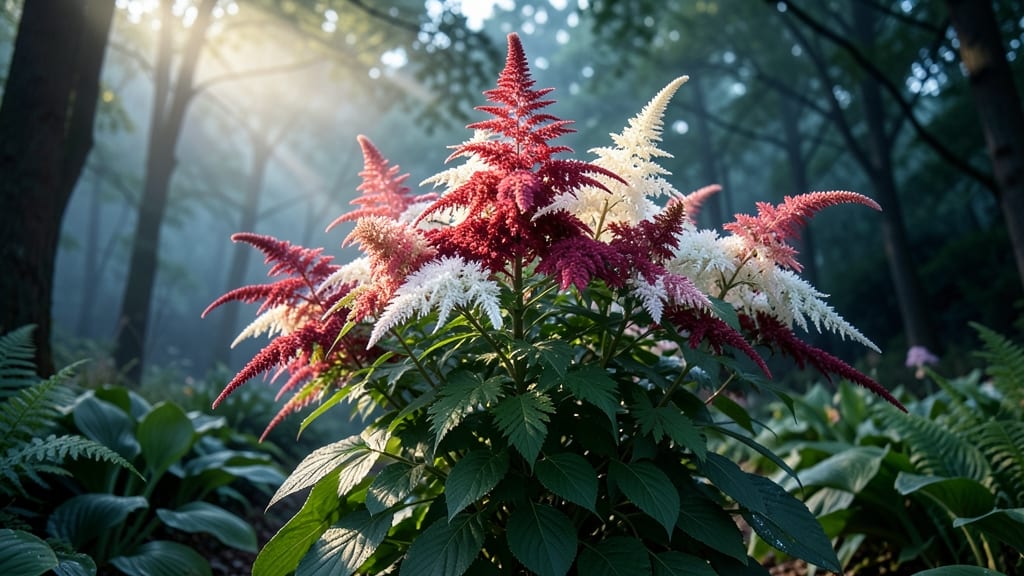
Looking to add dramatic height and texture to your shady garden without sacrificing blooms? Astilbe delivers feathery plumes in fiery pink, deep red, or pristine white that thrive where other plants falter. These shade specialists produce long-lasting flowers from late spring through summer, making them perfect for borders, containers, or cutting gardens.
Plant astilbe in moist, well-draining soil with partial to full shade (they tolerate less than 4 hours of direct sun daily). Their fern-like foliage adds lush texture, while the plumes create vertical interest that draws the eye upward. For containers, choose compact varieties like 'Fanal' and keep soil consistently moist—these plants wilt quickly when dry. Deadhead spent blooms to encourage more flowers and divide clumps every 3-4 years to maintain vigor.
Urban gardeners and small-space enthusiasts will love how astilbe transforms dark corners into showstopping displays with minimal care. Their ability to thrive in moist, shady spots makes them ideal for understory planting or woodland garden edges. 🌿