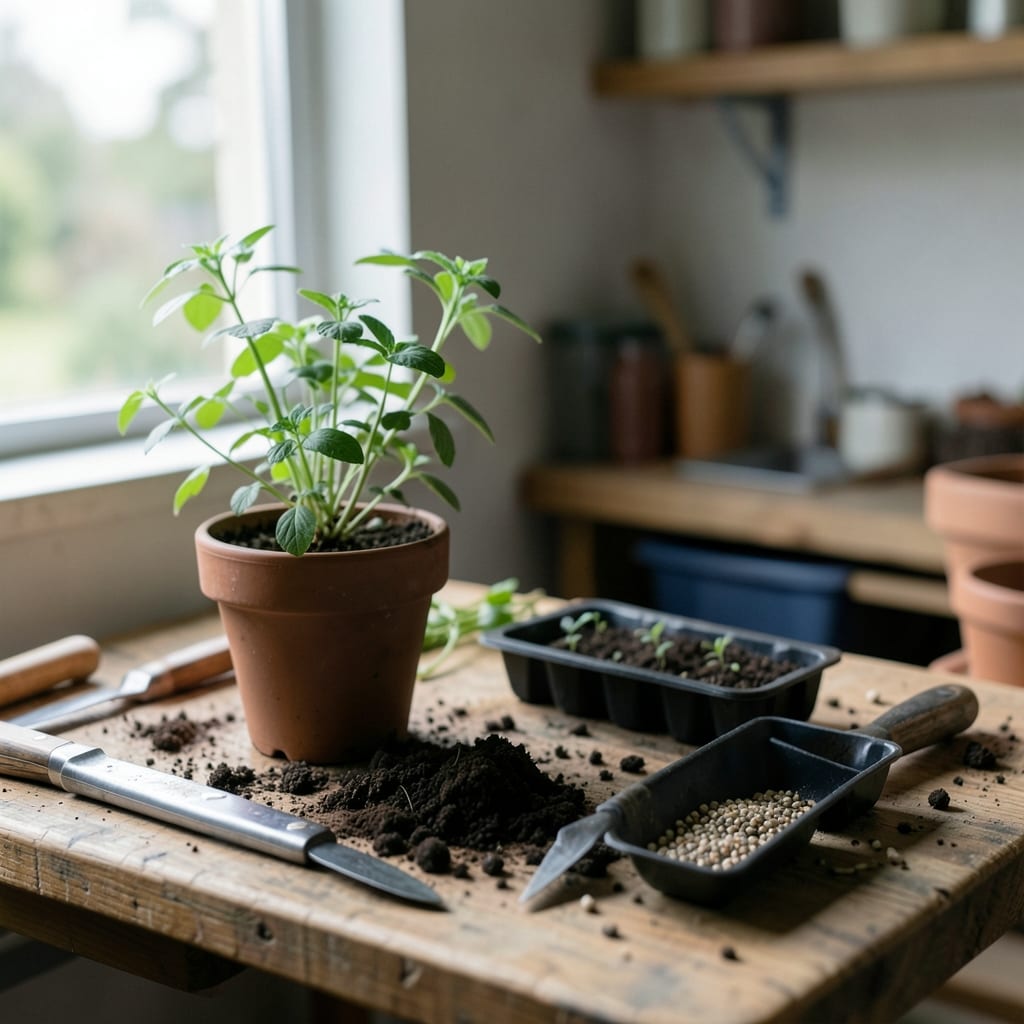
Why I started Shade Planting
I was knee-deep in a raised bed in rural Ohio, trying to coax a batch of shade-tolerant ferns to thrive under my grandmother’s old oak. The soil was too compacted, the watering schedule off, and the plants were wilting before they could even unfurl.
My grandmother watched me struggle for twenty minutes before handing me a trowel and saying, *‘You’re doing it wrong. The roots need air, not mud.’* That was the moment I realized most gardening advice assumes perfect conditions—and that’s not how real gardens grow.
This site is for the rest of us: the people who garden in apartments with south-facing windowsills, in backyards where the soil is more clay than compost, or in urban lots where shade is the only option. Here, you’ll find no idealized photos of lush borders.
Instead, there are notes on what actually works—when to water, how to amend stubborn soil, which plants will survive (and which won’t) in less-than-perfect light. No fluff, no guesswork, just the kind of advice I wish I’d had that day under the oak.
Meet the founder
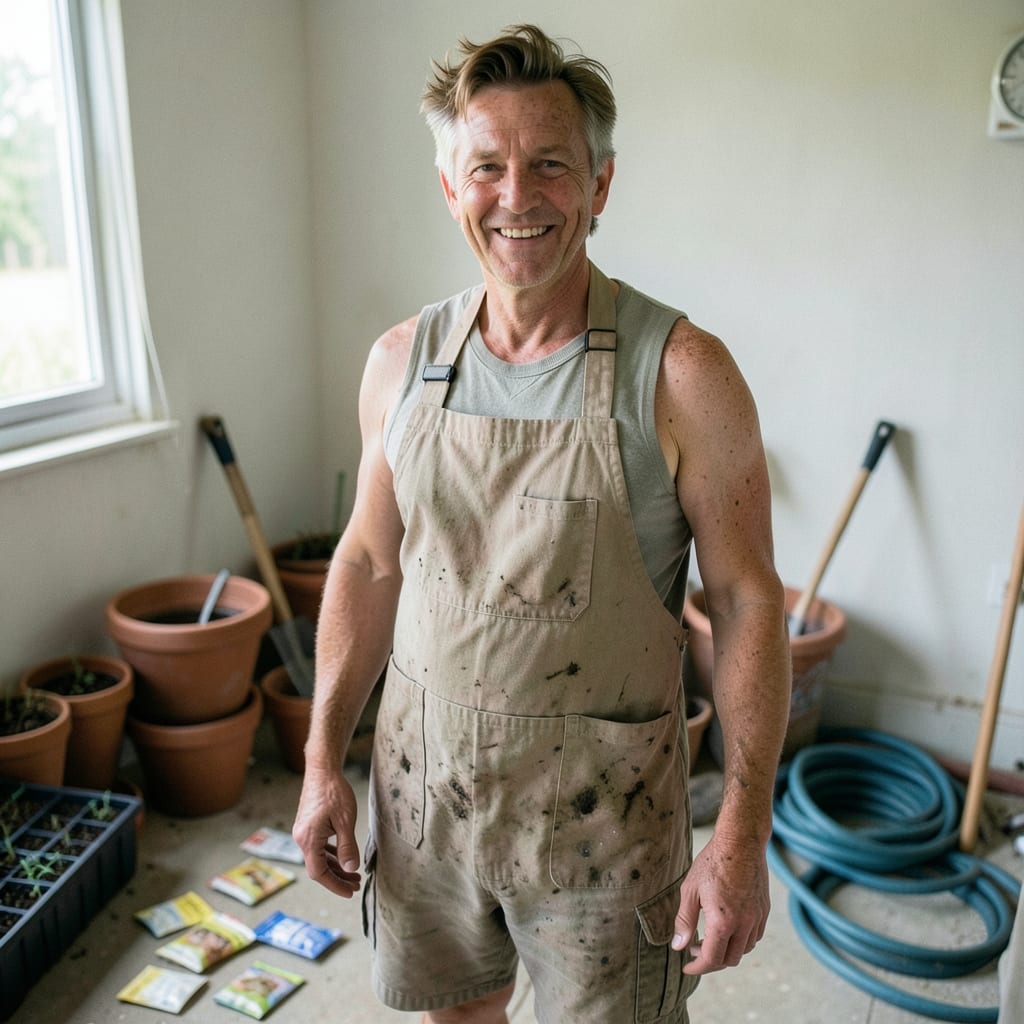
My grandmother’s garden was the first place I learned that plants don’t follow rules—they follow *you*. She’d let me dig up her hostas ‘to see how they grew,’ and I’d come back with a handful of mud and a lecture about ‘not disturbing the roots.’ That muddy lesson stuck.
Years later, when I moved to a cramped apartment in Portland with a windowsill that got exactly three hours of morning light, I realized most gardening advice was written for people with greenhouses, not people with basil that looked like it was giving up.
So I started testing what actually worked in that tiny patch of shade—first with herbs, then with ferns, then with the weird, overlooked plants that thrive where others fail.
The trowel I still use was a hand-me-down from my grandmother, its wooden handle splintered from years of digging in rocky Ohio soil.
She’d carved her initials into it decades ago, and I’ve kept it because it’s the only tool that’s ever made me feel like I was actually *helping* a plant, not just poking at it.
The blade is dull now, and the ferrule’s loose, but it’s the one I reach for when I’m troubleshooting a sickly seedling. Some tools outlast the methods they were meant for—and that trowel’s seen more failures than successes.
The first time I killed a batch of seeds was on purpose. I’d read that soaking them overnight would speed up germination, so I left a tray of heuchera seeds in a glass of water for 48 hours. By the time I planted them, they’d swollen into gray, mushy blobs.
That was the day I learned seeds don’t need a bath—they need *air*. Now, I test every germination trick I hear, from chilling to scarifying, and document what actually works. (Spoiler: Most of them don’t.)
I have a habit of talking to my plants. Not the ‘hey, little guy’ kind of chat—more like a running commentary on their life choices. *‘You picked the shadiest corner of the balcony, and now you’re complaining about not growing?’* or *‘That’s the third time this month you’ve wilted.
Maybe you’re just dramatic.’* My roommate thinks it’s weird, but I’ve noticed the ones I yell at the most seem to perk up faster. Call it therapy, call it madness—I’m not letting go of the habit.
Meet the mascot

The mascot started as a scribble on a napkin at a diner in Eugene, Oregon, where I was waiting for a bus after a long day of digging up volunteer mint from a neighbor’s yard.
I’d just realized I’d been pruning my hostas like they were topiaries instead of perennials, and I was in a mood. The first attempt was a lopsided fern with too many fronds and a face that looked permanently confused.
My companion at the table—a woman with a gardening apron covered in soil stains—suggested I draw it ‘like it’s hiding under a leaf.’ That was the breakthrough: the mascot wasn’t supposed to be pretty. It was supposed to look like it had just ducked out of the shade.
The proper drawn version took three tries. The first had the fern’s stems too rigid, like it was posing for a botanical illustration. The second made the face too human, with eyebrows that looked permanently arched in judgment.
The third—where it finally clicked—gave it a slumped posture, like it was exhausted from trying to grow in a world that didn’t understand its needs. I switched to a fine-liner pencil at that point, because the ballpoint kept smudging the ‘I give up’ vibe I was going for.
The name came last: *‘Dap’* for the way it always seems half-hidden, and *‘Fern’* because, well, it’s a fern, and I needed something that sounded like a plant.
The final version lost its detailed fronds and gained a single, wavy line to suggest movement. The face became a smudge, not a drawing, because at the size of a browser tab, anything more precise would’ve looked like a glitch.
The body turned into a simple oval, because the goal wasn’t to be recognizable—it was to look like something you’d spot between your toes if you lifted a garden stone. It’s still not perfect. But then, neither are most gardens.
What I promise you
This site exists to cut through the noise of ‘gardening as it should be’ and focus on how it *is*—messy, unpredictable, and full of plants that refuse to play by the rules. What you can count on here is honesty: about what grows, what doesn’t, and why.
What you can hold me to
- Every plant profile includes its *actual* light tolerance—no ‘partial shade’ vague-ese. If it says ‘2–4 hours of morning sun,’ that’s what it needs to thrive, not just survive.
- Soil amendments are listed with the *why* behind them. No ‘add compost’ without explaining how much, when, or why your clay soil might be fighting you.
- Failure stories are in the same section as successes. Because if you’re not losing a few plants, you’re not learning anything.
- No ‘wait until spring’ advice. These notes are for the plants you’re dealing with *today*, in whatever season—and whatever light—you’ve got.
How I create a plant profile
A profile starts in the dirt—or at least, in the pot. I don’t begin with a seed catalog or a botanical database. I start with a plant that’s already growing, whether it’s thriving or throwing a fit, and ask: *Why is it doing that?* Is it happy?
Is it begging for more water? Is it already dead, and I just haven’t noticed? The first step is always observation: watching how it reacts to light, how quickly it wilts when I forget to water, and what happens when I move it. Some plants are dramatic. Others are stubborn.
All of them have opinions.
The light test
For the first week, I place the plant in its intended spot and check it every two hours. No guessing—just a timer and a notebook. If the leaves start curling toward the light by noon, it’s getting too much. If they’re drooping by 3 PM, it’s not enough.
I adjust the position incrementally: move it an inch closer to the window, rotate it 45 degrees, or—if it’s in the ground—mark its shadow with a stake to track how it changes over the day. The goal isn’t perfection. It’s finding the *sweet spot* where the plant stops complaining.
And yes, I *do* talk to it during this process. Silence is overrated.
The soil fix
Once the light is right, the soil becomes the problem. If the plant’s roots are circling in a pot, it’s time to loosen the mix.
If the leaves are yellowing, I dig a sample and test the pH with a cheap kit from the garden center. (No lab reports—this isn’t a thesis.) The fix is always specific: a handful of perlite if the soil’s too dense, a sprinkle of sulfur if the pH is too high, or—if the plant’s just sulking—a deep watering to wake it up.
I never add ‘compost’ without knowing *why*. The soil’s job is to hold moisture and nutrients, not just look pretty. And if the plant’s still unhappy after two weeks? That’s when I start suspecting it’s the wrong plant for the job.
How a page gets onto this site
A profile isn’t done until it’s been tested in three different conditions: in a pot, in the ground, and in the shade of another plant.
I take notes on a waterproof notepad—because if it rains, I’m not drying out my phone—and rewrite the first draft on the contact page of my laptop while the soil’s still warm from my hands. The second read is where the fluff gets cut.
If a sentence doesn’t answer *how* or *why*, it goes. The third draft is the one that stays, and it’s always shorter than the first. Some pages get rewritten months later, after I’ve moved a plant or realized I’d missed a key detail.
But by then, the reader already knows the truth: gardens change, and so should the advice.
Write to me
I love hearing about the plants that refuse to behave, the soil that fights back, or the unexpected things that grow when you’re not looking.
Send me a photo of your shade garden’s weirdest resident or a story about the time a plant outsmarted you. (I’ve got a whole shelf for those.) If you’ve got a question about what’s growing—or what’s not—there’s a contact page for that.
And if you’re just here to argue with me about whether ferns count as ‘real’ plants, well, I won’t judge. Just don’t blame me if Dap starts looking at you funny.
Gordon Jensen
The guides are grouped by category: Advice, Aphids, Blooming, Companion Plants, Container Gardens and Light Requirements.