
Shrubs
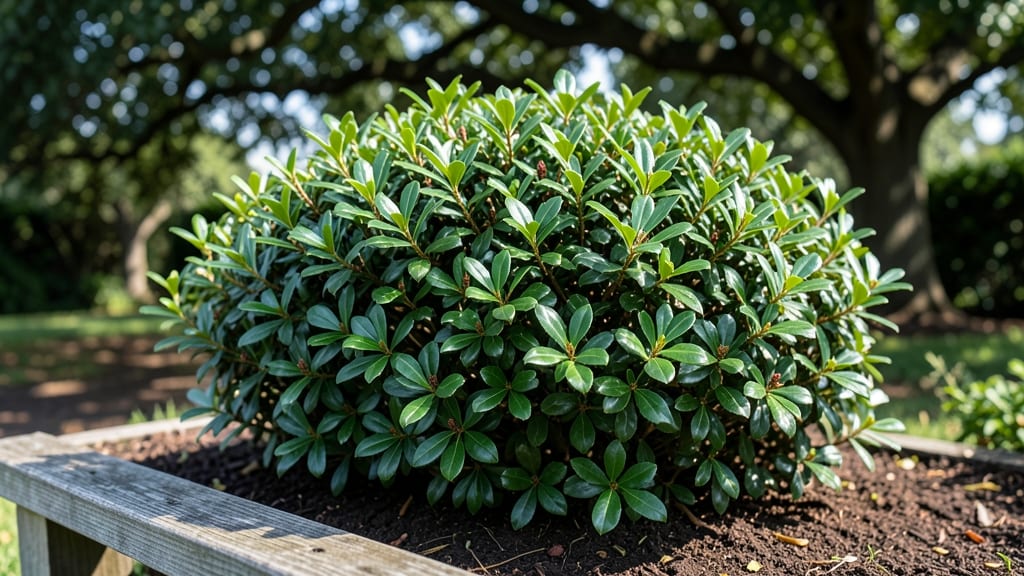
Japanese holly thrives where others fail—deep shade, damp soil, even tight spaces. 🌿 I planted mine under a pine tree where nothing else would grow, and now it’s the star of my shady corner with glossy leaves year-round. The secret?
It’s happy with 4-6 hours of dappled light or even full shade, and its dense growth blocks unsightly views without needing pruning. My ‘Green Lustre’ variety stays compact (4-6 feet tall), making it perfect for borders or foundation plantings.
You’ll love how it handles moisture—great for rain gardens or soggy spots—while keeping its rich green color even in winter. The only trade-off? It’s slow-growing, so patience pays off with decades of privacy. Works in zones 5-8 and adapts to urban pollution, too. Let’s get yours planted!
📚 In This Guide
- What you need
- Instructions
- Tips and common mistakes
- Wrapping up and next steps
What you need
- ● Japanese holly plants: 3–5 mature shrubs (3–5 ft tall) for a dense hedge, or smaller nursery-grown plants (1–2 ft) for gradual growth.
- ● High-quality soil: Well-draining, acidic soil (pH 5.0–6.5). Amend garden soil with 3–5 gallons of peat moss or compost per plant if drainage is poor.
- ● Organic fertilizer: Slow-release 10-10-10 or 12-4-8 NPK blend (1–2 tbsp per plant at planting time).
- ● Mulch: 2–3 inches of pine bark or wood chips (helps retain moisture and acidity).
- ● Tools: Trowel or hand shovel
- ● Garden spade (for digging holes)
- ● Pruning shears (sterilized)
- ● Watering can or hose with a gentle spray nozzle
- ● Measuring tape or ruler
- ● Epsom salt: 1 tbsp dissolved in 1 gallon of water (for magnesium boost, especially in clay soils).
- ● Slow-release fertilizer spikes: For hassle-free feeding (follow package instructions).
- ● Plant support: Stakes or twine if your hedge is tall or prone to wind.
- ● Soil test kit: To check pH and nutrient levels before planting.
- ● Drip irrigation system: For consistent moisture in dry shade.
How to plant and care for Japanese holly in shady spots
Here's how I've kept Japanese holly thriving in low-light areas for years—minimal fuss, maximum evergreen privacy.
🌱 Step 1: Choose the Right Variety for Your Shade Level
Japanese holly (Ilex crenata) handles shade better than most hollies, but not all varieties perform equally. For deep shade (<3 hours sun), pick 'Green Lustre' or 'Soft Touch'—they stay dense and glossy without sun. For partial shade (3-6 hours sun), 'Sky Pencil' or 'Helleri' grow taller and tolerate more light.
I always check the label at the nursery because some tagged as "shade-tolerant" still yellow leaves in heavy shade. Look for compact growth habits—these varieties won't outgrow their space quickly. Plant in spring or early fall when roots establish before extreme temperatures.
🪴 Step 2: Prepare the Planting Site for Low-Light Success
Japanese holly tolerates acidic to neutral soil (pH 5.0-7.0) but struggles in heavy clay or waterlogged spots. Amend 6-12 inches deep with 2 parts native soil, 1 part peat moss, and 1 part perlite to improve drainage. This mix prevents root rot while holding moisture—critical in shade where evaporation slows.
Dig a hole twice as wide as the root ball but only as deep as the container. Set the plant so the top of the root ball sits 1 inch below soil level. Backfill with the amended mix, then water deeply to eliminate air pockets. I always tap the soil gently after filling to settle it without compacting.
☀️ Step 3: Position for Maximum Shade Tolerance
Even shade-loving hollies need some light to maintain vibrant color. Place plants where they receive dappled light or filtered shade—think under tall deciduous trees where sunlight filters through leaves. Avoid dense evergreen shade (like pine trees) where light never reaches the ground.
Watch for yellowing leaves in the first year—this usually means too little light. If you see it, move the plant to a slightly brighter spot. Mature plants handle shade better, but young ones need at least 3 hours of indirect light to establish properly. Mulch with 2-3 inches of pine bark to retain moisture and regulate soil temperature.
💧 Step 4: Water and Fertilize for Shade-Grown Health
Shade slows evaporation, so water deeply once a week (or when the top 2 inches of soil feel dry). Overwatering causes root rot—check by sticking your finger in the soil. Japanese holly prefers consistent moisture but hates soggy roots. I use a soaker hose to water at the base and avoid wetting leaves, which reduces fungal risks.
Fertilize once in early spring with a slow-release, acid-loving plant fertilizer (like 10-10-10). Too much fertilizer burns roots in shade, so follow package rates precisely. Skip fertilizing in fall or winter—holly grows slowly in shade and doesn't need extra nutrients then. Yellow leaves in spring? That’s often a sign of over-fertilizing.
✂️ Step 5: Prune for Shape and Encourage Density
Prune Japanese holly in late winter or early spring before new growth starts. Remove dead, crossing, or inward-growing branches first—this improves airflow and prevents disease. Then shape by cutting back overly long branches to just above a leaf bud. Never cut into old wood (woody stems without leaves) or you’ll lose that section forever.
For a tight, dense hedge, trim twice a year: once after spring growth flushes and again in mid-summer. Use sharp, clean shears and make cuts at a 45-degree angle just above a leaf node. Avoid heavy pruning in fall—new growth won’t harden off before winter and may die back.
Tips & tricks for perfect Japanese holly in shade
These simple strategies will help your shade-loving holly thrive year after year with minimal effort.
Variety Selection: When choosing between 'Green Lustre' and 'Soft Touch' for deep shade, I recommend 'Green Lustre'—it maintains its glossy leaves even in the darkest corners. For partial shade, 'Helleri' grows taller and handles occasional sun better than 'Sky Pencil'. Pro tip: Check the label for "compact growth" wording—this means the plant won't outgrow its space quickly, which is crucial for tight garden spots.
Soil Mix Secret: The 2:1:1 soil mix (native soil, peat moss, perlite) is non-negotiable for shade plants. I always mix in a handful of compost too—it adds beneficial microbes that help roots absorb nutrients in low-light conditions. For heavy clay soils, add an extra part of perlite to prevent compaction. Remember, proper drainage is more important than ever in shade where evaporation is slower.
Light Positioning: That 3-hour minimum indirect light requirement is critical for young plants. I've found the best spots are north-facing walls or under deciduous trees where branches filter sunlight. If your holly develops yellow leaves, it's not getting enough light—move it gradually to a brighter spot over a week to avoid shock. Mature plants can handle less light, but young ones need that initial boost.
Pruning Strategy: When shaping your holly, always cut at a 45-degree angle just above a leaf bud—this prevents water from pooling on the cut and causing rot. I prune twice a year (spring and mid-summer) but never in fall, as new growth won't harden off before winter. For dense hedges, use hand pruners for detail work and hedge shears for larger sections, always working in sections to avoid over-stressing the plant.
Pro Tips for Japanese Holly For Shade
- These simple strategies will help your shade-loving holly thrive year after year with minimal effort.
- Variety Selection: When choosing between 'Green Lustre' and 'Soft Touch' for deep shade, I recommend 'Green Lustre'—i...
- Soil Mix Secret: The 2:1:1 soil mix (native soil, peat moss, perlite) is non-negotiable for shade plants. I always mi...
Frequently asked questions
How much shade can Japanese holly tolerate?
Japanese holly thrives in partial to full shade, making it ideal for low-light gardens. While it prefers at least 4–6 hours of dappled sunlight daily, it can survive in deep shade (e.g., under tall trees) with slower growth. Avoid complete darkness, as this may weaken the plant over time.
When is the best time to plant Japanese holly for shade?
Plant in early spring or fall for optimal root establishment. Spring planting (March–May) gives roots time to settle before summer heat, while fall planting (September–November) avoids winter stress. Avoid planting in peak summer or deep winter when conditions are harshest.
What are good alternatives if Japanese holly struggles in my shade?
If your shade is too dense, consider these hardy alternatives:
- Inkberry Holly (Ilex glabra) – Thrives in wet, shady spots and tolerates poor soil.
- Mountain Laurel (Kalmia latifolia) – Flowering shrub for deep shade (but needs acidic soil).
- Leucothoe (Doghobble) – Evergreen with arching foliage, great for moist, shady areas.
- Pieris Japonica (Andromeda) – Cold-hardy and drought-tolerant in partial shade.
Why are my Japanese holly leaves turning yellow or brown?
Yellowing leaves often signal overwatering or root rot (check for soggy soil). Brown edges may mean underwatering or salt buildup (flush soil with water). Pests like spider mites (tiny webs) or scale insects (sticky residue) can also cause stress. Prune affected areas and adjust watering—Japanese holly prefers consistently moist (not soggy) soil.
How fast does Japanese holly grow, and when can I expect privacy?
Japanese holly grows moderately slow—about 12–24 inches per year under ideal conditions. For a 6-foot-tall hedge, expect 3–5 years of growth. Prune annually in late winter to encourage denser foliage and faster privacy. Patience pays off—its glossy, evergreen leaves provide year-round screening!
Wrapping up and next steps
Japanese holly is the perfect choice for adding lush, evergreen privacy to shady spots in your garden—with minimal fuss! 🌿 Its glossy leaves, striking berries, and adaptability to low-light conditions make it a standout shrub for year-round beauty. Whether you're a seasoned gardener or just starting out, this resilient plant delivers effortless elegance.
Ready to transform your shady space? Start by selecting the right variety for your climate, then plant it in well-draining soil with a little patience—your future privacy hedge will thank you! 🌱