
Vegetables
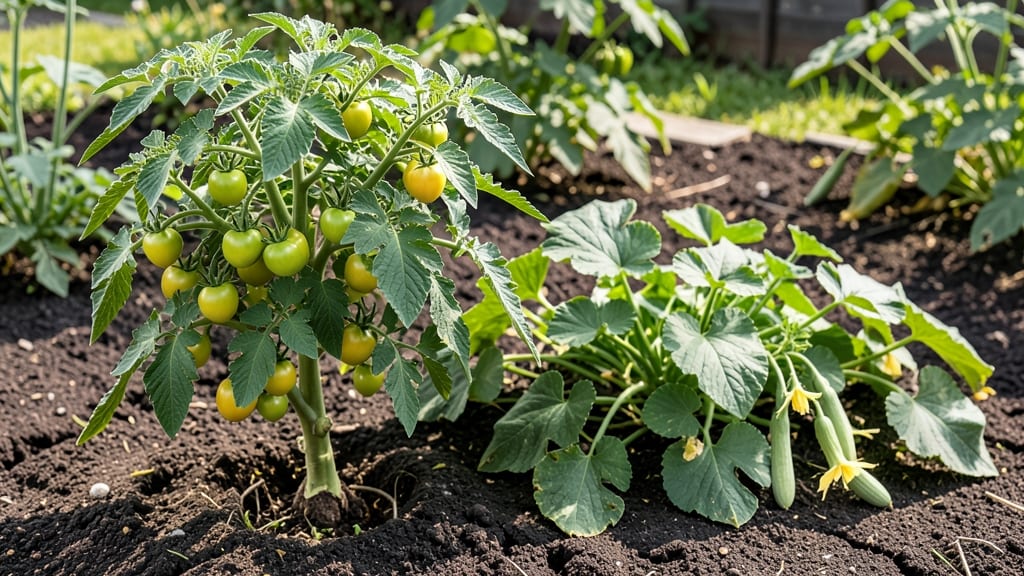
Cucumbers are not nightshades—they belong to the Cucurbitaceae family, while true nightshades like tomatoes, peppers, and eggplants grow in the Solanaceae family. This botanical difference affects allergies, flavor profiles, and even how they grow.
Nightshades are part of the Solanaceae family, which includes plants containing alkaloids like capsaicin (in peppers) or solanine (in tomatoes)—compounds that can trigger allergies or digestive reactions in some people. 🌱 Cucumbers, however, come from the Cucurbitaceae family, which includes squash and melons, and lack these compounds entirely.
This means cucumbers are generally safer for those with nightshade sensitivities, though cross-contamination in cooking can still be a concern.
Beyond allergies, this distinction matters in the garden too. Nightshades thrive in slightly acidic soil, while cucumbers prefer neutral to alkaline conditions. Pairing them with compatible plants—like dill for cucumbers or basil for tomatoes—can boost growth and flavor.
Understanding these differences helps you make better choices in both your kitchen and garden.
💡 In This Article
- Botanical Differences Between Cucumbers and Nightshades
- Growing and Cooking Cucumbers vs. Nightshades
Botanical differences between cucumbers and nightshades
The core difference lies in their plant families: cucumbers belong to the Cucurbitaceae family, while nightshades like tomatoes, peppers, and eggplants are part of Solanaceae.
This distinction isn't just academic—it affects everything from flavor to how your body processes them. 🌱 Nightshades contain alkaloids like solanine (found in tomatoes) or capsaicin (in peppers), which can trigger allergic reactions or digestive discomfort in sensitive individuals.
Cucumbers, however, produce no such compounds—their mild, crisp flavor comes from entirely different chemical pathways.
Nightshades also share a unique trait: many produce toxic compounds when exposed to light or stress, like green tomatoes containing solanine. Cucumbers, on the other hand, are non-toxic at all growth stages, with their primary defense mechanisms being bitter cucurbitacins (found in some wild varieties) rather than alkaloids.
These compounds are what give certain cucumbers their unpleasant bitterness, but modern cultivated varieties have been bred to minimize this trait. The skin's waxy coating, rich in cutin, also plays a role in protecting cucumbers from pests and pathogens, unlike nightshades' reliance on chemical defenses.
This botanical divide extends to their growth habits. Nightshades typically grow as shrubs with a woody stem, while cucumbers are vining plants that sprawl along the ground or climb trellises. Their root systems differ too: nightshades develop deep taproots, while cucumbers have shallow, fibrous roots that spread widely.
This affects how you'd plant them—cucumbers need well-draining soil with neutral pH (6.0-7.0), while nightshades prefer slightly acidic conditions (5.5-6.8). The difference is critical for gardeners trying to avoid cross-contamination between sensitive plants.
What's fascinating is how these families evolved separately. Solanaceae plants developed in the Americas and contain about 2,700 species, many of which are economically vital (like potatoes and tobacco).
Cucurbitaceae, with roughly 975 species, originated in tropical regions and includes economically important crops like melons, pumpkins, and squash.
Despite their different origins, both families share a fleshy fruit structure, which is why they might be confused—especially since some cucurbit fruits (like zucchini) resemble nightshades in appearance but lack their chemical properties.
Here's where it gets practical: if you're allergic to nightshades, you can safely enjoy cucumbers without cross-reactivity. However, be cautious with contaminated cooking surfaces—using the same knife or cutting board for tomatoes and cucumbers could transfer trace alkaloids.
The key is understanding that while these vegetables might share kitchen space, their biological makeup is fundamentally different. 💫
For example, a tomato's flavor comes from its alkaloid-rich flesh and skin, while a cucumber's refreshing taste is due to its high water content (95%+) and mild volatile compounds like (E)-2-hexenal, which gives it that crisp, clean profile.
This is why cucumbers pair so well with dill (which contains similar compounds) while tomatoes complement basil (which enhances their alkaloid-based flavors).