
Orchid Care
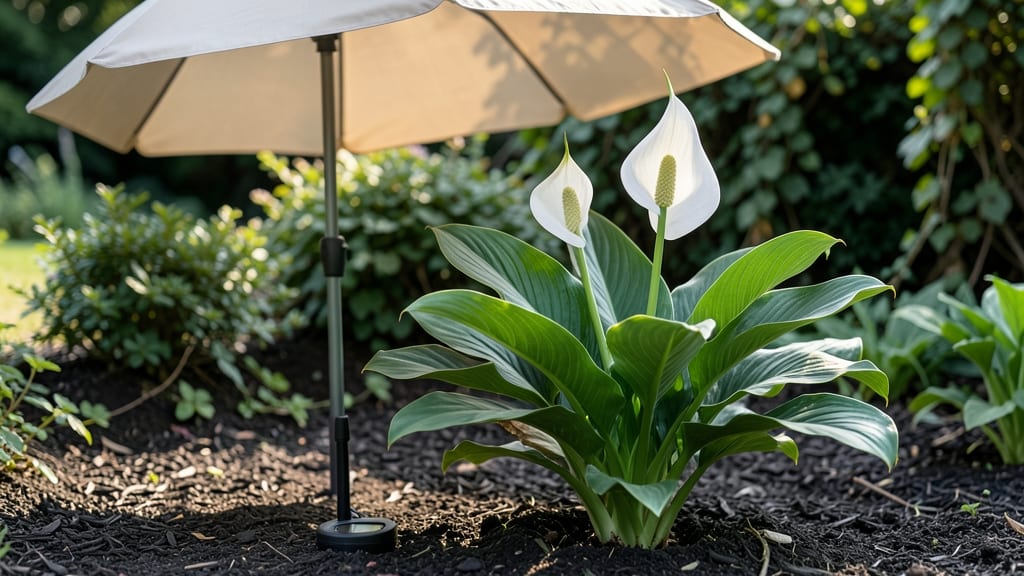
These elegant plants actually perform best with 4-6 hours of bright but diffused light each day, which you can achieve by placing them near east-facing windows or under sheer curtains. 🌿 In garden settings, I’ve found that planting them under taller trees or shrubs creates the ideal dappled light effect—this mimics their native woodland environments and keeps foliage vibrant.
The key is avoiding both scorching sun and overly dim corners, as both extremes stress the plant and reduce its ability to produce those striking blooms.
For container growers, rotating pots every few weeks ensures even light exposure, while indoor calla lilies may need supplemental grow lights during winter months when natural light fades.
The secret to their health lies in balancing light exposure with moisture retention—too much sun dries out their tropical roots faster than they can absorb water, leading to crispy edges on leaves.
💡 In This Article
- How Sunlight Affects Calla Lily Leaf Health and Bloom Production
- Creating the Perfect Light Environment for Potted vs Garden Calla Lilies
How sunlight affects calla lily leaf health and bloom production
Calla lilies rely on a delicate balance of light to produce chlorophyll efficiently. Their broad leaves contain high concentrations of chlorophyll a and b, which absorb blue and red wavelengths most effectively for photosynthesis.
However, unlike sun-loving plants, calla lilies have evolved in tropical understories where they receive only 30-50% of full sunlight. This means their leaves lack the thick waxy cuticle that protects sun-loving plants from dehydration.
Too much direct UV exposure causes their cell membranes to break down, leading to the characteristic brown or yellow patches you see on scorched leaves.
The real damage happens at the cellular level. Excessive sunlight triggers an overproduction of reactive oxygen species (ROS) in their cells, which act like microscopic rust eating away at cellular structures.
This oxidative stress disrupts the plant's hormone balance, particularly auxins that regulate growth and flowering. 🌱 What's fascinating is how calla lilies respond to shade: their leaves develop thicker cuticles and more compact cell structures, which helps them retain moisture better in their native humid environments.
This adaptation explains why they bloom more prolifically in filtered light conditions.
Bloom production is directly tied to light quality and duration. Calla lilies need 12-14 hours of light daily to trigger flowering, but this must be non-intense light. In nature, they receive this through dappled sunlight filtering through canopy leaves.
The red light spectrum (600-700nm) is particularly crucial for stimulating their flowering hormones, while blue light (400-500nm) promotes leaf expansion. Growers often notice that plants in bright shade produce 20-30% more blooms than those in full sun, as the stress of intense sunlight diverts energy away from flower production.
Seasonal light changes also impact calla lilies dramatically. During summer months, when UV index exceeds 6-7, their leaves become more sensitive to damage. This is why morning sun (before 10am) is ideal—it provides the blue light needed for photosynthesis without the intense afternoon UV.
In winter, when natural light weakens, supplementing with 6-8 hours of grow light can prevent leaf yellowing and maintain bloom quality. The key is mimicking their natural light cycle as closely as possible.
Here's what happens when you get the light wrong: too much sun causes chlorosis (yellowing between veins) and leaf burn, while too little light leads to etiolation (long, weak stems with sparse blooms).
The sweet spot is 4-6 hours of indirect light that's bright enough to see shadows but diffuse enough to prevent hot spots on leaves. This balance keeps their foliage vibrant and ensures those iconic white blooms appear reliably.
Consider this comparison: a calla lily in full sun may produce 3-5 blooms per season with stressed foliage, while one in perfect filtered light can yield 8-12 blooms with glossy, healthy leaves.
The difference comes down to how efficiently the plant can convert light into energy without damaging its delicate structures. 💫