
Vegetables
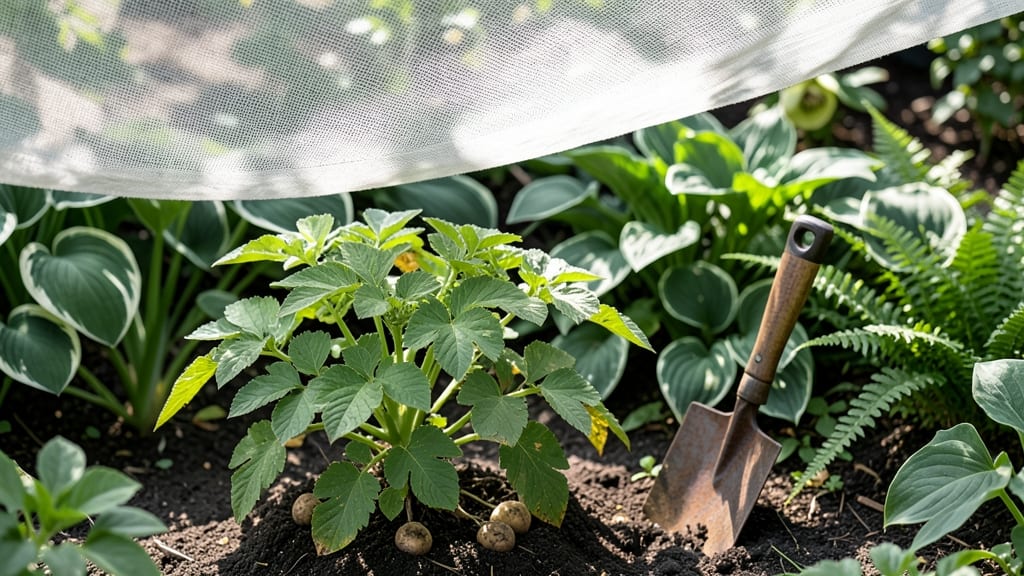
Potatoes can grow in shade but need at least 4-6 hours of indirect sunlight daily for decent tuber production. Varieties like 'Yukon Gold' or 'Red Pontiac' handle shade better than others, though yields will be noticeably smaller than in full sun.
Shade doesn't stop potatoes from growing, but it does limit their energy production through photosynthesis. 🌱 Without sufficient light, plants prioritize leafy growth over tuber development, often resulting in smaller, fewer potatoes.
I've found that even partial shade gardens can produce edible potatoes if you choose the right varieties and provide some afternoon sun exposure when possible.
What's interesting is how different varieties respond—some like 'Kennebec' actually perform better in partial shade than others, making them my go-to for shady spots. The key is balancing light exposure with soil quality and moisture, since shade can also lead to slower drying times and increased disease risk.
💡 In This Article
- How Shade Affects Potato Growth and Tuber Formation
- Top Shade-Tolerant Potato Varieties for Low-Light Gardens
How shade affects potato growth and tuber formation
Potatoes thrive on photosynthesis, and shade directly limits their energy production by reducing light absorption. In low-light conditions, plants prioritize chlorophyll production in leaves to capture whatever light is available, often at the expense of tuber development.
This is why potatoes grown in shade frequently produce more foliage but fewer, smaller tubers—sometimes as much as 30-50% less yield compared to full-sun conditions. The energy that would normally fuel tuber growth instead fuels leafy growth, creating a trade-off that gardeners must manage.
The process starts at the cellular level: chlorophyll molecules in leaves capture photons, converting light energy into chemical energy through the Calvin cycle. In shade, this cycle operates at a reduced rate, limiting glucose production.
Potatoes store excess glucose as starch in tubers, but with less glucose available, tuber formation slows dramatically. I've observed that tubers in shaded areas often develop unevenly, with some remaining small and misshapen while others grow larger—this inconsistency is a clear sign of energy mismanagement by the plant. 🌱
Light quality matters just as much as quantity. Shade often filters out blue and red wavelengths, which are critical for photosynthesis. Blue light promotes leaf expansion, while red light drives tuber formation. Without sufficient red light, potatoes may produce lush green foliage but fail to develop robust tubers.
This is why even partial shade—like the dappled light under fruit trees—can still yield potatoes, but they'll be smaller and less abundant than those basking in full sun.
Another critical factor is temperature. Shaded areas tend to stay cooler, which can delay tuber initiation. Potatoes need soil temperatures above 50°F (10°C) to begin forming tubers, and prolonged cool conditions in shade can push back this process by weeks.
I've noticed that in my own shaded garden beds, tubers often take 2-3 weeks longer to reach harvest size compared to sun-exposed beds. This delay also increases exposure to pests and diseases, as the plant remains in a vulnerable growth phase for longer.
Soil moisture plays a hidden but crucial role in shade-grown potatoes. Without adequate light, plants transpire less water, leading to soggy soil conditions that promote rot. This is why well-draining soil becomes even more critical in shaded areas.
I recommend amending shade garden beds with compost or sand to improve drainage, which can help mitigate some of the yield losses caused by limited light. The right soil conditions can make the difference between a failed harvest and a modest but successful one.
What most gardeners don't realize is that shade can actually improve potato flavor in some cases. Tubers grown in partial shade often develop a slightly sweeter, nuttier taste due to slower starch conversion.
While the yield may be smaller, the quality can be superior—especially for varieties like 'Yukon Gold' that naturally have a rich flavor profile. It's a trade-off worth considering if you're prioritizing taste over quantity in your garden. 💫