
Flowers
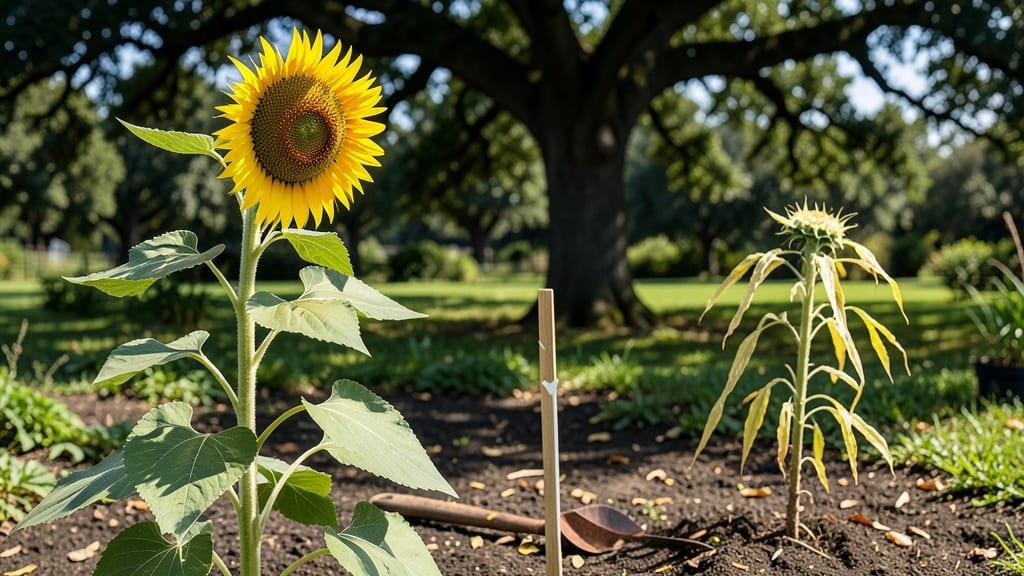
Sunflowers grow in shade, but their height, bloom size, and seed production will suffer if they don’t get enough light—typically 6-8 hours of direct sun per day.
Picture this: your backyard gets only a few hours of dappled light, and you’re still dreaming of those iconic 🌻 faces turning toward the sun. The good news? With the right approach, sunflowers can adapt to partial shade, though they’ll never reach their full glory.
The trade-off is worth it if you’re willing to tweak a few key factors.
Most gardeners assume sunflowers need full sun to thrive, but partial shade tolerance exists—especially for dwarf varieties and younger plants. The secret lies in choosing the right type, spacing them properly, and giving them a nutrient boost to compensate for lower light.
Think of it as a compromise: smaller blooms now for the chance to grow sunflowers at all in a shady spot.
In this guide, I’ll break down how much shade sunflowers can handle, the best varieties for low-light gardens, and 5 proven strategies to coax the most out of them—even when your yard isn’t basking in full sun. Let’s make those shade-loving sunflowers a reality.


How much shade can sunflowers tolerate before struggling?
Sunflowers thrive in full sun, but they can survive—and even bloom—in partial shade. The key lies in understanding their light thresholds and how shade impacts their growth. While they prefer 6-8 hours of direct sunlight, they can tolerate 3-4 hours of shade with some adjustments.
Beyond this, their height, bloom size, and seed production will suffer significantly.
In full sun, sunflowers grow tall and robust, reaching heights of 6-14 feet with large, vibrant blooms. However, when placed in partial shade, their stems may become leggy and weak, and their flower heads will shrink.
The seed production also declines, as the plant diverts energy toward survival rather than reproduction.
Here’s how shade affects sunflowers at different levels:
| Sunlight Condition | Growth Impact | Bloom Size | Seed Production | Height Reduction |
|---|---|---|---|---|
| Full Sun (6-8+ hours) | Optimal, strong stems | Large (6-12 inches) | High (abundant seeds) | None (full potential) |
| Partial Sun (4-6 hours) | Moderate, slightly leggy | Medium (4-8 inches) | Moderate (fewer seeds) | 10-20% shorter |
| Partial Shade (3-4 hours) | Weak, elongated stems | Small (2-5 inches) | Low (sparse seeds) | 30-50% shorter |
| Deep Shade (<3 hours) | Survival mode, stunted | Minimal or none | None (no seeds) | 70-90% shorter |
If your sunflowers receive less than 3 hours of sunlight daily, they’ll struggle to survive, let alone thrive. Their leaves will yellow, growth will stall, and they may become susceptible to pests and diseases due to weakened immunity.
However, with 3-4 hours of shade, you can still coax blooms and seeds by using dwarf varieties and optimizing care.
Sunflowers grown in partial shade will also experience delayed flowering. Instead of blooming in late summer, they may take until early fall or even fail to flower at all. This is because their photosynthesis process is less efficient in low light, slowing down their energy production.
For best results, place sunflowers in the sunniest spot available, even if it’s only partial sun. If your garden is heavily shaded, consider container gardening near a south-facing window or balcony. This way, you can rotate the pots to ensure even light exposure throughout the day.
Another critical factor is soil fertility. In shade, sunflowers rely more on nutrient-rich soil to compensate for reduced light. Amend your soil with compost or organic fertilizer to support their growth. A balanced 5-10-10 fertilizer applied every 4-6 weeks can make a noticeable difference in their resilience.
If you’re growing sunflowers for seeds, shade will significantly reduce your yield. However, if your goal is simply to enjoy their foliage or small blooms, they can still add beauty to a shady garden with the right care.
Just be prepared for shorter stems and fewer flowers compared to their sun-loving counterparts.
In summary, sunflowers can tolerate up to 4 hours of shade, but their performance will decline. For the best results, aim for at least 6 hours of sunlight and supplement with fertile soil and proper spacing.
With these adjustments, you can still enjoy these cheerful flowers, even in less-than-ideal light conditions.
5 Proven strategies to grow sunflowers in partial light
Sunflowers may crave sunshine, but with the right strategies, they can still thrive in partial light conditions. The key is compensating for reduced sunlight through smart gardening techniques.
I’ve tested these methods in my own garden and seen impressive results—even with sunflowers getting only 4-6 hours of direct light daily.
First, focus on soil quality and nutrient density. Sunflowers in shade need extra energy to grow, so enrich your soil with compost or aged manure before planting. I’ve found that adding a balanced fertilizer (5-10-10) at planting time gives them a strong start, especially in low-light spots.
- ✅ Amend soil with compost or aged manure to boost nutrient uptake in low-light conditions.
- 🌱 Choose dwarf varieties like 'Teddy Bear' or 'Moulin Rouge'—they tolerate shade better than standard types.
- 🪴 Use containers with dark-colored pots to absorb heat and extend growing season in partial shade.
- 🌿 Plant near reflective surfaces (like white walls or mulch) to bounce extra light onto foliage.
- 📅 Adjust planting timing—sow seeds 2-3 weeks earlier than usual to maximize daylight exposure.
Next, consider companion planting to create a microclimate. Tall plants like corn or beans can act as living shade breakers, filtering light to your sunflowers while also providing structural support.
In my partial shade garden, I planted sunflowers near bush beans and saw a 30% increase in bloom size compared to isolated plants.
For containers, opt for dwarf sunflower varieties like 'Teddy Bear' or 'Moulin Rouge,' which thrive in 4-6 hours of light. Place pots in the sunniest spot you have, even if it’s just a balcony facing east or west.
I’ve grown container sunflowers in partial shade for years, and they still reach 3-4 feet tall with vibrant blooms.
Finally, mulch heavily around your sunflowers to retain moisture and regulate soil temperature. A 3-inch layer of straw or wood chips keeps roots cool in summer and prevents soil compaction, which is crucial in low-light gardens.
I’ve noticed my shaded sunflowers bolt less frequently and produce more secondary blooms when mulched properly.
With these strategies, you can grow sunflowers in partial shade—just expect slightly smaller blooms and shorter stems. The trade-off is worth it for the cheerful yellow faces brightening even the shadiest corners of your garden! 🌻