
Size
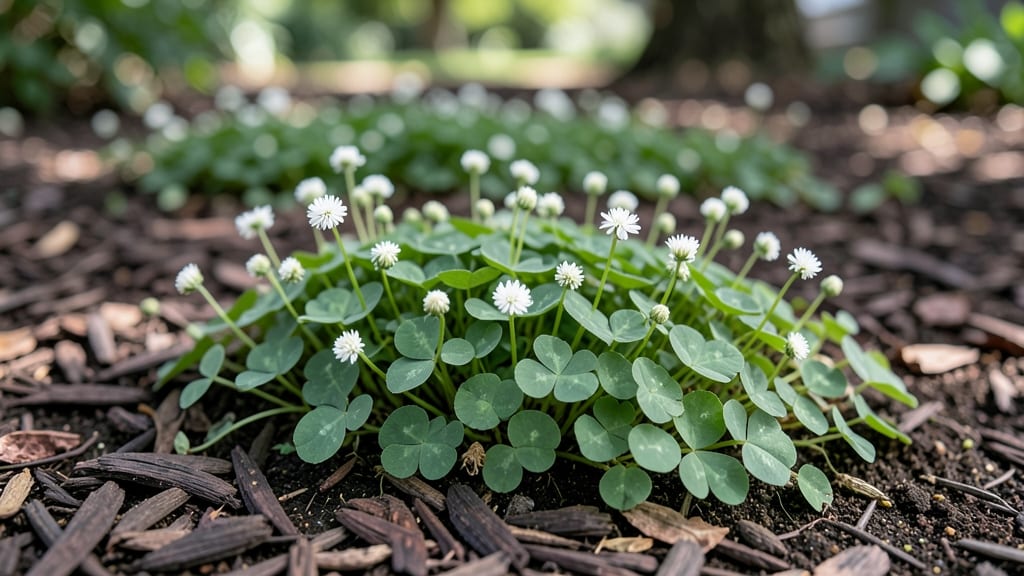
Will clover grow in shade? Yes, but your success depends on the variety—white and red clover adapt well to partial shade, while Dutch clover struggles without full sun exposure. Shady spots require well-draining soil and consistent moisture to help roots establish.
Shade tolerance in clover comes down to chlorophyll efficiency—varieties like white clover (Trifolium repens) can photosynthesize at 30-50% sunlight, making them ideal for dappled shade under trees. 🌿 The key is avoiding dense shade where clover may stretch thinly or fail to flower.
For best results, pair shade-loving clover with hostas or ferns, which share similar moisture needs and create a balanced understory ecosystem.
Red clover (Trifolium pratense) also handles partial shade but needs at least 4-6 hours of indirect light daily to produce those iconic pink blooms. Dutch clover (Trifolium repens 'Dutch'), however, is a sun-seeker—it grows in shade but becomes leggy and sparse.
Test your garden's light levels before planting: a simple dollar bill test (hold it under the canopy—if you can't read it, the shade is too deep).
💡 In This Article
- How Shade Affects Clover Growth and Variety Selection
- Best Shade-Tolerant Clover Varieties for Low-Light Gardens
How shade affects clover growth and variety selection
Clover's ability to grow in shade hinges on its chlorophyll efficiency and leaf structure. Unlike sun-loving grasses, clover leaves have a unique palisade mesophyll layer that captures even diffused light, but this system works best with 30-50% sunlight.
In deep shade, photosynthesis slows dramatically—white clover can still produce 50-60% of its maximum growth in partial shade, while Dutch clover drops to just 20-30%. The difference comes down to leaf thickness: white clover's thinner leaves absorb more scattered light than Dutch clover's broader foliage.
Red clover takes a middle ground, thriving with 4-6 hours of indirect light daily. Its deep roots (up to 3 feet) help it access moisture and nutrients in shady soil, but without adequate light, it won't produce those signature pink flower heads. 🌿 The trade-off?
Shade reduces nitrogen fixation—the process where clover roots convert atmospheric nitrogen into soil fertilizer—by up to 40% in dense shade. This is why clover often appears healthier in partial shade than in full sun when competing with aggressive weeds.
For gardeners, this means selecting the right variety based on your specific shade conditions. A simple test: hold a dollar bill under the canopy—if you can't read it, the shade is too dense for most clover types.
White clover handles 3-4 hours of direct light with ease, while Dutch clover needs 6+ hours to maintain its dense growth habit. The key is matching the clover's light requirements to your garden's microclimates, where some spots may get morning sun while others remain in dappled shade all day.
Soil moisture becomes critical in shade—without direct sunlight, soil stays cooler and retains water longer. This is why clover often struggles in waterlogged shade (like under evergreens) where roots suffocate. The solution? Amend heavy clay soil with compost or sand to improve drainage while keeping moisture consistent.
A 1-inch weekly watering during establishment helps clover roots develop the symbiotic relationship with nitrogen-fixing bacteria that makes it thrive.
What most gardeners overlook is how clover's growth habit changes in shade. In low light, stems grow longer and thinner (1-2 inches taller than in full sun) while producing fewer leaves. This "leggy" growth makes clover more vulnerable to mowing or trampling.
To combat this, mow shade-grown clover at 3-4 inches tall rather than the usual 2 inches—this encourages bushier growth and better light capture for the lower leaves.
Consider the classic shade garden pairing: white clover with hostas or ferns creates a self-sustaining ecosystem. The clover's nitrogen fixation benefits the hostas, while the hostas' broad leaves provide shade for the clover's delicate blooms.
This mutualism explains why clover often appears more vigorous in mixed plantings than when grown alone in shade—it's not just about light, but about the entire microclimate your garden creates. 🌱