
Shrubs
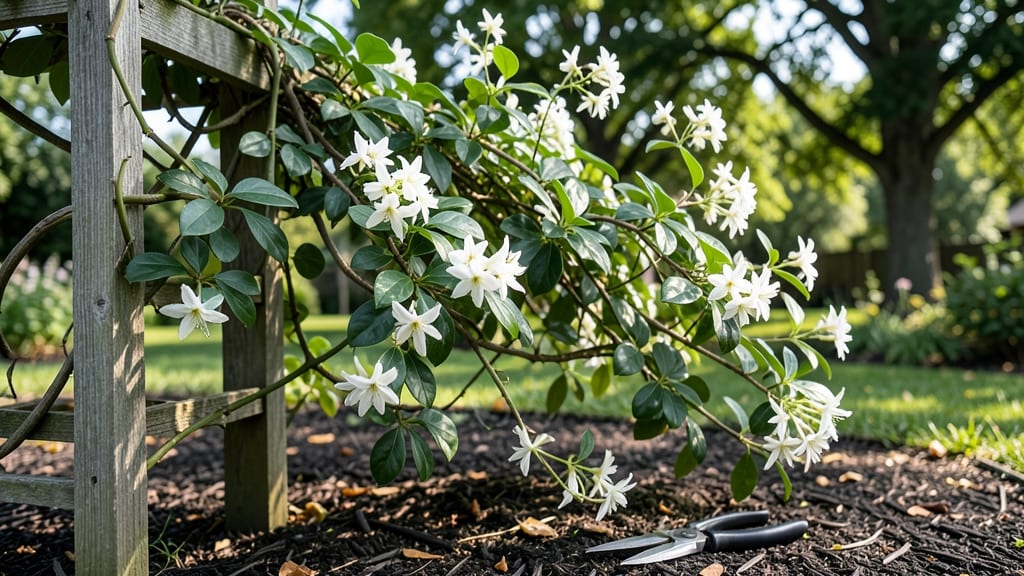
Star jasmine thrives in sun or shade with the right balance 🌸 — but get it wrong, and you’ll end up with sparse blooms or leggy vines.
Picture this: your fragrant climber, heavy with star-shaped flowers, struggling to decide whether to bask in full sun or retreat into dappled shade. The truth? It’s all about where you live and how you adjust its care.
In hot climates, afternoon shade saves it from scorching, while cooler zones let it soak up morning sun for bold blooms.
I’ve seen star jasmine flourish in both with a few key tweaks—like watering deeper in full sun or pruning to encourage bushier growth in shade. Below, I’ll break down the exact light needs, soil tricks, and seasonal shifts to keep your plant happy and blooming year-round.
Whether you’re dealing with a sun-drenched patio or a shady corner, this guide will help you turn your star jasmine into the star of your garden—no guesswork required.
 Best Window Placement
Star jasmine light requirements: sun vs shade breakdown for optimal growth
Star jasmine (Trachelospermum jasminoides) is one of those magical vines that rewards you with heavenly fragrance and lush foliage—but only when you get its light needs right.
Unlike fussy tropical plants, star jasmine is flexible with sunlight, thriving in everything from morning sun with afternoon shade to bright indirect light. The key? Understanding how its light tolerance shifts based on your climate and region.
In hot, dry areas like Southern California or Arizona, it craves afternoon shade protection, while in cooler Pacific Northwest climates, it handles full sun without stress. Let’s break down the sun vs. shade rules to keep your star jasmine blooming like crazy.
First, recognize that star jasmine isn’t a one-size-fits-all plant. Its light requirements depend on two critical factors: temperature and humidity. In humid subtropical zones (Zones 8-9), where afternoons can turn scorching, partial shade (3-6 hours of sun) is ideal to prevent leaf scorch or wilting.
Meanwhile, in arid desert climates (Zones 7-10), it can tolerate full sun with consistent moisture, especially when established. The secret? Mimicking its natural habitat in East Asia, where it grows under canopy trees with dappled sunlight.
This means your goal should be bright, filtered light—think east-facing windows or lattice near a building—rather than harsh, direct midday rays.
| Light Condition | Sun Exposure (Hours/Day) | Best For | Growth Impact | Climate Notes |
|---|---|---|---|---|
| Full Sun | 6+ hours | Cooler climates (Zones 5-7) | Vigorous growth, abundant blooms | Risk of leaf burn in heat |
| Partial Sun | 3-6 hours | Humid/temperate zones (Zones 8-9) | Balanced growth, fewer blooms | Ideal for most gardens |
| Partial Shade | 2-3 hours | Hot/dry climates (Zones 10+) | Slow growth, sparse blooms | Afternoon shade critical |
| Deep Shade | <2 hours | North-facing walls | Leggy, weak stems | Avoid—minimal blooms |
Now, let’s talk about the telltale signs your star jasmine is struggling with light stress. If you notice yellowing leaves (especially on new growth), it’s likely getting too much direct sun—a classic sign of sunburn.
In contrast, dark green but sparse foliage with long, leggy stems means it’s craving more light. The worst offenders? Deep shade spots where the vine stretches desperately toward any available light, producing fewer flowers and weaker wood.
Pro tip: If your star jasmine is dropping leaves unexpectedly, check for overwatering combined with low light, which can lead to root rot. The fix? Move it to a sunnier spot with better airflow.
For regional adjustments, think about your local microclimate. In arid Southwest gardens, I’ve seen star jasmine thrive in full morning sun with afternoon shade—just like its wild cousins in Chinese forests.
Use lightweight shade cloth (30-50%) during peak summer hours to protect it without cutting off all light. Meanwhile, in Pacific Northwest rainforests, star jasmine can handle full sun year-round because the cooler temperatures prevent heat stress.
The golden rule? Observe your plant’s response after a month in its new spot: if it’s perking up, you’ve nailed the light balance.
How to adjust star jasmine care based on sun or shade exposure
Star jasmine (Trachelospermum jasminoides) is one of those magical plants that can thrive in both sun and shade—but only if you tweak your care routine. The key lies in understanding how its light exposure affects watering needs, pruning frequency, and fertilizer timing.
In full sun, this vine grows faster but demands more hydration, while shade slows growth but reduces drought risk. Let’s break down how to optimize care for each scenario.
First, assess your star jasmine’s current location. If it’s in full sun (6+ hours of direct light), expect vigorous growth but also higher water evaporation. In partial shade (3-6 hours of sun), it’ll grow more slowly but with fewer stress signals.
The goal? Match your care routine to these conditions to avoid leaf scorch or leggy, sparse blooms. Seasonal shifts matter too—summer sun behaves differently than winter sun, and afternoon shade in hot climates isn’t the same as morning shade in cooler areas.
- 1 Watering: Full sun = deep watering 2x/week; shade = water weekly. Check soil moisture 2 inches down—if dry, water.
- 2 Pruning: Sun-exposed plants need spring pruning to control growth; shade plants benefit from light summer trims to encourage bushiness.
- 3 Fertilizing: Full sun = feed monthly (April-July); shade = feed bi-weekly (April-May). Use 10-10-10 NPK for balanced growth.
- 4 Seasonal shifts: Move potted star jasmine to morning sun in summer; winter sun is ideal for maximizing blooms before dormancy.
- 5 Bloom boost: In low-light spots, use reflective mulch (white gravel) to increase light exposure by 20% and improve flowering.
Let’s talk watering adjustments first, since this is where most gardeners trip up. In full sun, star jasmine’s roots dry out faster, so aim for 1-2 gallons per week during peak summer months. I like to water deeply in the early morning to reduce evaporation and fungal risks.
For shade-grown plants, cut back to 1 gallon weekly—they’re more forgiving but still hate soggy soil. Pro tip: Use a moisture meter to avoid guesswork; star jasmine wilts dramatically when thirsty.
Pruning is another game-changer based on light. Sun-loving star jasmine grows aggressively, so I prune mine twice a year: once in late winter to shape the vine and again in early summer to encourage more blooms.
In shade, growth slows, so I opt for light trims in spring to remove deadwood and open up the canopy. Always prune just above a leaf node to stimulate new growth. And remember—never prune after July 1st, or you’ll risk stunted blooms next season.
Fertilizer timing shifts with light too. My sun-exposed star jasmine gets a monthly dose of 10-10-10 fertilizer from April through July, while shade plants only need feeding in April and May. Over-fertilizing in low light leads to leaf burn, so I halve the recommended dose for shaded vines.
Organic options like compost tea or fish emulsion work wonders in both scenarios—just dilute them for shade-grown plants. Mulch heavily (3-4 inches) to retain moisture and regulate soil temperature, especially in sun.
Don’t overlook seasonal light shifts. In hot climates, afternoon sun can scorch star jasmine’s leaves, so I provide dappled shade with sheer curtains during peak heat. Conversely, winter sun is a gift—it helps the plant photosynthesize longer and store energy for spring blooms.
If your star jasmine is in a pot, rotate it quarter-turns weekly to ensure even light exposure all around. This simple habit prevents lopsided growth and keeps those fragrant white flowers coming year after year.
For low-light spots, try these bloom-boosting tricks: Install a small LED grow light (12-15 watts) near the vine for 6 hours daily, or plant it near a reflective surface like a white fence.
I’ve also had success with mycorrhizal fungi in the soil—it improves root health and helps the plant make the most of limited light. And if all else fails, choose a shade-tolerant variety like Trachelospermum jasminoides ‘Minima,’ which thrives with just 3 hours of morning sun.