
Shrubs
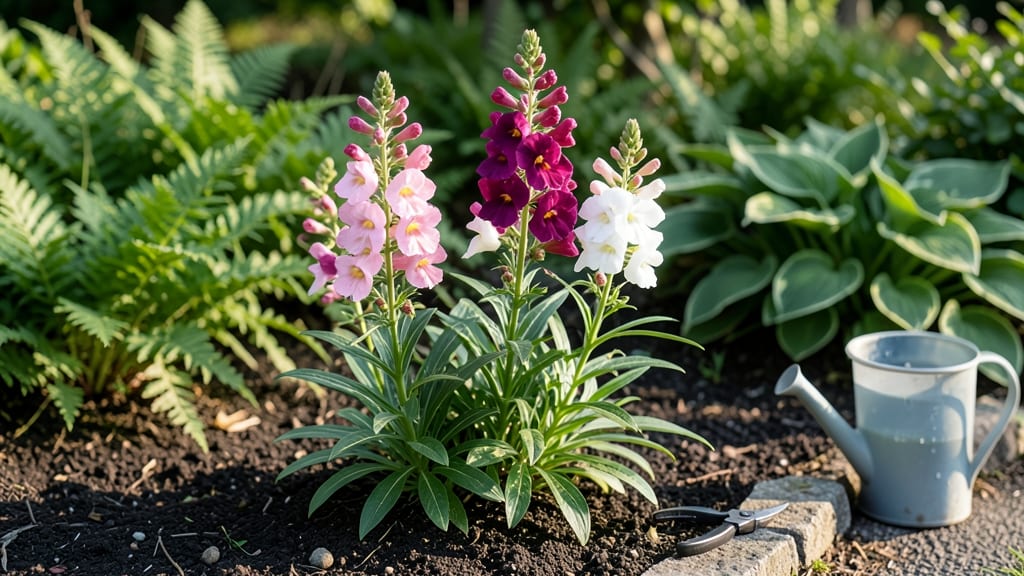
Snapdragons in shade grow best with 4-6 hours of indirect sunlight daily and shade-tolerant varieties like 'Black Velvet,' 'Matrix,' or 'Tango.' Deep shade weakens stems and cuts back blooms, but proper mulching and steady watering can help them thrive in low-light spots.
Snapdragons aren't just sun-lovers—they adapt well to partial shade when given the right conditions. 🌿 The key is choosing varieties bred for lower light, as they've been cultivated to maximize photosynthesis efficiency even with less sunlight.
These shade-friendly types often produce slightly smaller blooms but maintain their vibrant colors and sturdy stems better than sun-dependent varieties in dimmer spots.
For gardeners working with limited sunlight, I recommend planting them near north-facing walls or under deciduous trees where they'll get morning light but afternoon shade.
The consistent moisture from mulch is especially critical in shaded areas, as it prevents soil from drying out too quickly—something that can stress snapdragons even more than light deprivation.
💡 In This Article
- How Light Affects Snapdragon Growth and Flowering
- Top Shade-Tolerant Snapdragon Varieties for Low-Light Gardens
How light affects snapdragon growth and flowering
Snapdragons rely on photosynthesis efficiency to produce energy, and light intensity directly impacts this process. In full sun (6+ hours), chlorophyll absorbs maximum light, fueling rapid stem growth and abundant blooms. However, snapdragons in shade experience reduced photosynthesis, which slows sugar production—the plant's energy source.
This is why shaded plants often develop longer, leggier stems as they stretch toward available light, a condition called etiolation.
The difference between partial shade (4-6 hours of light) and deep shade (2-3 hours or less) is dramatic. Partial shade allows enough light for moderate growth, while deep shade triggers stress responses, like fewer blooms and weaker stems.
Studies show snapdragons in deep shade produce 30-50% fewer flowers compared to those in partial shade, with stems that flop under their own weight. The key is finding that sweet spot where light is sufficient but not overwhelming.
Light quality matters too. Snapdragons thrive in cool, blue-rich light (morning sun) versus harsh afternoon heat, which can scorch leaves. This is why planting near north-facing walls or under deciduous trees works well—they filter intense midday rays while still providing essential light.
The red-blue light spectrum (400-500nm) is particularly important for chlorophyll activation, which is why shade-tolerant varieties have evolved to maximize absorption in lower-light conditions.
Flowering cycles also shift with light exposure. In partial shade, snapdragons typically bloom for 6-8 weeks, while deep shade can cut this to just 3-4 weeks. The reason? Lower light reduces the plant's ability to produce florigen, a hormone that triggers flowering.
This is why shade-tolerant varieties like 'Matrix' are bred to prioritize bloom production even with limited light, making them ideal for low-light gardens.
One surprising benefit of partial shade is longer bloom longevity. Flowers in partial shade often last 2-3 days longer than those in full sun because the cooler temperatures reduce water loss and stress.
The trade-off? You may see slightly smaller blooms, but the overall plant health and extended display make it worthwhile for gardeners with limited sun.
For best results, pair partial shade with reflective surfaces (like light-colored gravel or mulch) to bounce extra light onto the plants. This simple trick can boost light exposure by 10-15%, making a noticeable difference in growth and flowering. 🌿