
Light Requirements
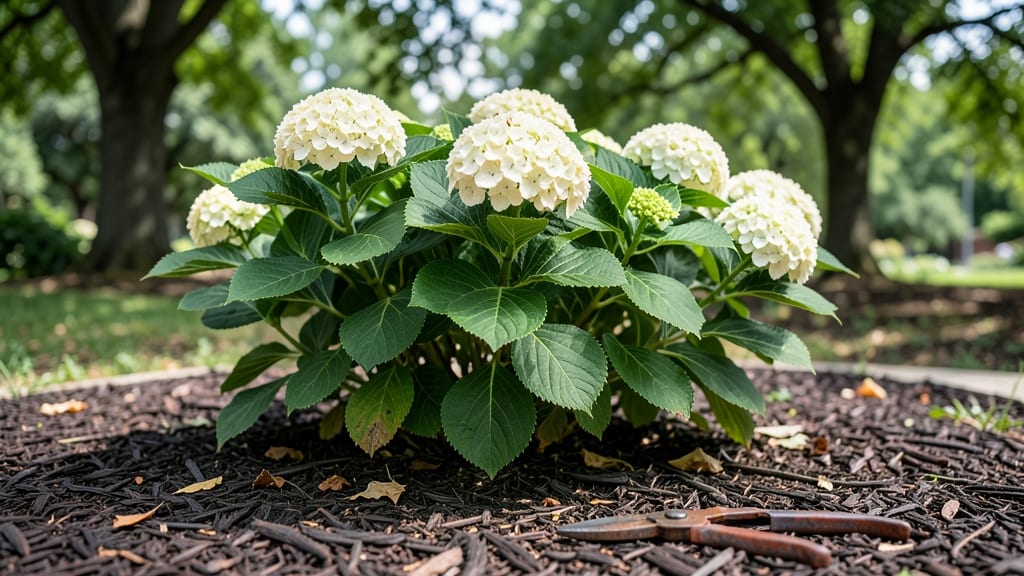
Shade-tolerant hydrangeas bring drama to your yard even where sunlight barely reaches. 🌿 I’ve grown them under towering pines and against brick walls, and the right varieties transform gloomy corners into lush, flower-filled spaces. These plants don’t just survive in shade—they thrive, with blooms that last from summer into fall.
The secret lies in choosing the right cultivars like Hydrangea macrophylla (bigleaf hydrangea) or Hydrangea quercifolia (oakleaf hydrangea), both of which handle shade better than their sun-loving cousins.
They love moist, well-draining soil rich in organic matter—think mulch, compost, or even a slow-release fertilizer—and need consistent watering, especially during dry spells. Pruning in late winter keeps them compact and encourages bigger blooms.
What you’ll get is a garden corner that feels alive, with bold blooms in blues, pinks, or whites that change color as the season progresses.
The foliage stays vibrant, and the plants grow 3–6 feet tall, depending on the variety, making them perfect for borders, containers, or even as a focal point under trees. The best part? They’re low-maintenance once established.
Works in partial to full shade, from dappled light to deep shadows, and adapts to containers or garden beds. Here’s how to pick the perfect spot and keep them looking their best year after year.
📚 In This Guide
- What you need
- Instructions
- Tips and common mistakes
- Wrapping up and next steps
What you need
- ● Shade-tolerant hydrangea varieties: 1–3 plants of Hydrangea macrophylla (e.g., 'Nikko Blue,' 'Endless Summer')
- ● 1–3 plants of Hydrangea quercifolia (oakleaf hydrangea)
- ● 1–3 plants of Hydrangea arborescens (smooth hydrangea, e.g., 'Annabelle')
- ● Well-draining potting mix or garden soil: 5–10 gallons (for containers) or amended native soil (for in-ground planting)
- ● Organic compost or slow-release fertilizer: 1–2 cups (5–10 oz) per plant
- ○ Mulch (optional but recommended): 2–3 inches of shredded bark or pine needles
- ● Garden trowel or hand shovel
- ● Gloves (for handling soil and plants)
- ● Watering can or hose with a gentle spray nozzle
- ● Pruners (sterilized, for trimming)
- ● Measuring tape (for spacing plants 3–5 feet apart)
- ● Container pots (15–20 gallons, if growing in pots)
- ● Partial to full shade location (2–6 hours of indirect light daily)
- ○ Soil pH test kit (optional, but helpful for adjusting acidity for blue/pink blooms)
- ● Access to water (hydrangeas love consistent moisture!)
How to grow stunning shade-tolerant hydrangeas
Here's my foolproof method for cultivating hydrangeas that burst with color even where sunlight barely reaches.
🌱 Step 1: Select the Right Variety for Your Shade Conditions
Not all hydrangeas tolerate shade equally. For deep shadows, choose Oakleaf hydrangeas (Hydrangea quercifolia) or Bigleaf hydrangeas like 'Annabelle' or 'Endless Summer'. These varieties thrive with 4-6 hours of filtered light and handle full shade better than others. Avoid lacecap types—they need more sun to produce their signature blooms.
I always check the mature height of the variety before planting. Larger varieties like 'Alice' need 6-8 feet of space between plants, while compact types like 'Little Lime' only require 3-4 feet. Planting too closely leads to overcrowded roots and weak stems that flop under heavy blooms.
🪴 Step 2: Prepare the Planting Site with Rich, Moist Soil
Shade-tolerant hydrangeas demand well-draining yet moisture-retentive soil—they hate soggy roots but need consistent hydration. Amend your native soil with 3-4 inches of organic compost mixed into the top 12 inches of soil. I like to add a handful of sulfur if my soil tests alkaline (hydrangeas love pH 5.2-6.0 for blue blooms).
Dig a hole twice as wide as the root ball but only as deep as the container's root zone. The top of the root ball should sit 1 inch above ground level—this prevents rot from sitting water. Gently loosen roots that circle tightly before placing the plant in the hole.
☀️ Step 3: Plant and Water for Immediate Establishment
Backfill the hole with native soil mixed with 1 part compost to encourage root spread. Water deeply as you fill, tamping down gently to eliminate air pockets. The soil should settle 1-2 inches—add more if the plant sinks below the original level. Mulch heavily with 3 inches of shredded bark or wood chips, keeping it 6 inches away from the stem to prevent rot.
Water immediately after planting with 5 gallons to settle the soil and eliminate air gaps. Keep the soil evenly moist (not soggy) for the first 4-6 weeks—this is critical for root establishment. You'll know you're doing it right when the mulch stays damp but not wet to the touch.
💧 Step 4: Maintain Consistent Moisture and Fertilize Strategically
Shade-tolerant hydrangeas need 1-1.5 inches of water weekly during the growing season. I water deeply twice a week in summer, checking soil moisture by pushing a finger 2 inches deep—if it's dry, water again. Overhead watering can cause fungal issues, so I use drip irrigation or water at the base early in the day.
Fertilize twice a year: once in early spring with a balanced 10-10-10 fertilizer and again in mid-summer with a low-phosphorus formula (like 12-4-8) to encourage blooms. Avoid high-nitrogen fertilizers—they produce lush foliage at the expense of flowers.
✂️ Step 5: Prune for Health and Next Year's Blooms
Prune shade-grown hydrangeas in late winter or early spring before new growth begins. Remove dead or crossing branches first, then cut back last year's stems by ⅓ to encourage bushier growth. Never prune current year's blooms—they set buds on old wood. If you see yellowing leaves, it's often a sign of overwatering or poor drainage, not disease.
I always sterilize my pruners with rubbing alcohol between cuts to prevent spreading bacterial infections. After pruning, apply a 2-inch layer of fresh mulch to retain moisture and regulate soil temperature. The key to long-term success is patience—shade-tolerant hydrangeas establish slowly but reward you with bold, long-lasting blooms for decades.
Tips & tricks for perfect shade-tolerant hydrangeas
These game-changing insights will help you coax even more vibrant blooms from your shade-loving beauties.
Variety Matters: Oakleaf hydrangeas (Hydrangea quercifolia) are my top pick for deep shade—their stunning fall foliage adds bonus seasonal interest. For dramatic blooms, 'Annabelle' produces huge white flowers that practically glow in shadowy spots. Remember: lacecap types need more light to show off their delicate blooms, so skip them for full shade areas.
Soil Science: The secret to thriving shade hydrangeas lies in that 3-4 inches of organic compost mixed into the top 12 inches of soil. I test my soil pH first—if it's above 6.0, I add elemental sulfur to create that perfect 5.2-6.0 range for blue blooms. Pro tip: Mix in a handful of coffee grounds too—they're acidic and provide slow-release nitrogen without promoting excessive leaf growth.
Planting Precision: That 1-inch elevation for the root ball isn't just about preventing rot—it creates better air circulation at the base. I always loosen any tightly circled roots before planting, which encourages outward growth instead of girdling. For container gardening, use pots with drainage holes and elevate them on feet to prevent waterlogging from overhead sprinklers.
Watering Wisdom: Those 5 gallons of water after planting aren't just for settling soil—they help eliminate air pockets that could strangle new roots. During the critical 4-6 week establishment period, I check soil moisture by pushing my finger 2 inches deep. If it feels dry, I water again immediately. Overhead watering can spread fungal spores, so I use drip irrigation or water at the base early in the morning when foliage has time to dry.
Pro Tips for Shade Tolerant Hydrangea
- These game-changing insights will help you coax even more vibrant blooms from your shade-loving beauties.
- Variety Matters: Oakleaf hydrangeas (Hydrangea quercifolia) are my top pick for deep shade—their stunning fall foliage adds bonus seasonal interest.
- Soil Science: The secret to thriving shade hydrangeas lies in that 3-4 inches of organic compost mixed into the top 12 inches of soil.
Frequently asked questions
Got questions about shade-tolerant hydrangeas? You’re not alone!
Whether you’re a first-time gardener or a seasoned plant parent, these answers will help you grow lush, healthy blooms—even in the shadiest spots.
Which shade-tolerant hydrangeas bloom best in full shade?
Look for Hydrangea macrophylla (like ‘Endless Summer’ or ‘Annabelle’) or Hydrangea quercifolia (oakleaf hydrangea). These varieties handle 4+ hours of shade daily and still deliver vibrant blooms. Avoid Hydrangea paniculata, which needs at least 6 hours of light for optimal flowers.
When is the best time to plant shade-tolerant hydrangeas?
Plant in early spring or fall when temperatures are mild (50–70°F). This gives roots time to establish before extreme heat or cold. Pro tip: Water deeply after planting and mulch to retain moisture—hydrangeas hate drought, even in shade!
Why are my shade hydrangeas’ leaves yellowing?
Yellow leaves often signal overwatering, poor drainage, or nutrient deficiencies. Check soil moisture—hydrangeas prefer consistently moist (not soggy) soil. Amend heavy clay with compost and test pH (aim for 5.5–6.2 for blue flowers or 7.0+ for pink).
Can I grow shade-tolerant hydrangeas in containers?
Use a 15+ gallon pot with drainage holes and a well-draining mix (like 60% potting soil, 30% perlite, 10% compost). Choose compact varieties like ‘Little Lime’ or ‘Mini Penny’. Move containers to a bright, indirect spot in winter if temps drop below 20°F.
What’s a great alternative if my shade is too dark?
Try Heuchera (coral bells), Astilbe, or Ferns for lush, low-light foliage. For color, Impatiens or Begonias thrive in deep shade and complement hydrangeas beautifully. Just ensure they share similar moisture needs!
Wrapping up and next steps
Shade-tolerant hydrangeas are the perfect solution for transforming dim corners of your garden into vibrant, lush spaces—no sunlight required! 🌿 Whether you're working with a shady patio, a wooded backyard, or a north-facing yard, these beauties prove that great blooms don’t need direct sun.
With the right variety, soil prep, and care, you’ll enjoy bold colors and thriving foliage all season long.
Ready to bring your shady spots to life? Start by selecting your favorite shade-tolerant hydrangea and grabbing your gardening tools—your garden’s next masterpiece is just a few steps away! 🌸