
Light Requirements
Struggling with a shady garden spot in Zone 6? These 10 shade-loving perennials thrive where others fail, offering vibrant blooms with minimal effort. From woodland natives to classic cottage favorites, these plants transform dark corners into lush, colorful retreats.
Hostas for Textured Leaf Beauty

If you love foliage that steals the show, hostas are your perfect shade garden companion. Their bold, variegated leaves create striking contrast even when flowers are absent, making them ideal for understory planting where sunlight barely reaches.
Hostas thrive in partial to full shade and come in a rainbow of colors—from deep blues and purples to golden chartreuse and classic green. Plant them in well-draining, moist soil enriched with organic matter, and mulch annually to retain moisture. Varieties like 'Blue Angel' or 'Halcyon' offer dramatic textures, while 'Francee' delivers delicate white edges for a softer look.
This low-maintenance perennial is ideal for beginners or busy gardeners, as it requires minimal care beyond occasional division every few years. Perfect for borders, containers, or woodland gardens, hostas bring year-round interest with their lush foliage. 💚
Astilbe for Feathery Summer Plumes

If your shade garden feels flat, astilbe is the secret weapon to add drama with its feathery plumes that dance in the breeze. This moisture-loving perennial thrives in partial to full shade, making it perfect for spots where other plants struggle—like under trees or along north-facing walls.
With summer blooms lasting 6-8 weeks, astilbe offers colors from white to deep pink, and varieties like 'Fanal' or 'Stralsund' reach 2-3 feet tall, creating stunning vertical accents. Keep the soil consistently moist (they hate drought), and deadhead spent blooms to encourage more flowers. Deer tend to avoid them, making them a great low-maintenance choice for rural gardens.
Urban gardeners with small spaces will love astilbe’s adaptability—it thrives in containers too! Pair it with hostas or bleeding heart for a layered shade garden that feels lush and intentional. 🌻
Hellebores for Early Winter Interest

When your garden looks bare after winter, helleborus niger (the Lenten rose) emerges like clockwork, offering delicate blooms in late February through April—often before snow melts. This hardy perennial thrives in Zone 6’s coldest, dampest corners, where most plants refuse to grow.
Plant hellebores in well-drained but moisture-retentive soil with partial to full shade, and they’ll reward you with year-round interest: leathery evergreen foliage in winter, early blooms in spring, and even occasional summer flowers. Deadhead spent blooms to encourage more flowers, but otherwise, they’re virtually maintenance-free. Deer and rabbits typically avoid them too!
Perfect for woodland gardens, cottage-style beds, or under trees, hellebores bring life to forgotten spots where nothing else dares to grow. 🌷
Bleeding Heart for Graceful Arches

Want to add romantic charm to your shady garden without sacrificing hardiness? Bleeding heart (Dicentra spectabilis) is the answer—its delicate, heart-shaped blooms cascade like a waterfall from arching stems, creating a dreamy, cottage-garden feel.
This Zone 6 perennial thrives in partial to full shade, making it perfect for woodland gardens or spots under trees. Plant it in well-drained, moist, humus-rich soil and space stems 18–24 inches apart for that signature arching effect. Blooms appear in spring to early summer, followed by lacy foliage that adds texture year-round. Deadhead spent flowers to encourage a second flush, but leave seed pods for winter interest.
Bleeding heart is especially rewarding for gardeners who love low-maintenance elegance—it’s deer-resistant, self-seeds modestly, and pairs beautifully with hostas and ferns. Perfect for adding vertical drama to shady borders or containers! 🌷
Japanese Painted Fern for Year-Round Color

Tired of shade gardens that look dull year-round? The Japanese painted fern (Athyrium niponicum var. pictum) brings dynamic color to dark corners with its silver-green fronds that shift hues through the seasons—deep green in summer, purple stems in fall, and even subtle winter interest.
This Zone 6 hardy fern thrives in partial to full shade and moist, well-draining soil, making it perfect for woodland gardens or under trees. Its delicate, lacy foliage reaches 2-3 feet tall and spreads 2-3 feet wide, creating a soft, textured backdrop for bolder perennials like hostas or hellebores. Unlike many shade plants, it offers year-round foliage interest without flowers, making it ideal for gardeners who prioritize texture over blooms.
Urban gardeners with small spaces will love its adaptability—it thrives in containers too! Perfect for woodland-style borders or as a focal point in shady corners, this fern is a game-changer for adding movement and color where sunlight is scarce. 🌿
Lungwort for Medicinal and Ornamental Value

Looking for a shade-loving perennial that does double duty as both a medicinal plant and a stunning ornamental? Lungwort (Pulmonaria spp.) delivers with its spotted, silvery-green leaves and delicate blue or pink flowers that appear in early spring—often before many other plants wake up.
This hardy Zone 6 perennial thrives in partial to full shade, making it perfect for woodland gardens or under trees. Its self-healing properties (hence the name "lungwort") have made it a historic remedy for respiratory ailments, while its long-lasting blooms attract early pollinators like bees. Plant it in moist, well-draining soil enriched with compost, and watch it naturalize beautifully over time.
Cottage gardeners and herbalists will love lungwort for its dual benefits—it’s a living piece of garden history that also adds texture and color to shady spots. 💚
Solomon’s Seal for Architectural Elegance

Looking for a shade-loving perennial that adds both structure and movement to your garden borders? Solomon’s seal (Polygonatum) delivers with its elegant, arching stems and dangling white flowers, creating a natural, architectural focal point that feels both refined and effortless.
This Zone 6 hardy perennial thrives in partial shade to dappled sunlight, making it perfect for understory planting or north-facing garden beds. Its vertical growth habit (2–4 feet tall) adds height without requiring staking, while the delicate, bell-shaped flowers bloom in late spring to early summer. The foliage remains attractive year-round, and mature plants form dense colonies that suppress weeds naturally.
Ideal for gardeners who love low-maintenance elegance, Solomon’s seal pairs beautifully with ferns, hostas, and bleeding heart. Its graceful movement in the breeze adds dynamic interest to static borders, making it a standout choice for cottage gardens or woodland settings. 🌱
Coral Bells for Vibrant Foliage and Flowers

Looking for a shade-loving perennial that delivers year-round color and delicate blooms? Coral bells (Heuchera) are your answer—these underrated gems offer striking foliage in shades of purple, silver, lime green, or deep burgundy, paired with airy flower spikes that add height and texture.
Thriving in partial to full shade, coral bells adapt to almost any soil as long as it’s well-draining. Their compact size (12–24 inches tall) makes them ideal for containers, rock gardens, or layered shade beds, while varieties like 'Palace Purple' or 'Lime Rickey' provide bold contrast. For best results, plant in spring or early fall and water consistently until established—once settled, they’re drought-tolerant once more.
Perfect for modern gardens, urban patios, or woodland edges, coral bells bring seasonal interest without the fuss. Their low-maintenance nature and deer resistance make them a favorite for busy gardeners who crave color without compromise. 💚
Toad Lily for Unique Spidery Blooms

If your shade garden feels predictable, toad lily (Tricyrtis spp.) brings a touch of exotic drama with its spider-like, nodding blooms that appear in late summer to fall—when most shade plants have already faded. These unusual flowers, often orange or yellow, contrast beautifully with their dark green, strap-like leaves, creating a striking focal point in woodland gardens or under trees.
This Zone 6 perennial thrives in moist, well-drained soil with partial to full shade, making it perfect for damp corners where other plants struggle. Plant bulbs in fall or early spring at a depth of 3–4 inches, spacing them 4–6 inches apart. Once established, toad lily spreads slowly, forming dense colonies that suppress weeds naturally. Its late-season blooms also attract hummingbirds and other pollinators, adding unexpected life to your garden.
Perfect for gardeners who love unexpected textures, toad lily is especially rewarding in cottage gardens or naturalized areas where its unique form stands out. Pair it with hostas or Japanese painted ferns for a layered, woodland-inspired look that feels both wild and intentional. 🌷
Foxglove for Dramatic Height and Texture

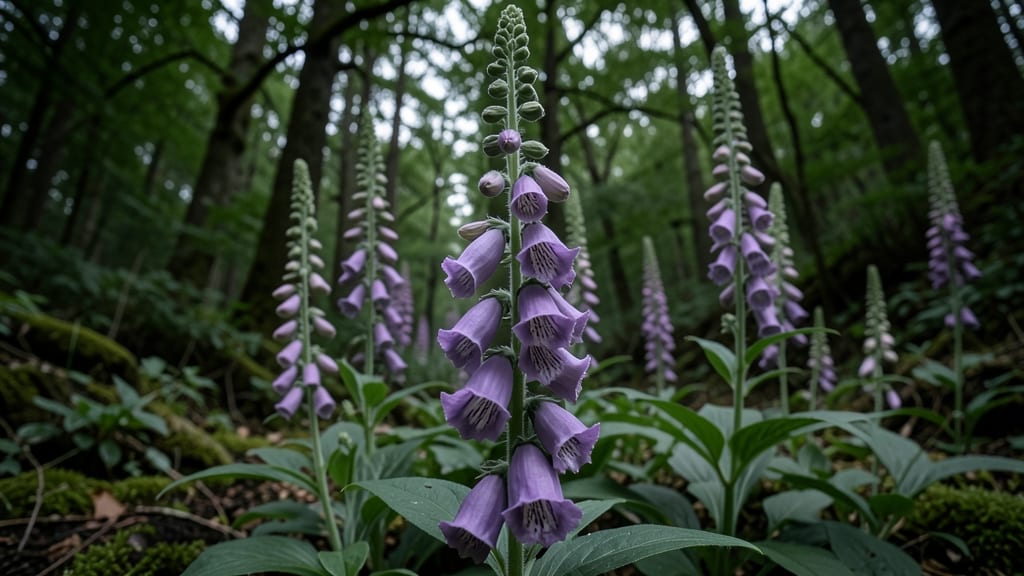
If you're craving a dramatic focal point in your shady garden that reaches for the sky, foxglove (Digitalis purpurea) delivers with its towering, bell-shaped blooms that can soar up to 5-6 feet tall. Unlike most shade perennials, foxglove creates instant vertical interest, making it perfect for the back of borders or as a woodland garden statement plant.
This biennial (but self-seeding) beauty thrives in partial to full shade and moist, well-drained soil, ideal for Zone 6's damp corners. Plant seeds in early fall for spring blooms, or transplant young plants in spring or early summer. Deadhead spent flowers to encourage more blooms, but leave some seed pods for next year's surprise volunteers. Choose varieties like 'Pam's Choice' for pink blooms or 'Giant Candelabra' for deep purple spikes that attract hummingbirds.
Foxglove is a game-changer for gardeners who want instant drama with minimal effort—its striking height and texture create a cottage garden feel while requiring almost no maintenance once established. Perfect for adding dramatic verticals to shady spots where other plants struggle. ✨