
Planting
Fall is the perfect time to plant shade-loving bulbs that promise vibrant spring blooms. These 10 fast-germinating varieties thrive in low-light conditions, offering effortless color for woodlands, under trees, or shady borders.
Snowdrops For Early Winter Interest

When winter’s chill still lingers and most gardens lie dormant, snowdrops (Galanthus) push through the soil like tiny messengers of spring. These delicate white blooms appear as early as January, offering a rare burst of color when little else is in bloom.
Plant them in deep shade under trees or along north-facing walls for a naturalizing effect—each bulb multiplies over time, creating a lush carpet of flowers. They thrive in moist, well-drained soil and tolerate poor conditions, making them ideal for woodland gardens or shady borders. For best results, plant bulbs 3–4 inches deep in fall, spacing them 3–4 inches apart to encourage spreading.
Perfect for gardeners who love low-maintenance beauty, snowdrops reward patience with years of effortless blooms. 🌱
Crocus 'Tommasinianus' For Alpine Gardens

If you’ve got tricky spots in your garden where sunlight barely reaches—like under trees or in rocky crevices—Crocus 'Tommasinianus' is your secret weapon. This hardy purple crocus thrives in partial shade, blooming earlier than most spring flowers and adding late-winter color when little else is in bloom.
Plant these bulbs in well-drained soil mixed with gravel or sand to mimic their natural alpine habitat. They’re ideal for rock gardens or slopes, where their delicate purple flowers peek through gravel or moss. Unlike sun-loving crocuses, Tommasinianus tolerates dappled shade, making it perfect for understory planting where other bulbs struggle.
Gardeners with limited sun or alpine-style spaces will love how this crocus naturalizes over time, creating a carpet of early blooms. It’s also deer-resistant, so you won’t lose your investment to hungry critters. 🌱
Bleeding Heart 'Dicentra Spectabilis'

If you're dreaming of a woodland garden that feels like a secret fairy retreat, Bleeding Heart (Dicentra spectabilis) is your star player. Unlike traditional bulbs, this classic shade perennial delivers dramatic, heart-shaped blooms that naturalize beautifully—think cascading pink or white flowers that dance in spring breezes.
Plant the rhizomes in well-drained soil with partial to full shade, mimicking the dappled light of a forest floor. They thrive in moist, humus-rich soil and reward you with 3-4 weeks of blooms in late spring. For best results, mulch heavily to protect roots and divide clumps every 3-4 years to prevent overcrowding. This plant also pairs perfectly with hostas or ferns for a lush understory effect.
Perfect for gardeners who love low-maintenance drama, Bleeding Heart is especially magical in urban gardens with mature trees or along north-facing foundations. Its ability to spread makes it a long-term investment for shade lovers. 🌷
Glory Of The Snow 'Chionodoxa'

When you crave a burst of color in early spring but lack full sun, Glory of the Snow (Chionodoxa) delivers with its striking blue star-shaped blooms. This tiny but mighty bulb thrives in conditions where other plants struggle, making it ideal for shaded borders, woodland edges, or even rocky crevices where water pools.
Plant these bulbs in well-drained soil mixed with gravel or sand to prevent rot, especially in clay-heavy areas. Their natural preference for rocky or sandy soil mimics their Mediterranean origins, and they’ll reward you with clusters of flowers that appear before many perennials wake up. A handful of bulbs creates a dramatic display, perfect for underplanting shrubs or framing evergreen hedges.
Urban gardeners with limited space or woodland gardeners seeking early color will love how Chionodoxa naturalizes over time, creating a self-sustaining carpet of blue. It’s also deer-resistant and drought-tolerant once established—ideal for low-maintenance shade gardens. 💚
Lungwort 'Pulmonaria Officinalis'

If you’re tired of dull green foliage in your shady spots, lungwort (Pulmonaria officinalis) is your secret weapon. This underrated perennial steals the show with its silver-spotted leaves that turn chartreuse in spring, paired with vibrant blue or pink blooms that appear before most other perennials wake up.
Unlike finicky shade plants, lungwort thrives in dry shade once established, making it perfect for understory planting or woodland gardens where moisture lingers. Plant crowns just below soil level in well-drained, humus-rich soil—it tolerates everything from clay to sandy loam as long as it’s not waterlogged. The spotted foliage remains attractive even after blooms fade, providing year-round interest with minimal effort.
Ideal for gardeners who love low-maintenance perennials with texture, lungwort pairs beautifully with hostas or ferns while attracting early pollinators. Its ability to spread slowly makes it a long-term investment for shady borders. 🌿
Winter Aconite 'Eranthis Hyemalis'

When your garden feels like it’s taking a winter nap and you crave a splash of sunshine, winter aconite (Eranthis hyemalis) is your secret weapon. This cheerful little bulb bursts into bright yellow blooms as early as February, often while snow still lingers—making it one of the first signs that spring is on its way.
Unlike many shade bulbs, winter aconite thrives in moist, well-drained soil that stays consistently damp, making it perfect for under conifers or along northern exposures where other plants struggle. Plant the bulbs 2–3 inches deep in fall, spacing them 3–4 inches apart for a natural look. They’ll spread over time, creating a golden carpet that brightens dark corners. Just avoid soggy soil—they hate being waterlogged.
This bulb is a game-changer for gardeners with shady, cool microclimates or those who want to add early color to container gardens or woodland edges. It’s also deer-resistant, so you won’t lose your investment to hungry critters. 🌻
Scilla Siberica For Woodland Gardens

When your garden feels like a shadowy stage waiting for its spotlight, Scilla siberica steps in with its delicate blue star-shaped blooms that appear like magic in early spring. Unlike finicky bulbs that demand sunlight, this woodland gem thrives in the deepest shade, where most plants give up—making it perfect for understory planting or shaded lawns.
Plant these bulbs in well-drained soil mixed with compost to encourage naturalization, and watch them multiply over time. They spread easily through self-seeding, creating a self-sustaining carpet of color that lasts for years. Their grass-like foliage stays attractive even after blooms fade, providing year-round interest with minimal effort. For best results, plant bulbs 3 inches deep in fall, spacing them 3–4 inches apart to encourage spreading.
Ideal for gardeners with woodland gardens or shady spots that feel neglected, Scilla siberica brings life to forgotten corners while attracting early pollinators. Its ability to thrive in deep shade makes it a must-have for low-maintenance gardeners. 🌿
Hellebore 'Lenten Rose' For Late Winter Color

When late winter feels bleak and most gardens are still asleep, Hellebore 'Lenten Rose' emerges like a quiet promise of spring. These evergreen perennials defy the cold with their nodding flowers that bloom from February through April, offering soft pink, white, or green hues when little else is in bloom.
Unlike finicky shade plants, Hellebores thrive in deep shade—even under dense tree canopies—and once established, they tolerate dry conditions better than most bulbs. Plant the corms 2–3 inches deep in well-drained soil mixed with compost, spacing them 8–12 inches apart for a natural look. Their leathery, evergreen leaves provide year-round texture, while the flowers attract early pollinators like bees and butterflies.
This is the perfect choice for gardeners with shady, low-maintenance spaces, including urban courtyards, woodland gardens, or rockeries. Hellebores also resist deer and rabbits, making them a reliable investment for problem areas. 🌿
Daffodil 'Tête-à-Tête' For Containers

If you’ve ever struggled to grow daffodils in shady spots, Daffodil 'Tête-à-Tête' is your game-changer. This compact variety thrives in partial to full shade, producing cheerful bright yellow blooms that brighten up containers, understory plantings, or even north-facing borders where other daffodils would struggle.
Unlike traditional daffodils that demand full sun, 'Tête-à-Tête' grows just 6–8 inches tall, making it perfect for containers, window boxes, or understory planting where space is limited. Plant bulbs 3–4 inches deep in well-drained soil mixed with compost, and they’ll reward you with blooms in early spring. This variety is also deer-resistant and multiplies over time, creating a self-sustaining display with minimal effort.
Urban gardeners with balconies, patio planters, or shady corners will love how this daffodil brings bold color to forgotten spaces. It’s also ideal for pairing with hostas or ferns in woodland gardens where sunlight is scarce. 🌱
Allium 'Globemaster' For Dramatic Height

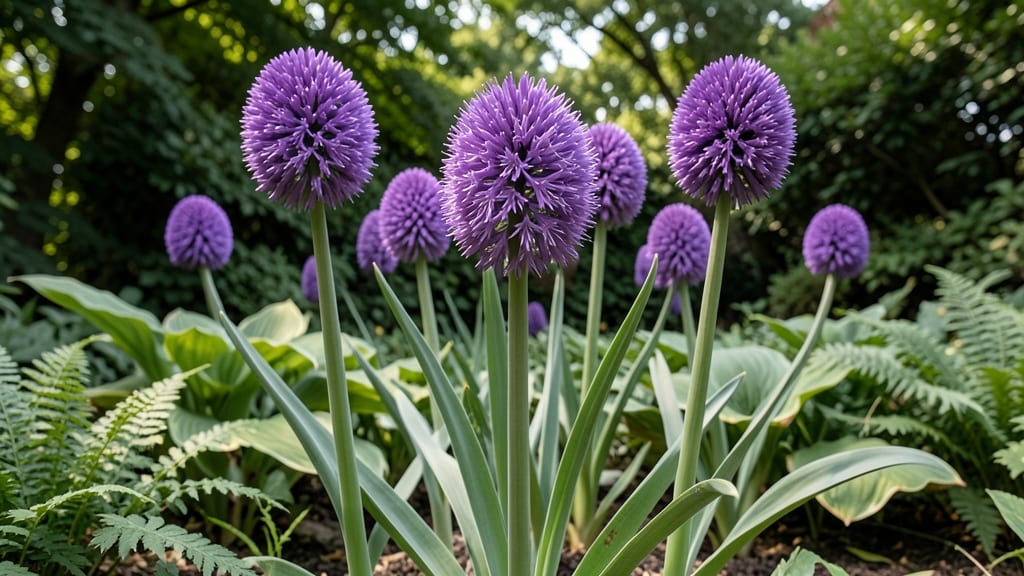
When your shade garden feels flat and needs a vertical pop of drama, Allium 'Globemaster' delivers with its striking spherical purple blooms that rise like purple balloons on stems reaching 3-4 feet tall. Unlike most shade plants that stay low to the ground, this allium creates instant height and structure, making it perfect for cutting gardens or as a focal point in shady borders.
Thriving in partial shade (3-6 hours of sun), 'Globemaster' adapts to a wider range of light conditions than most bulbs, making it ideal for understory planting or containers on shaded patios. Its late spring blooming time (May-June) coincides with peak pollinator activity, attracting bees and butterflies when few other shade plants are in flower. For best results, plant bulbs 6 inches deep in well-drained soil and space them 8-12 inches apart to showcase their dramatic form.
Perfect for gardeners who want dramatic height without sunlight demands, this allium pairs beautifully with hostas or ferns while adding architectural interest to shady corners. Its long vase life makes it a standout cut flower too—ideal for gardeners who love both the garden and the bouquet. 🌟