
Size
Struggling to make your shady garden thrive? These 10 compact perennial plants not only survive in low-light conditions but also add texture, color, and year-round interest to small spaces—without overwhelming your landscape.
Hostas With Unique Variegated Leaves

If you’ve ever thought a shady garden was destined for dullness, think again—variegated hostas turn low-light spaces into lush canvases of color. These perennials thrive in deep shade, offering striking foliage in shades of blue-green, gold, and white that brighten even the darkest corners of your yard.
Hostas are beginner-friendly because they’re nearly indestructible: they tolerate moist, well-draining soil, require minimal pruning, and grow slowly to avoid crowding. Choose varieties like 'Francee' (blue-green with white edges) or 'Halcyon' (chartreuse with white stripes) for maximum visual impact. Plant them in clusters to create a bold, textured foundation for other shade plants.
Perfect for urban gardeners with limited sunlight or beginners who want instant gratification, hostas deliver year-round interest with minimal effort. Just watch for slugs—mulch heavily to deter them! 🌱
Coral Bells (Heuchera) For Vibrant Foliage

Tired of dull, green-only shade gardens? Coral bells (Heuchera) bring bold color and texture to dark corners with foliage in deep purple, silvery blue, or lime green—all while staying compact enough for containers or tight borders.
These shade-loving perennials thrive in partial to full shade and prefer well-draining soil to prevent root rot. Their ruffled leaves add dimension, and some varieties even produce delicate flowers on tall stems. Choose dwarf types like 'Palace Purple' (12" tall) for containers or 'Lime Rickey' for a bright pop in shady spots.
Perfect for urban gardeners with limited space or anyone wanting to brighten dark corners, coral bells offer year-round interest since their foliage rarely fades. 💚
Japanese Fern (Athyrium) For Delicate Fronds

Want to add a whisper of elegance to your shady garden without the fuss? The Japanese fern (Athyrium) brings ethereal, feathery fronds that dance in the breeze, creating a woodland retreat right in your backyard. Its lacy foliage thrives in partial to full shade, making it perfect for understory planting where sunlight is scarce.
This fern is a dream for low-maintenance gardeners—it tolerates moist, well-draining soil and even handles occasional dry spells once established. Varieties like 'Ghost' (silvery-blue fronds) or 'Silver Falls' (arching stems) add architectural interest while keeping a natural, airy look. Pair it with hostas or astilbe for a layered, forest-inspired bed.
Ideal for gardeners who love texture over flashy blooms, Japanese ferns bring year-round interest with minimal upkeep. They’re also slug-resistant compared to other shade plants, making them a practical choice for problem spots. 🌿
Bleeding Heart (Dicentra) For Spring Blooms

Want to transform your shady garden into a romantic springtime haven? Bleeding heart (Dicentra) brings delicate, heart-shaped blooms that cascade like a waterfall—perfect for adding soft elegance to borders, containers, or woodland gardens.
This shade-loving perennial thrives in partial to full shade and produces clusters of pink, white, or red flowers from late spring through summer. Plant in groups of three or more for a dramatic, cascading effect, and pair with hostas or ferns to extend the seasonal interest. Water consistently to keep the soil evenly moist, and mulch to protect roots during winter. 💚
Bleeding heart is ideal for gardeners who love cottage-style gardens or want to add vertical interest without sacrificing shade tolerance. The more you plant, the more your garden will feel like a secret springtime retreat. ✨
Solomon’s Seal (Polygonatum) For Elegant Arching Stems

When your garden space is narrow but you still crave height and drama, Solomon’s seal (Polygonatum) delivers with its arching, graceful stems that reach 3-4 feet tall while staying only 1-2 feet wide. This shade-loving perennial thrives where others falter, producing dangling white flowers that nod like tiny bells along its stems, followed by edible blue berries in late summer.
Plant in partial to full shade with moist, well-draining soil—it’s happiest under trees or along north-facing walls. The glossy, lance-shaped leaves provide year-round interest, and its clumping habit makes it a low-maintenance choice for borders or woodland gardens. Best of all, it’s deer-resistant, so you won’t have to worry about hungry critters nibbling away your hard work.
Urban gardeners and small-space enthusiasts will love how Solomon’s seal adds vertical interest without stealing precious square footage. Pair it with hostas or ferns for a lush, layered look that feels like a secret garden. 🌿
Astilbe For Fluffy Plume Flowers

Looking for a dramatic yet soft way to brighten shady spots in your garden? Astilbe delivers with its feathery plumes in pink, white, or red—perfect for containers or borders where you want height without sacrificing romance. These shade-loving perennials thrive in partial to full shade, making them ideal for under trees or along north-facing walls.
Astilbe’s airy blooms appear in late spring to early summer, lasting for weeks, and their fern-like foliage provides year-round texture. Choose varieties like 'Fanal' (deep red) or 'Deutschland' (pink) for maximum impact. Deadhead spent blooms to encourage more flowers, and mulch to retain moisture—these plants love consistently damp soil but hate soggy roots.
Urban gardeners and small-space enthusiasts will love how astilbe adds vertical drama without taking up much room. Pair it with hostas or ferns for a lush, layered look that feels like a secret garden retreat. 🌻
Lungwort (Pulmonaria) For Early Spring Color

When your garden still looks bare in early spring, lungwort (Pulmonaria) steps in like a cheerful early guest, offering spotted silver-green leaves and delicate blue or pink flowers that appear before most perennials even think about waking up.
This shade-tolerant perennial thrives in partial to full shade and prefers moist, well-draining soil, making it perfect for woodland gardens, under trees, or along north-facing walls. Its unique foliage—often marked with white or silver spots—adds visual interest even when not in bloom, while the flowers attract early pollinators like bees. Plant in clusters for a natural, cottage-garden feel, and pair with hostas or ferns to extend the seasonal display.
Ideal for gardeners who want early color without the fuss, lungwort is also deer-resistant and drought-tolerant once established, making it a reliable choice for low-maintenance shade gardens. 🌷
Sweet Woodruff (Galium odoratum) For Ground Cover

Tired of battling weeds in shady garden spots? Sweet woodruff (Galium odoratum) is your secret weapon—a fragrant, low-growing ground cover that spreads gently to smother weeds while releasing a vanilla-like scent when crushed. This shade-loving perennial thrives in moist, well-draining soil and forms a lush, green carpet perfect for under trees, along pathways, or in woodland gardens.
Plant in partial to full shade and expect delicate white flowers in late spring. Its star-shaped leaves create a soft, textured mat that suppresses weeds naturally. Unlike aggressive spreaders, sweet woodruff grows slowly and stays contained, making it ideal for small gardens or tight spaces. It also attracts pollinators like bees, adding another layer of garden charm.
Perfect for gardeners who want a low-maintenance, fragrant solution for shady areas, sweet woodruff is especially great for urban gardeners with limited space or anyone seeking a sensory-rich garden experience. 🌿
Toad Lily (Tricyrtis) For Late-Season Interest

When most of your garden seems to fade into dormancy by fall, toad lily (Tricyrtis) steps in like a dramatic late-season star. Its unusual purple-and-white striped flowers bloom from late summer through frost, creating a magical contrast against the green backdrop of ferns and hostas.
This shade-loving perennial thrives in partial to full shade and prefers moist, well-draining soil—ideal for woodland gardens or under trees. The spider-like blooms appear on upright stems (18-24 inches tall) and attract hummingbirds, extending your garden's pollinator season. Deadhead spent blooms to encourage more flowers, and divide clumps every 3-4 years to maintain vigor.
Perfect for gardeners who crave year-round interest, toad lilies are especially rewarding for those with woodland or cottage-style gardens. Their unique foliage and flowers create focal points that keep your garden lively long after other perennials have retired for winter. 🌷
Dwarf Crested Iris For Bold Foliage

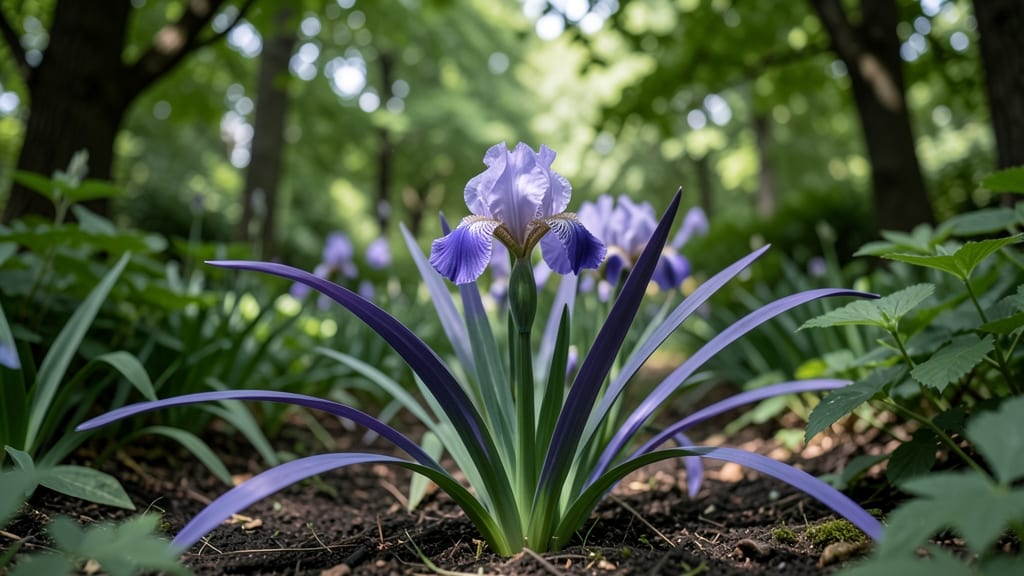
Looking for a shade-loving perennial that delivers drama in miniature form? The dwarf crested iris (Iris cristata) steals the show with its sword-like, deep purple foliage—a striking contrast to most shade plants. Unlike its taller cousins, this compact beauty stays under 12 inches tall, making it perfect for small gardens, rockeries, or even container plantings where you want bold texture without bulk.
This native woodland plant thrives in partial to full shade and prefers moist, well-draining soil, though it tolerates occasional dry spells once established. In late spring, it rewards you with delicate lavender-blue flowers that hover just above the foliage, attracting early pollinators. The key to keeping it happy? Mulch well to retain moisture and prevent weeds from competing—its clumping habit means it won’t spread invasively, making it a low-maintenance star.
Urban gardeners and small-space enthusiasts will love how the dwarf crested iris adds architectural interest without overwhelming tight spots. Pair it with hostas or ferns for a layered, woodland-inspired look that feels intentional yet effortless. 💚