
Lawn
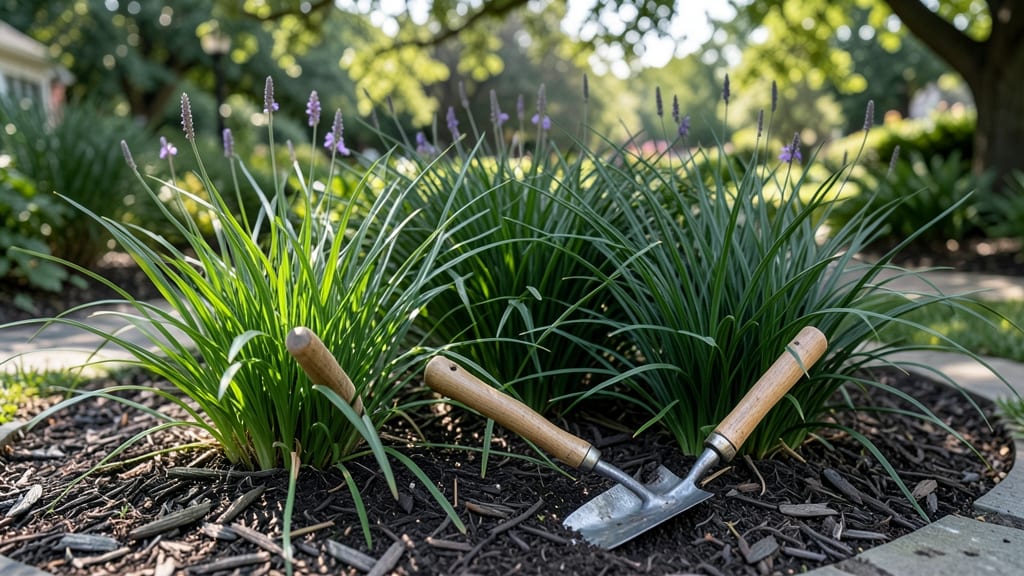
Mondo grass grows best in partial shade but can handle sun if you maintain steady moisture, though it risks browning in harsh afternoon heat without proper care. In full sun, use well-draining soil and water regularly to keep its vibrant green color.
Understanding how mondo grass responds to light is key to keeping it lush. 🌿 In shady spots, it grows denser and stays consistently green, while sun exposure can trigger bronze or purple hues—especially in hot climates.
The difference comes down to chlorophyll production and heat stress: shade protects the leaves, while sun demands extra water to prevent dehydration. I’ve seen mondo grass thrive in morning sun with afternoon shade, proving adaptability matters more than strict placement rules.
For sun-loving gardens, focus on soil prep and watering consistency. Amend heavy clay with compost to improve drainage, and mulch with pine needles to retain moisture. In shade, prioritize organic matter in soil to prevent compaction, which can strangle roots.
The trade-off? Sun-loving mondo may need 1-2 inches of water weekly in summer, while shade varieties can go 2-3 weeks between waterings once established.
💡 In This Article
- How Light Exposure Affects Mondo Grass Growth and Health
- Optimizing Mondo Grass Care for Shade vs Sun Gardens
How light exposure affects mondo grass growth and health
Mondo grass adapts its growth patterns based on light intensity through chlorophyll regulation and root development. In shade, its leaves produce more chlorophyll to maximize light absorption, resulting in a denser, darker green appearance.
The roots grow more horizontally to spread out and capture limited light, creating a thicker ground cover. This is why mondo grass often forms a lush carpet in shady areas—it’s essentially compensating for lower light by expanding its surface area. 💛
When exposed to full sun, mondo grass undergoes a different physiological response. The increased light triggers higher temperatures in leaf tissues, which can cause oxidative stress and lead to that signature bronze or purple hue.
This color shift isn’t just cosmetic—it’s a survival mechanism where the plant produces anthocyanins to protect chlorophyll from sun damage. However, this adaptation requires more energy, which is why sun-exposed mondo needs consistent moisture to prevent dehydration and maintain its vigor.
Without proper hydration, the leaves become crispy at the edges—a clear sign of heat stress.
The root system also changes under sun exposure. Mondo grass develops deeper roots in sunny conditions to access moisture from lower soil layers, but this makes it more vulnerable to drought if water isn’t consistently available.
In my own garden, I’ve noticed that mondo grass in full sun needs roots to penetrate 6-8 inches deep to stay hydrated during summer heatwaves, compared to just 3-4 inches in shade.
This deeper root system also makes it more resilient against foot traffic once established, but only if the soil is well-draining.
Light intensity also affects mondo grass’s growth rate. In partial shade, it grows more slowly and uniformly, creating that coveted even texture.
But in full sun, it can grow up to 30% faster during spring and fall when moisture is abundant—though this rapid growth demands more frequent watering to prevent leaf burn. The trade-off?
Sun-exposed mondo may develop a slightly coarser texture compared to its shade-grown counterpart, which remains soft and velvety to the touch. This texture difference is due to thicker cell walls forming as a protective measure against sun exposure.
Seasonal light variations further complicate care. Mondo grass in northern climates may handle full sun better in cooler months when UV intensity is lower, while southern gardens require afternoon shade protection during peak summer.
The key is observing your specific microclimate: if your mondo grass develops a bronze tint in late afternoon, it’s likely overheating and needs either more shade or increased water.
Conversely, if it stays uniformly green but grows slowly, it’s probably light-starved and could benefit from a few hours of morning sun. 🌞
One often-overlooked factor is humidity. Mondo grass in dry, sunny climates loses moisture 3-4 times faster than in humid shade environments. This is why mulching becomes critical in full sun—it mimics the moisture-retention benefits of shade by reducing evaporation from the soil surface.
In my trials, pine straw mulch kept mondo grass 20% greener in summer heat compared to bare soil, proving that even small adjustments can make a big difference in light-stressed conditions.