
Shrubs
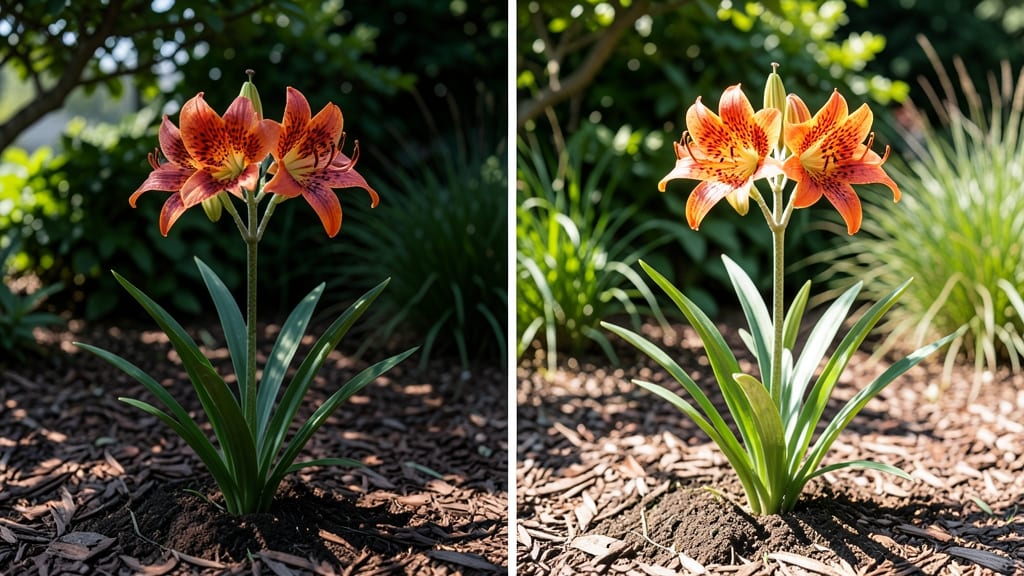
Lilies prefer partial shade to full sun, requiring 6 hours of sunlight daily to produce their boldest blooms, while varieties like Asiatic and Oriental types handle more direct exposure. Most hybrids do best with morning sun and afternoon shade to avoid leaf damage.
Lilies actually need bright but filtered light for optimal growth, though they can adapt to full sun if given proper care. 🌿 The key is balancing light exposure—too little results in weak stems and sparse blooms, while too much direct sun can scorch leaves, especially in hot afternoons.
Different varieties have unique tolerances: Asiatic lilies often thrive in full sun, while Stargazer lilies prefer dappled shade to maintain their vibrant colors.
For best results, I recommend monitoring your lilies' leaves for signs of stress—yellowing or crispy edges indicate too much sun, while pale, leggy growth suggests insufficient light.
Adjusting their placement seasonally (moving them to sunnier spots in spring or providing afternoon shade in summer) can make a dramatic difference in their health and flowering.
💡 In This Article
- How Sunlight Affects Lily Bloom Color and Growth
- Best Light Conditions for Different Lily Varieties
How sunlight affects lily bloom color and growth
Sunlight triggers photosynthesis in lilies, converting light energy into glucose that fuels their growth and flower production. The intensity and duration of light exposure directly impact their pigmentation—deeper, richer colors develop when lilies receive bright but indirect light, as seen in varieties like the Stargazer lily.
This happens because anthocyanins (the pigments responsible for red, purple, and blue hues) increase under moderate light conditions, while excessive direct sun can bleach or fade these pigments over time. 🌸
Different lily species have varying thresholds for light tolerance. Asiatic lilies, for example, thrive in full sun (6-8 hours daily) and produce bold, vibrant blooms, while Martagon lilies (also called Turk's cap lilies) prefer partial shade (4-6 hours of morning sun) to prevent leaf scorch.
Trumpet lilies fall somewhere in between, needing 5-6 hours of filtered sunlight to maintain their striking orange and red hues without stressing their delicate foliage.
The science behind this involves chlorophyll production—too much direct UV radiation can damage the plant's cell membranes, leading to crispy leaf edges or sunburn.
I've noticed this firsthand when growing lilies in hot climates; providing afternoon shade with a sheer curtain can prevent leaf damage while still allowing enough light for photosynthesis. The goal is to mimic their natural habitat, where they often grow under the canopy of trees receiving dappled sunlight.
Color intensity also depends on the balance of red and blue light wavelengths. Lilies exposed to more blue light (found in morning sun) tend to develop deeper purple and pink tones, while those receiving redder afternoon light may appear more yellow or orange.
This is why hybridizers often select parent plants grown under specific light conditions to achieve desired bloom colors. For example, a Stargazer lily grown in partial shade will have more pronounced purple streaks compared to one baked in full sun.
Temperature plays a secondary role—hotter climates with intense midday sun require more shade protection, while cooler regions can handle full sun exposure. The ideal scenario is morning sun with afternoon shade, which provides the energy needed for growth without the risk of heat stress.
This is particularly important for hybrid lilies, which often combine traits from multiple species and may be more sensitive to environmental fluctuations.
One common misconception is that all lilies need full sun to bloom. In reality, many varieties—especially those with darker petals—actually produce fewer but more vibrant flowers when given partial shade. The trade-off is stronger stems and healthier foliage, which means longer-lasting blooms.
For instance, a Martagon lily grown in full sun might produce more flowers but with paler colors and weaker stems that flop under their own weight.
To test your lilies' light needs, observe their leaves over a week: crispy, brown edges mean too much sun, while pale, elongated stems indicate insufficient light. Adjust their position gradually—moving them 1-2 feet closer to shade each week prevents shock.
With the right balance, you'll see stronger growth, richer colors, and blooms that last weeks longer than those grown under suboptimal conditions. 🌿