
Shrubs
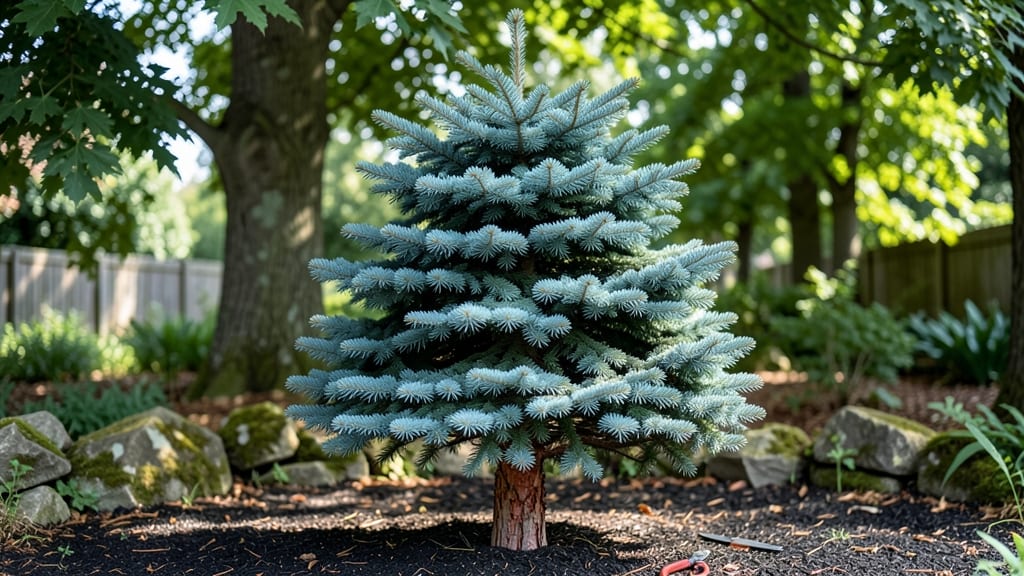
Leyland cypress handles partial shade but grows best in full sun, developing slower and less dense foliage when light is limited. Excessive shade weakens branches and makes the tree more vulnerable to pests. For healthy growth, provide at least 4-6 hours of sunlight daily.
Understanding how much shade Leyland cypress can handle starts with its natural growth habits. 🌳 These evergreens are naturally sun-loving plants, and when they don't get enough light, their growth slows dramatically. You'll notice thinner branches and sparser foliage, which makes the tree look less full and more leggy.
The key is finding that balance—too little light stresses the plant, while too much direct shade can create an environment where pests thrive.
If you're planting in an area with limited sunlight, consider positioning the tree where it can get morning sun and afternoon shade. This gradual exposure helps the Leyland cypress adapt without shocking its system.
For existing trees in shady spots, you might need to supplement with occasional pruning to encourage denser growth and maintain structural integrity.
What's interesting is how Leyland cypress reacts differently to shade in various seasons. In winter, when days are shorter, even partial shade might feel more intense, so monitoring the tree's health during these months is especially important.
Adjusting your care routine—like watering less frequently in shaded areas—can make a big difference in keeping your tree thriving.
💡 In This Article
- How Shade Affects Leyland Cypress Growth and Health
- Optimal Light Conditions for Leyland Cypress Planting
How shade affects Leyland cypress growth and health
When Leyland cypress trees face shade, their growth rate drops significantly due to reduced photosynthesis. These trees rely on sunlight to produce energy, and with less light, they allocate resources toward survival rather than expansion.
You'll notice branches stretching toward any available light—a phenomenon called etiolation—resulting in a less compact, more spindly appearance. The foliage also becomes sparser, with needles growing farther apart along the branches, which weakens the tree's natural wind resistance.
The real damage happens at the cellular level. Shade triggers hormonal imbalances, particularly reducing auxin production—the growth hormone that strengthens woody tissue.
Without sufficient auxin, the branches become weaker and more prone to breakage, especially during storms or heavy snow. 🌿 In extreme cases, prolonged shade can lead to fungal infections because the damp, shaded environment creates ideal conditions for pathogens like Phytophthora, which thrives in low-light, high-moisture settings.
Foliage density takes a hit too. In full sun, Leyland cypress develops a thick, lush canopy with tightly packed needles that create an effective windbreak. But in shade, the needles grow thinner and more widely spaced, reducing the tree's ability to block wind and retain moisture.
This makes the tree more susceptible to dehydration during dry spells, as the wider gaps allow more water loss through transpiration.
Pests become a bigger problem in shaded conditions. Many insects, like spider mites and aphids, prefer the cooler, more humid environments created by shade. These pests weaken the tree further by feeding on its sap, leaving behind sticky honeydew that attracts mold.
The tree's weakened state makes it harder to fight off these infestations, creating a vicious cycle of declining health.
Seasonal variations matter too. During winter, when daylight is already limited, additional shade can stress the tree further. The reduced energy production means less stored energy for spring growth, leading to slower recovery.
In contrast, summer shade might seem beneficial, but it often traps moisture against the foliage, increasing the risk of fungal diseases like needle blight.
Consider this example: A Leyland cypress in full sun grows about 2-3 feet per year with dense foliage, while one in heavy shade might only grow 6-12 inches annually with sparse, weak branches.
The difference in growth rate and structural integrity is stark, making light exposure a critical factor in long-term health.
To mitigate these effects, supplement shaded trees with occasional pruning to encourage denser growth and improve air circulation. This helps reduce moisture buildup and strengthens the tree's natural defenses against pests and disease. 🌱