
Shrubs
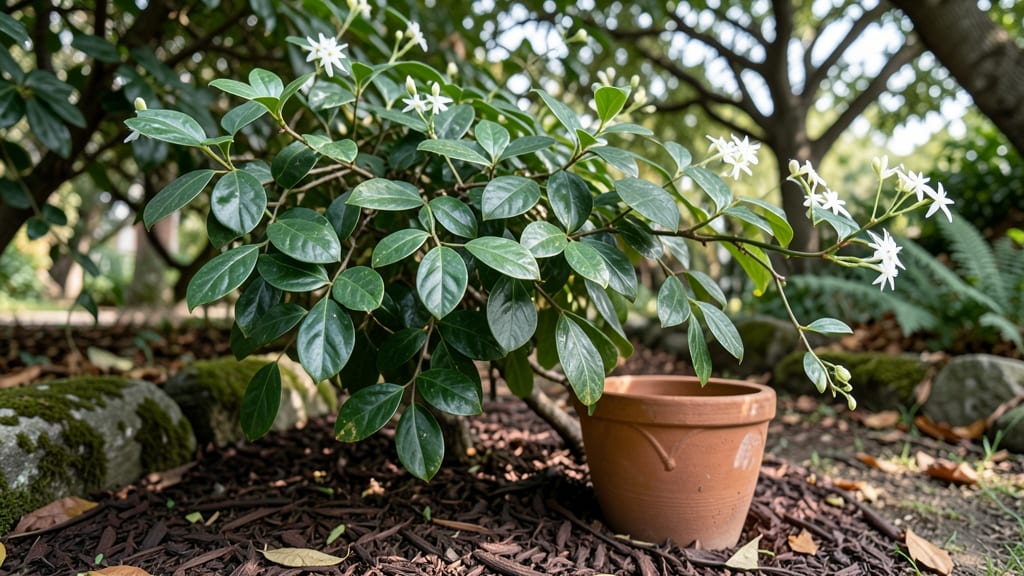
Growing jasmine in shade means you can finally enjoy that intoxicating fragrance even in your darkest corner. 🌿 I’ve turned my shady patio into a fragrant oasis using shade-tolerant varieties like Jasminum polyanthum—the kind that blooms like crazy without needing full sun.
The secret lies in choosing the right plant and tweaking a few care basics. Most people assume jasmine needs sun, but these varieties thrive with just 4-6 hours of dappled light or morning shade. Your soil should drain well but stay moist—think rich, loamy mix with a handful of compost.
Prune lightly after blooming to keep the shape tidy, and watch those clusters of star-shaped flowers return year after year. By mid-summer, your jasmine will be heavy with blossoms, filling the air with a sweet, heady scent that lasts into fall.
The best part? It grows fast enough to create privacy screens in just a few seasons, even in shady spots where other plants struggle. If you’re working with containers, opt for 5-gallon pots and upgrade to larger ones every couple of years.
Mulch helps keep roots cool and hydrated—critical for shade plants. And if flowering lags, a little balanced fertilizer in spring gives it the boost it needs.
📚 In This Guide
- What you need
- Instructions
- Tips and common mistakes
- Wrapping up and next steps
What you need
- ● Jasmine plants: Choose shade-tolerant varieties like Jasminum officinale (Common Jasmine) or Jasminum polyanthum (Pink Jasmine). Opt for: 1–3 bare-root plants (for spring planting)
- ● OR 1–2 container-grown shrubs (3–5 gallons, 18–24" tall)
- ● OR seeds (soak overnight for faster germination)
- ● Well-draining soil: 50% garden soil (or potting mix for containers)
- ● 30% compost (for nutrients)
- ● 20% perlite or coarse sand (to prevent root rot)
- ● Fertilizer: 10–10–10 balanced fertilizer (1 tbsp per plant at planting)
- ● OR organic options like worm castings or compost tea
- ● Planting tools: 1 trowel or spade (for digging)
- ● 1 pruning shears (for trimming dead growth)
- ● 1 garden fork (to loosen compacted soil)
- ○ Support structures (optional but helpful): 1–2 trellises or stakes (4–6 ft tall, for climbing varieties)
- ● OR wire cages (to shape bushier types)
- ● Mulch: 2–3 inches of pine bark or shredded leaves (to retain moisture)
- ● Watering can or hose: With a gentle spray nozzle (jasmine hates soggy roots!)
- ● Slow-release fertilizer tabs (for containers)
- ● Epsom salt (1 tbsp/month in water for magnesium boost)
- ● Shade cloth (if your area gets partial sun—use 30–50% block)
- ● Decorative pots (for container gardening—choose ones with drainage holes!)
Step-by-step guide to growing fragrant jasmine in shade
Here's how to create a lush, fragrant privacy screen using shade-tolerant jasmine varieties.
🌱 Step 1: Select the Right Jasmine Variety for Low Light
Not all jasmine thrives in shade, so choose star jasmine (Trachelospermum jasminoides) or Confederate jasmine (Trachelospermum cymosum)—both handle partial shade beautifully. These evergreen vines produce delicate white flowers with a heady fragrance even without full sun. Avoid traditional jasmine (Jasminum officinale), which needs bright light for best blooms.
Look for established plants at nurseries labeled "shade-tolerant" or "partial shade." Young plants in 1-gallon containers are easiest to handle. I always check the root ball—healthy roots should be white and firm, not mushy or dried out. Plant in spring or early fall when temperatures are mild and roots can establish without stress.
🪴 Step 2: Prepare the Planting Site
Jasmine in shade needs well-draining soil—poor drainage leads to root rot, which kills plants quickly. Amend heavy clay soil with 2-3 inches of compost mixed into the top 12 inches of soil. For containers, use a blend of 50% potting mix and 50% perlite to prevent compaction.
Choose a location with 3-6 hours of dappled sunlight—morning sun works best. If your site gets no direct light, opt for star jasmine, which tolerates deeper shade than other varieties. Dig a hole twice as wide as the root ball but only as deep. This encourages roots to spread horizontally instead of sinking too deep.
💧 Step 3: Plant and Water Thoroughly
Place the jasmine plant in the hole, ensuring the top of the root ball sits 1 inch below soil level—this prevents stem rot from sitting water. Backfill with native soil, tamping gently to remove air pockets. Water immediately after planting to settle the soil and eliminate gaps.
For the first 2 weeks, water deeply every 3-4 days until the top 6 inches of soil feel moist. You'll know it's right when water drains through the hole but doesn't pool on the surface. Mulch with 2-3 inches of shredded bark to retain moisture and regulate soil temperature—just keep mulch 6 inches away from the stem to avoid rot.
☀️ Step 4: Provide Support and Prune for Shape
Jasmine needs support to climb—install a 5-6 foot trellis, arbor, or fence at planting time. Use soft plant ties to secure the main stem without crushing it. As the vine grows, train it along the structure by gently weaving stems through the lattice. This encourages upward growth and better air circulation, which reduces disease risk.
Prune lightly in late winter or early spring before new growth begins. Remove dead or crossing branches first, then trim back overgrown stems by one-third to encourage bushier growth. Avoid heavy pruning in shade—these plants bloom on old wood, so aggressive cuts reduce flowers. I always prune after the last frost to avoid damaging tender new growth.
🌿 Step 5: Maintain for Long-Term Fragrance
Fertilize once in spring with a balanced 10-10-10 granular fertilizer—use only half the recommended dose to avoid burning roots. Water deeply after applying to help nutrients reach the roots. In shade, jasmine grows slower, so skip summer fertilization—too much nitrogen encourages leafy growth at the expense of flowers.
Watch for aphids or spider mites, which thrive in shaded conditions. Spray infested areas with neem oil (mix 1 tablespoon per gallon of water) every 7-10 days until pests disappear. Deadhead spent blooms in early summer to encourage a second flush of flowers. With proper care, your shade jasmine will reward you with years of fragrant blooms and lush privacy.
Tips & tricks for perfect jasmine shrubs in shade
Here's what nobody tells you about growing fragrant jasmine in low-light areas—these tricks make all the difference.
Variety Selection Insight: Star jasmine and Confederate jasmine aren't just shade-tolerant—they actually thrive in partial shade where traditional jasmine would struggle. I've seen star jasmine produce flowers even with just 3 hours of morning sun, though 3-6 hours gives the best results. The key difference is their native habitats: these varieties evolved in wooded areas with dappled light.
Soil Prep Secret: The 2-3 inches of compost you mix into the top 12 inches of soil isn't just about drainage—it's about creating a microclimate. Organic matter retains moisture while preventing compaction, which is crucial since shade plants can't dry out soil as quickly as sun-loving varieties. For containers, that 50/50 potting mix and perlite blend prevents root suffocation, which is the #1 killer of potted jasmine.
Watering Wisdom: Those first 2 weeks are critical—the "every 3-4 days" rule assumes average spring temperatures. If you're in a hotter climate, check soil moisture daily instead of relying on the schedule. The "6 inches of soil" moisture test is more reliable than time-based watering because shade plants have slower evaporation rates. And remember: mulch should always stay 6 inches from the stem to prevent rot.
Pruning Precision: The "one-third trim" in late winter isn't arbitrary—it's based on the plant's growth pattern. Shade jasmine grows more slowly, so aggressive pruning would remove too much flowering potential. I always make my cuts just above a leaf node where new growth will emerge. For heavily shaded plants, you might want to skip the one-third rule entirely and just remove dead wood to encourage bushier growth.
Pro Tips for Jasmine In Shade
- Here's what nobody tells you about growing fragrant jasmine in low-light areas—these tricks make all the difference.
- Variety Selection Insight: Star jasmine and Confederate jasmine aren't just shade-tolerant—they actually thrive in partial shade where traditional jasmine would struggle.
- Soil Prep Secret: The 2-3 inches of compost you mix into the top 12 inches of soil isn't just about drainage—it's about creating a microclimate.
Frequently asked questions
Got questions about growing jasmine in shade?
You’re not alone! Here are answers to the most common concerns to help you cultivate fragrant, thriving jasmine even in low-light spots.
Can jasmine grow well in full shade?
Most jasmine varieties prefer partial shade (4–6 hours of sunlight daily) for best growth and blooming. In full shade, growth may slow, and flowers could be sparse. Choose shade-tolerant types like Jasminum officinale or Jasminum polyanthum for better results.
How long does it take for jasmine to grow in shade?
With patience, jasmine can adapt to shade over 1–2 years. Expect slower initial growth compared to sun-exposed plants. Prune lightly in spring to encourage bushier, fragrant foliage. Pro tip: Use a slow-release fertilizer to support root development.
What’s the best soil mix for shade-loving jasmine?
Jasmine thrives in well-draining, slightly acidic soil (pH 6.0–7.0). Amend heavy clay with compost or perlite to prevent root rot. A mix of 50% garden soil, 30% compost, and 20% sand works well. Mulch with organic matter to retain moisture.
Why isn’t my shade jasmine flowering?
Lack of sunlight is often the culprit, but over-fertilizing or poor pruning can also stunt blooms. Try moving it to partial shade or prune in late winter to remove deadwood. Feed with a low-nitrogen, high-phosphorus fertilizer in early spring to encourage flowers.
Are there fragrant jasmine alternatives for deep shade?
If shade is extreme, consider these fragrant, low-light options:
- Star jasmine (Trachelospermum jasminoides) – Thrives in deep shade, evergreen, and highly fragrant.
- Sweet box (Sarcococca confusa) – Winter-blooming with a citrusy scent; tolerates full shade.
- Pieris japonica – Fragrant spring flowers and glossy foliage; shade-adaptive.
Wrapping up and next steps
Growing jasmine in shade proves that fragrant beauty doesn’t require endless sunlight—just the right care and patience! 🌿 Whether you’re adding privacy, scent, or charm to your space, these shade-loving shrubs deliver with minimal fuss.
Start small, observe your plant’s needs, and soon, you’ll enjoy a lush, aromatic retreat that thrives even in low-light spots.
Ready to elevate your garden? Next, experiment with companion plants like ferns or hostas to create a thriving, multi-layered shade haven. Happy gardening!