
Shrubs
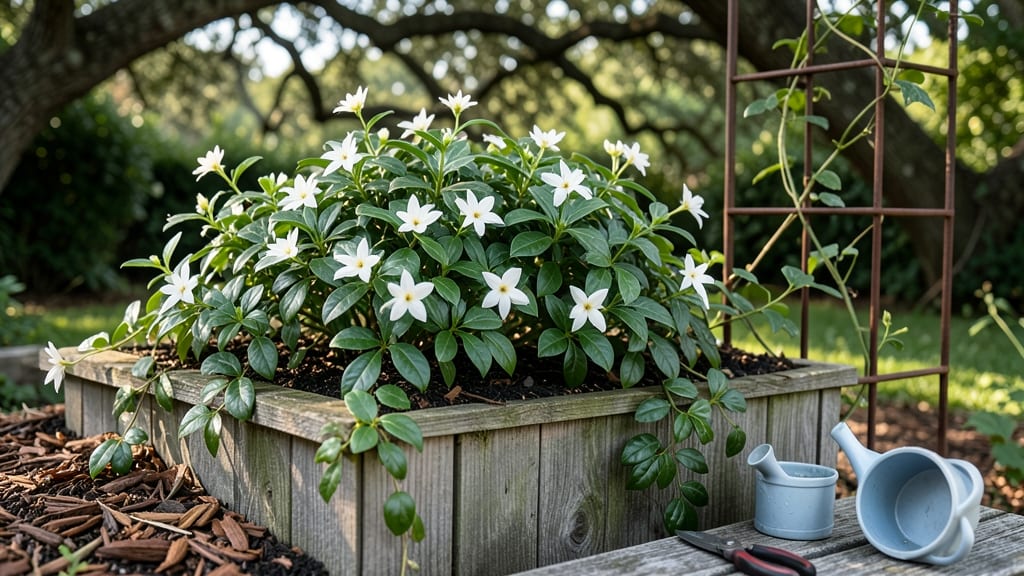
Confederate jasmine thrives in shade where most climbers give up. 🌿 I've grown it under towering oaks and along north-facing walls, and its glossy leaves and heady jasmine scent make it the star of my shady garden corners.
The key is partial shade—think morning sun with afternoon relief or dappled light all day. Too much direct sun scorches the leaves, but full shade slows growth. Amend heavy clay soil with compost, and water consistently but avoid soggy roots.
By summer, you'll have fragrant blooms climbing trellises or cascading from containers. The plant handles humidity well, making it perfect for southern gardens where heat and shade collide. Prune lightly in late winter to shape it, and watch for spider mites in dry shade.
With the right spot, this shade-lover becomes the most fragrant climber in your garden.
📚 In This Guide
- What you need
- Instructions
- Tips and common mistakes
- Wrapping up and next steps
What you need
- ● Confederate Jasmine Plant: 1 nursery-grown plant (3-5 gallons, 18-24" tall) or
- ● 5-10 rooted cuttings (4-6" long) or
- ● Seeds (if starting from scratch—germination is slow!)
- ● Well-draining potting mix: 2-3 cubic feet (for containers) or amended garden soil (50% native soil + 50% compost)
- ● Organic mulch: 2-3 inches of shredded bark or pine needles (to retain moisture and suppress weeds)
- ● Slow-release fertilizer: 10-10-10 or balanced organic fertilizer (1 tbsp per plant at planting)
- ● Pruning shears: Sharp, sterilized shears (for trimming and shaping)
- ● Garden trowel or spade: For digging holes (12-18" wide/deep for nursery plants)
- ● Watering can or hose with gentle spray nozzle: Confederate Jasmine hates soggy roots!
- ○ Gloves (optional): Protect your hands from thorns and soil
- ● Stakes or trellis: 6-8 ft tall (for vertical growth—this climber loves to sprawl!)
- ○ pH testing kit (optional): Ideal soil pH: 6.0–7.0 (slightly acidic to neutral)
- ● 🌡️ Best planting time: Early spring or fall (avoid extreme heat or frost).
- ● ✨ Shade lovers: Choose a spot with partial to full shade (2-6 hours of dappled light max).
- ● 🔥 Container growing? Use a pot with drainage holes and repot every 2-3 years.
How to plant and care for Confederate jasmine in shade
This fragrant climber thrives where others falter—here’s how to grow it lush and blooming in deep shade.
🌱 Step 1: Choose the Perfect Shady Spot
Confederate jasmine (Trachelospermum jasminoides) handles shade better than most vines, but it still needs dappled light or partial shade—think 4-6 hours of filtered sunlight daily. Avoid dense, dark shade where leaves stay deep green and growth stalls. I test spots by watching how nearby plants perform: if hostas and ferns thrive, your jasmine will too.
Look for locations near north-facing walls, large trees with open canopies, or east-facing porches. The vine will climb naturally on trellises, fences, or even tree branches—just ensure the support can handle its 10-15 foot spread over time. If your yard is truly dark, mix in a small grow light (12 hours/day) during winter to keep it blooming.
🪴 Step 2: Prepare Well-Draining Soil and Plant
This vine hates soggy roots, so amend heavy or clay soil with 3 inches of compost and 1 inch of coarse sand or perlite to improve drainage. I dig a hole twice as wide as the root ball but only as deep as the container’s base—planting too deep suffocates the roots. Loosen the soil around the edges to encourage root spread.
Place the plant so the top of the root ball sits level with the ground. Backfill with native soil mixed with compost, pressing gently to remove air pockets. Water deeply right after planting to settle the soil—you’ll see the surface firm up slightly. Mulch with 2 inches of shredded bark (not wood chips) to retain moisture and suppress weeds.
☀️ Step 3: Water and Fertilize for Strong Growth
Water once a week in shade, but check the soil first—stick your finger 2 inches deep. If it feels dry, water until moisture reaches 6 inches down. Overwatering in shade leads to yellow leaves and root rot, so I always err on the side of slightly dry soil. In hotter months, increase to every 4-5 days if the mulch looks dry.
Feed lightly in spring with a balanced 10-10-10 fertilizer (follow package rates) to encourage blooms. Too much nitrogen makes leaves grow fast but flowers sparse. I skip fertilizer in fall and winter—this vine stores energy for next year’s blooms. Watch for dark green, glossy leaves as a sign it’s happy; pale or yellowing leaves mean it’s time to adjust water or light.
✂️ Step 4: Prune for Health and Fragrance
Prune right after blooming (late spring) to shape the vine and encourage more flowers. Cut back overly long stems by 1/3 to improve airflow and reduce disease risk. I also remove any dead, crossing, or inward-growing branches—this keeps the plant open and fragrant. Avoid heavy pruning in fall, as new growth won’t harden off before winter.
Train young vines with soft ties to their support—never force them to climb too quickly. Mature vines can handle pruning in early spring if needed, but I prefer to wait until after blooms to avoid cutting off next year’s flowers. The goal is to keep the vine open and airy, so it doesn’t develop fungal issues in humid shade.
⏰ Step 5: Protect in Winter and Encourage Reblooming
Confederate jasmine is semi-evergreen but benefits from a light mulch layer (3-4 inches) in winter to insulate roots. I add extra mulch in zones colder than 10°F, but avoid piling it against the stems. In spring, remove old mulch and replace with fresh to prevent soil compaction.
To boost reblooming, I give the vine a light trim after the first flush of flowers and a small dose of bloom-boosting fertilizer (like 7-9-5). The key is consistent moisture—dry spells in late summer can cause buds to drop. Watch for new growth at the tips in early spring; this signals it’s ready for another season of fragrance.
Tips & tricks for perfect Confederate jasmine in shade
Here's what nobody tells you about getting your shade-loving vine to thrive—these tricks make all the difference.
Light Matters: That 4-6 hours of filtered sunlight is non-negotiable for blooms. I've seen people plant in complete shade and wonder why their jasmine grows but never flowers—it needs some light to trigger blooming. If your yard is truly dark, supplement with a small grow light (12 hours/day) in winter. Place it near the vine for 3-4 hours in the evening to mimic natural light extension.
Soil Secrets: The 3 inches of compost and 1 inch of sand combo isn't just about drainage—it's about creating an airy root zone. I've found that adding orchid bark (about 1 cup mixed into the planting hole) gives extra aeration for those deep roots. This helps prevent the dreaded root rot that kills so many shade plants.
Pruning Precision: When you cut back those overly long stems by 1/3, make sure you're cutting just above a leaf node where new growth will emerge. I always prune in late spring because cutting too early can remove next year's flower buds. For mature vines, I do a light trim after the first flush of flowers to encourage a second bloom—just a few inches off the tips is enough to keep it flowering all season.
Winter Protection: That 3-4 inch mulch layer in winter is your best friend in colder zones. I've seen jasmine survive 10°F winters with just this protection, but here's the trick: remove old mulch in spring before new growth starts. Piling old mulch against stems can suffocate them. Instead, refresh with 2-3 inches of fresh shredded bark—this keeps moisture in while letting air circulate.
Pro Tips for Confederate Jasmine Shade
- Here's what nobody tells you about getting your shade-loving vine to thrive—these tricks make all the difference.
- Light Matters: That 4-6 hours of filtered sunlight is non-negotiable for blooms.
- Soil Secrets: The 3 inches of compost and 1 inch of sand combo isn't just about drainage—it's about creating an airy root zone.
Frequently asked questions
Got questions about growing Confederate Jasmine in shady spots?
You’re not alone! Here are answers to the most common queries to help you nurture this fragrant beauty with confidence.
Is Confederate Jasmine truly shade-tolerant?
While it loves morning sun, Confederate Jasmine thrives in partial to full shade, making it perfect for under trees or north-facing walls. Just ensure it gets at least 4-6 hours of indirect light daily for optimal blooms. In deep shade, growth may slow, but it’ll still flourish with patience.
When is the best time to plant Confederate Jasmine for shade?
Plant in early spring or fall when temperatures are mild. This gives roots time to establish before summer heat or winter frosts. Avoid planting in peak summer—the intense sun (even indirect) can stress young plants. A 6-8 week head start in containers is ideal for fall planting.
What’s the fastest way to encourage blooms in shady conditions?
Blooms thrive with balanced care:
- Light: Supplement with a grow light (12+ hours/day) if shade is extreme.
- Water: Keep soil consistently moist but not soggy—shade slows evaporation.
- Prune: Trim back leggy growth in late winter to redirect energy to flowers.
Can I grow Confederate Jasmine in containers for shade?
Yes! Use a large pot (15+ gallons) with drainage holes and a well-draining potting mix (add perlite or orchid bark). Choose a trellis or obelisk for vertical growth. Move containers to brighter spots in winter if possible, but avoid harsh sun. Water more frequently—containers dry out faster.
What pests should I watch for in shady Confederate Jasmine?
Shade reduces some pests, but keep an eye out for:
- Aphids (cluster on new growth—blast off with water or use neem oil).
- Spider mites (if air is dry; mist leaves or use insecticidal soap).
- Scale insects (sticky residue on stems; scrape off or apply horticultural oil).
Wrapping up and next steps
Confederate jasmine is a fragrant gem for shady gardens, offering both beauty and resilience. With its low-maintenance needs and stunning blooms, it’s perfect for adding charm to deep shadows—whether you’re a seasoned gardener or just starting out. 🌿✨
Ready to transform your space? Plant one today and enjoy its sweet scent and lush growth for years to come! For extra tips, check out our gardening resources to keep your Confederate jasmine thriving.