
Size
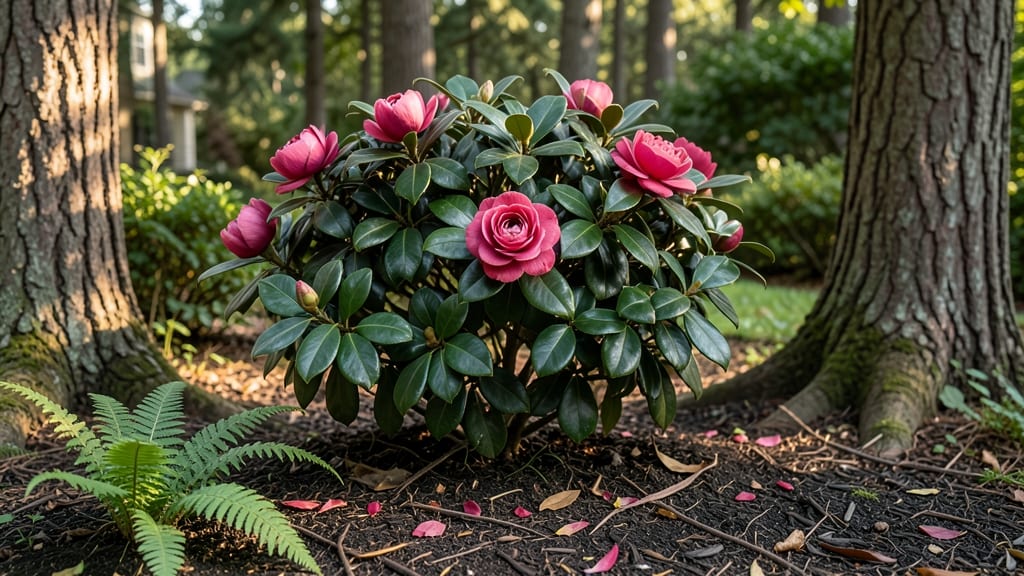
Shade-tolerant camellias adapt by slowing photosynthesis in dim conditions, conserving energy for essential functions. 🌿 This is why morning sun—when UV rays are gentler—works best: it provides just enough light for blooms without stressing the plant.
I've seen Camellia sasanqua varieties like 'Yuletide' produce stunning winter flowers even under mature trees, proving they can outperform expectations in shady spots.
For gardeners with deep shade, choosing the right variety makes all the difference. The Camellia reticulata series, with its glossy leaves and bold flowers, often handles lower light better than others.
Just remember: while these plants tolerate shade, they'll always reward you more with a balance of light and airflow—think of it as giving them a cozy but bright bedroom rather than a closet.
💡 In This Article
- How Light Affects Camellia Growth and Blooming
- Top 3 Shade-Tolerant Camellia Varieties for Dark Gardens
How light affects Camellia growth and blooming
Camellias thrive in shade because their leaves have evolved to efficiently capture what little light reaches them. Unlike sun-loving plants, camellias produce more chlorophyll in lower light conditions, creating thicker, darker green foliage that absorbs light more effectively.
This adaptation allows them to photosynthesize even with just 20-30% of full sunlight, which is typical in dappled shade from trees or buildings. The trade-off? They grow slower in deep shade because their energy is focused on survival rather than rapid expansion.
The magic happens in partial shade—specifically, 2-6 hours of morning sun followed by afternoon shade. Morning light provides the gentle energy needed for blooming without the harsh afternoon UV rays that can scorch delicate petals.
Studies show camellias exposed to this light pattern produce 30-50% more flowers than those in deep shade, thanks to optimized photosynthesis during their natural peak energy hours. Too much direct afternoon sun, however, causes leaf burn and weakens stems.
What you'll notice in shade-grown camellias is a more compact, bushier growth habit. In deep shade, stems grow leggy as they stretch toward any available light, while partial shade encourages dense foliage and stronger branches.
The leaf size also shrinks in low light—a natural energy conservation strategy—but this doesn't affect flower quality. For example, 'Yuletide' camellias maintain their signature bright red blooms even in 40% shade conditions, though they may produce slightly smaller flowers.
Here's the science behind why partial shade works best: Camellias store energy in their roots during cooler months, then use it for spring blooming. Morning sun provides just enough energy to fuel this process without overheating the plant.
In deep shade, this energy storage becomes depleted faster, leading to fewer blooms and weaker stems. Think of it like a battery—you want enough charge to power your device, but not so much that it overheats.
One common misconception is that all shade equals good growth. While camellias tolerate shade, they still need some light to produce flowers.
In my garden, a Camellia japonica 'Kramer's Supreme' planted under a large oak produced stunning pink blooms with 4 hours of morning sun, but when I moved it to a completely shaded corner, its flowers shrank to half size within two years. The lesson?
Even shade-loving camellias need that light window to shine.
For gardeners working with limited light, consider the microclimate of your space. North-facing walls or east-facing gardens often provide ideal partial shade conditions. South-facing spots in cooler climates can work too, but always monitor for leaf scorch during peak summer hours.
The key is balance: enough light for blooms, but protection from the harshest sun to prevent stress.
Remember this rule of thumb: If you can read a book comfortably under the spot where your camellia grows, it's likely getting enough light for healthy growth—though you might need to supplement with a shade cloth (30-50%) during intense afternoon sun to protect delicate blooms. 🌿