
Plants
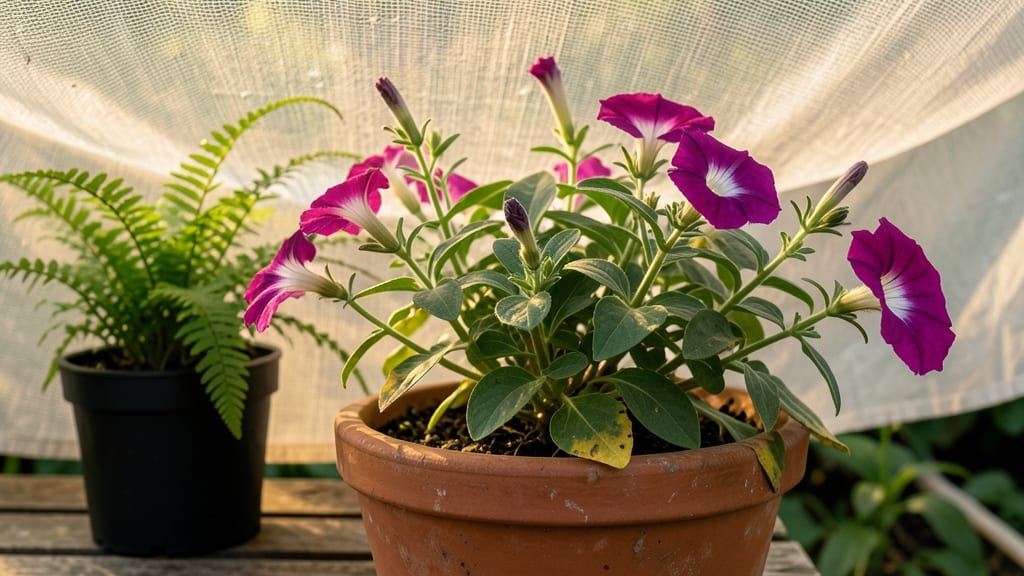
Petunias are sun-loving annuals that rely on bright light to fuel their energy production through photosynthesis. 🌞 When they don't get enough sunlight, their growth becomes leggy and sparse, with fewer blooms.
I've noticed that even morning sun with afternoon shade can work in cooler climates, but southern exposures with consistent light yield the most dramatic displays. The key is balancing their needs with your garden's conditions—too little light means you'll get more foliage than flowers.
For those tricky low-light spots, consider dappled sunlight or filtered light through sheer curtains. Container gardening near a south-facing window can also work, though you'll need to rotate pots occasionally for even growth. Companion plants like coleus or impatiens thrive in similar conditions and won't compete for light.
💡 In This Article
- How Sunlight Affects Petunia Growth and Flowering
- Best Shade Solutions for Petunias in Low-Light Areas
How sunlight affects petunia growth and flowering
Petunias are sun worshippers at heart, and their growth habits reveal why. These plants rely on photosynthesis to convert sunlight into energy, a process that drives both leaf production and flower development.
When exposed to 6-8 hours of full sun daily, petunias produce abundant chlorophyll, which powers their vibrant growth.
Without adequate light, their metabolism slows, leading to weak stems and fewer blooms. 🌞 The science is clear: insufficient sunlight reduces the plant's ability to produce energy-rich glucose, forcing it to prioritize survival over reproduction.
Here's what happens under different light conditions: In full sun, petunias develop compact, bushy growth with 3-4 inches of new stems per week and continuous blooming. Under partial shade (4-6 hours of sunlight), they still perform well but may produce 20-30% fewer flowers and develop slightly taller stems.
Too little light (<3 hours) triggers a survival response—petunias stretch toward any available light, creating leggy, weak stems with sparse foliage and almost no flowers. This is because the plant's energy is diverted to growing taller rather than developing blooms.
Light quality matters too. Petunias prefer direct sunlight, but in hot climates, afternoon shade can prevent leaf scorch while still providing enough energy for growth. The ideal light spectrum for petunias includes blue and red wavelengths, which drive photosynthesis and flower production.
Artificial grow lights can supplement natural light, especially in indoor settings, with LED grow lights (5000-6500K color temperature) being the most efficient for promoting blooming. 💡
What most gardeners don't realize is how quickly petunias respond to light changes. If you move a potted petunia from shade to full sun, you'll see new buds forming within 7-10 days as the plant adjusts its energy production.
Conversely, moving a sun-loving petunia into deep shade causes existing blooms to drop within 2-3 weeks as the plant conserves energy. This rapid response highlights why consistent light exposure is crucial for maintaining healthy, flowering petunias.
The difference between a thriving petunia and a struggling one often comes down to light intensity.
For example, a petunia in a south-facing window (which receives 6-8 hours of direct sunlight) will produce 3-5 times more flowers than one in a north-facing window with only 2-3 hours of indirect light.
The key is providing the right balance—enough light to fuel growth without causing stress from excessive heat or drought.
Consider this comparison: A petunia in full sun might produce 100-150 blooms per season with stems reaching 12-18 inches tall, while one in deep shade may only produce 10-20 blooms with stems stretching 24-36 inches tall in a desperate bid for light.
The trade-off is clear: more light equals more flowers and a more compact, manageable plant. 🌸