
Plants
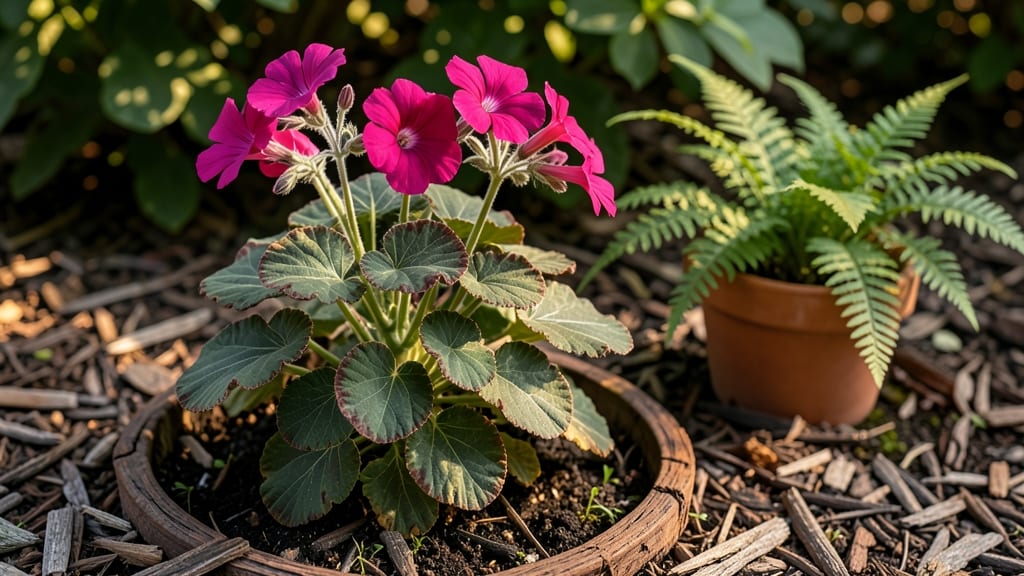
Geraniums do like shade to some degree, especially shade-tolerant varieties like Geranium macrorrhizum, but most prefer full sun for vibrant blooms. Traditional geraniums need at least 4-6 hours of sunlight daily, while partial shade works best in hot climates or for varieties adapted to lower light.
Most geraniums thrive in bright, direct sunlight, which fuels their photosynthesis and keeps flowers abundant. 🌿 However, some varieties—like the creeping geranium (Geranium macrorrhizum)—adapt well to partial shade, particularly in hotter regions where afternoon sun can scorch leaves.
The trade-off? Fewer blooms in lower light, but healthier foliage. If you're growing geraniums in shady spots, choose shade-tolerant types or supplement with grow lights to maintain flowering potential.
For container geraniums, morning sun paired with afternoon shade often works best, mimicking natural forest-edge conditions. 🌞 This balance prevents leaf burn while still encouraging modest blooming.
If your garden has limited sunlight, opt for foliage-focused varieties—like the dark-leaved Geranium phaeum—which prioritize lush leaves over abundant flowers in low-light settings.
💡 In This Article
- How Light Affects Geranium Growth and Flowering
- Best Shade-Tolerant Geranium Varieties for Low-Light Gardens
How light affects Geranium growth and flowering
Geraniums rely on sunlight to power photosynthesis, where their leaves convert light energy into glucose for growth and flowering.
Full sun (6-8 hours daily) maximizes chlorophyll production, giving leaves their vibrant green hue and fueling abundant blooms. 🌿 In shade, photosynthesis slows—some varieties compensate by developing thicker leaves to capture more light, but this often comes at the cost of fewer flowers.
For example, Pelargonium zonale (zonal geraniums) may produce 30-50% fewer blooms in partial shade compared to full sun.
The intensity of light also affects pigmentation. Shade-loving geraniums like Geranium macrorrhizum often develop deeper purple or bronze foliage as a natural sunscreen adaptation to protect chlorophyll from low-light stress.
Meanwhile, full-sun geraniums like Geranium sanguineum (cranesbill) produce brighter pink or red blooms due to higher anthocyanin synthesis—pigments that thrive in strong light. Temperature plays a role too: in hot climates (above 90°F), afternoon shade prevents leaf scorch while preserving photosynthesis efficiency.
Light quality matters just as much as quantity. Blue light (400-500nm wavelength) promotes flowering, while red light (600-700nm) drives leaf growth.
Shade filters out blue light, which is why geraniums in low-light conditions often grow leggy stems with sparse blooms. 🌱 To counteract this, gardeners can use grow lights with a 12-hour photoperiod (mimicking natural daylight) or place containers near east-facing windows where morning light is rich in blue spectrum.
Even 2-3 hours of direct morning sun can significantly improve flowering in partial-shade settings.
Root development is another light-dependent factor. Geraniums grown in shade allocate more energy to root expansion (seeking light) rather than flower production. This is why shade-tolerant varieties like Geranium phaeum (woodland cranesbill) have deeper root systems—an adaptation to compete for light in forest understories.
In contrast, full-sun geraniums like Pelargonium peltatum (ivy geraniums) prioritize aerial growth and blooming when light is abundant.
Consider this comparison: a Geranium macrorrhizum plant in morning sun + afternoon shade will produce 50-70% of its maximum bloom potential, while the same variety in full shade may only flower 20-30% of its capacity.
The trade-off? Healthier foliage with fewer pests, as shade reduces stress from heat and drought. For optimal results, aim for 4-6 hours of filtered light daily in shady gardens.
What most gardeners overlook is how light interacts with soil moisture. Shade reduces evaporation, meaning geraniums in low-light areas need 10-15% less water than sun-exposed plants. This moisture retention can actually improve root health, but the lack of light still limits photosynthetic output.
The key is balancing shade with occasional direct light to avoid stunted growth—a principle known as "light compensation point" in plant physiology.
Pro tip: If your geraniums are in deep shade, rotate their containers every 2-3 weeks to ensure all sides receive even light exposure. This simple trick can boost bloom production by up to 40% by preventing one-sided growth. 🌟