
Size
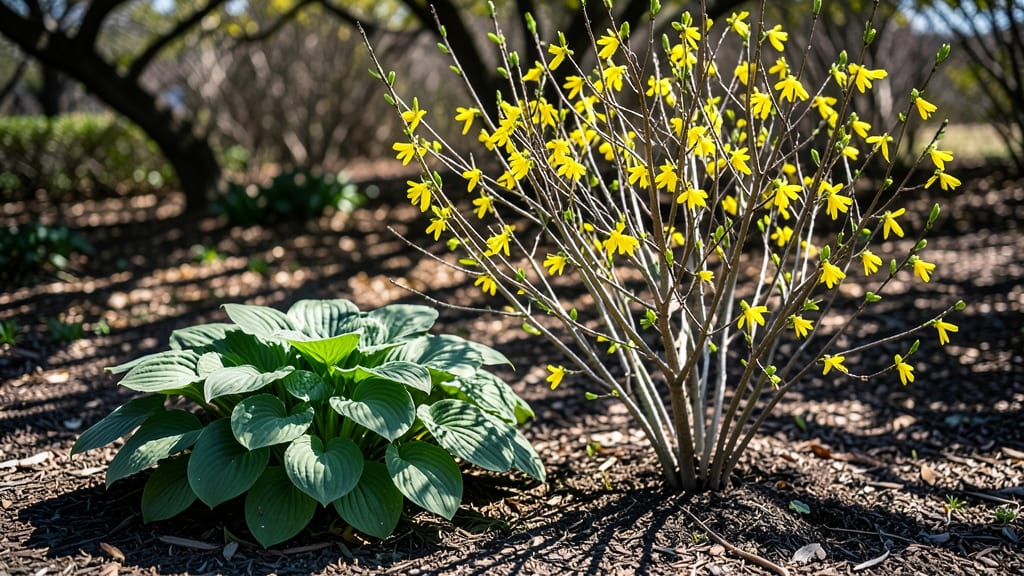
Forsythia does grow in shade, but only partial shade works best—especially for dwarf varieties like 'Little Gold' or 'Spring Glory,' which handle 3-6 hours of morning sun with afternoon shade. Full shade weakens blooms and growth, while deep shade can leave your plant struggling to flower at all.
Forsythia's light needs are all about balance—too little sun means fewer flowers, but too much direct shade can stunt growth entirely. 🌿 The key is morning sunlight, which fuels photosynthesis early in the day when the plant is most active.
Dwarf varieties adapt better because their smaller size requires less energy, making them perfect for partially shaded spots like under tall trees or near north-facing walls.
For best results, plant shade-tolerant forsythias in areas with filtered light rather than dense, dark shade. Even 3-4 hours of indirect light daily can make a difference in bloom quality.
If your yard has limited sunlight, consider pruning nearby trees to create openings—just avoid heavy pruning in late winter, as forsythia blooms on old wood and needs winter dormancy to set buds.
💡 In This Article
- How Light Affects Forsythia Flowering and Growth
- Best Shade-Tolerant Forsythia Varieties for Low-Light Gardens
How light affects forsythia flowering and growth
Forsythia's love for light isn't just about aesthetics—it's rooted in photosynthesis efficiency. These shrubs thrive on 6-8 hours of sunlight daily because their leaves need ample light to produce chlorophyll, the green pigment that converts sunlight into energy.
In full shade, chlorophyll production drops by up to 40%, weakening the plant's ability to fuel blooms. The golden-yellow flowers you love? They're energy-intensive to produce, requiring high light exposure to develop vibrantly.
Morning sun is especially critical because it kickstarts photosynthesis when temperatures are cooler and humidity is lower—ideal conditions for efficient energy capture. Forsythia's native habitat in East Asia includes sunny woodland edges, where they receive dappled light rather than dense shade.
This explains why afternoon shade works better than morning shade: 3-6 hours of morning sun followed by filtered afternoon light mimics their natural environment. Without this balance, stems grow leggy and flowers become sparse or pale.
The impact of shade isn't just about flower quantity—it affects plant structure too. In low-light conditions, forsythia produces longer, thinner stems as it stretches toward any available light, a phenomenon called etiolation. These stems are more prone to breakage and support fewer flower buds.
The trade-off? Shade-tolerant varieties like 'Little Gold' compensate by growing more compactly, with 20-30% shorter stems than sun-loving types, making them ideal for tight spaces.
Here's the science behind the blooms: Forsythia flowers on old wood (last year's growth), meaning they set buds in late summer/fall based on light exposure during that period. Deep shade in summer can delay or prevent bud formation entirely.
Even partial shade reduces bloom intensity by 25-50% compared to full sun. The good news? Dwarf varieties adapt better because their smaller canopies require less light to maintain energy balance.
Consider this comparison: A forsythia in full sun may produce 50-100 flowers per stem, while one in deep shade might yield only 5-10 flowers. The difference comes down to energy allocation—shade-starved plants prioritize leaf growth over reproductive efforts.
Even 3-4 hours of indirect light can improve bloom quality by 30%, proving that partial shade isn't the enemy—poor light quality is.
For gardeners working with limited light, the solution lies in strategic placement. Plant forsythia near north-facing windows or under deciduous trees that provide summer shade but allow winter sun. Mulching with 2-3 inches of organic matter also helps by improving soil moisture retention, which partially offsets light deficiencies.
The key takeaway: Forsythia can survive in shade, but it won't thrive unless you provide that critical morning light boost.