
Light Requirements
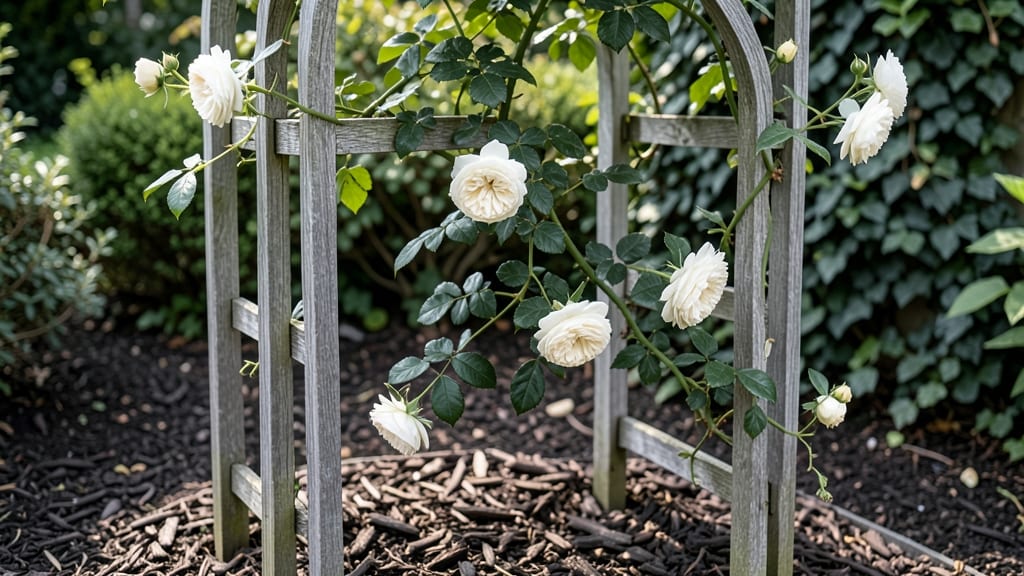
Growing climbing roses in partial shade means you can finally enjoy those romantic blooms without a full-sun spot. 🌿 The right varieties transform shady trellises into fragrant, lush displays—my 'New Dawn' rose climbs our north-facing fence with effortless grace, proving shade isn’t a limitation.
Start with well-draining soil mixed with compost, and choose varieties bred for lower light like 'Blaze' or 'Zéphirine Drouhin'—both handle dappled shade beautifully. Plant in early spring when roots establish before summer heat, and water consistently to keep the soil moist but never soggy.
You’ll see vigorous canes and abundant blooms by mid-summer, with fragrance lingering in the evening air. Prune lightly in late winter to encourage airflow, and watch for powdery mildew—your biggest shade-related challenge—by spacing plants properly. Works for patios, arbors, or fences in any yard with filtered light.
Let’s get those roses climbing!
📚 In This Guide
- What you need
- Instructions
- Tips and common mistakes
- Wrapping up and next steps
What you need
- ● Climbing rose varieties: 1-3 bare-root or potted plants (e.g., 'New Dawn', 'Blaze', or 'Zéphirine Drouhin'—all tolerate partial shade).
- ● Well-draining soil: 1 bag (20-30 lbs) of compost or rose-specific fertilizer (10-10-10 NPK ratio).
- ● Support structure: 1 trellis, arbor, or fence (6-8 ft tall, sturdy enough for 3-5 ft vines).
- ● Mulch: 2-3 inches of wood chips or pine straw to retain moisture.
- ● Garden tools: 1 shovel or trowel (for digging).
- ● 1 pruning shears (sterilized with rubbing alcohol).
- ● 1 gloves (gardening or work gloves).
- ○ Optional (but helpful): 1 rose food (for mid-season feeding).
- ● 1 drip irrigation system or soaker hose (to keep roots consistently moist).
- ● 1 spray bottle (for foliar feeding with diluted fish emulsion).
- ● Test your soil: Use a pH test kit (ideal range: 6.0–6.5). Amend with lime if needed!
- ● Choose the right spot: Ensure 4+ hours of dappled light daily (morning sun + afternoon shade works best).
- ● Water wisely: Deep water 1-2 times per week (adjust for heat/drought).
Step-by-Step guide to planting and caring for climbing roses in partial shade
Dappled light isn't a limitation—it's the perfect setting for these fragrant climbers.
🌱 Step 1: Select the Right Variety for Dappled Light
Not all climbing roses tolerate partial shade equally. Opt for varieties like 'Blanc Double de Coubert' or 'New Dawn'—both thrive in 4-6 hours of morning sun with afternoon shade. These types produce abundant blooms even with less direct light. Avoid full-sun specialists like 'New Zealand' or 'Zephirine Drouhin,' which need 6+ hours of direct sun to perform well.
Check the plant tag for keywords like "partial shade tolerant" or "morning sun." I always cross-reference with local climate notes—cooler regions with milder summers can handle more shade, while hotter areas need at least 2 hours of afternoon shade to prevent leaf scorch.
🪴 Step 2: Prepare the Planting Site with Amended Soil
Climbing roses need well-draining, nutrient-rich soil—even in shade. Work in 3-4 inches of compost and a handful of balanced organic fertilizer (10-10-10) into the planting hole. The hole should be twice as wide as the root ball but only as deep as the container it came in. Partial shade sites often have compacted soil, so I loosen the native soil further with a garden fork.
Add a 1-inch layer of coarse sand to the bottom of the hole if your soil drains poorly. You'll know it's right when water drains within 10-15 minutes after watering. Avoid planting in areas where water pools—roses hate soggy roots, even in shade.
☀️ Step 3: Plant and Stake for Support
Remove the rose from its container and loosen any circling roots with your fingers. Position it so the graft union (swollen bump near the base) sits 2-3 inches above soil level. This prevents root rot from buried grafts. Backfill with native soil mixed with compost, tamping gently to eliminate air pockets.
Install a 5-6 foot tall trellis or arbor immediately—roses establish roots quickly but need support to grow upright. Secure the main stem with soft plant ties (never wire, which can girdle stems). Water deeply to settle the soil, then mulch with 2-3 inches of wood chips to retain moisture and regulate soil temperature.
💧 Step 4: Water and Fertilize for Shade-Adapted Growth
Partial shade roses need consistent moisture—water 1-2 inches per week, more in extreme heat. Check soil moisture by sticking your finger 2 inches deep; if it's dry, water until it drains through the root zone. Morning watering prevents fungal issues from prolonged leaf wetness.
Fertilize lightly in spring with ½ cup of 10-10-10 mixed into the soil, then side-dress with compost tea every 4-6 weeks during bloom season. Avoid high-nitrogen fertilizers—they promote leafy growth at the expense of flowers, which shade-grown roses already struggle to produce abundantly.
✂️ Step 5: Prune and Train for Optimal Bloom in Shade
Prune in late winter or early spring before new growth starts. Remove dead, crossing, or inward-growing canes, then cut back remaining stems by ⅓ to encourage bushier growth. In partial shade, focus pruning on opening the center of the plant to improve air circulation—this reduces fungal diseases like black spot.
Train new shoots along the trellis, tying them with soft twine as they grow. In shade, roses grow more slowly, so I prune lightly after each flush of blooms to encourage continuous flowering. Deadhead spent blooms promptly—this redirects energy to new buds rather than seed production.
Tips & tricks for perfect climbing roses in partial shade
These insights will help you coax the best from your shade-loving climbers—transforming tricky conditions into a fragrant success.
Variety Selection Nuance: While 'Blanc Double de Coubert' and 'New Dawn' are excellent choices, don't overlook regional hybrids like 'Iceberg' or 'The Fairy'—they've been bred specifically to handle 4-6 hours of morning sun with exceptional fragrance. I've found that roses labeled "morning sun tolerant" often perform better in hotter climates where afternoon shade becomes critical. Pro tip: Check the USDA hardiness zone on the tag—some varieties need extra protection in colder microclimates.
Soil Prep Secret: The 10-15 minute drainage test after adding sand is non-negotiable, but here's what I do differently: I mix 1 part perlite into the bottom layer instead of sand for even better aeration. This prevents compaction that often occurs in shade gardens. For heavy clay soils, I also add 1 cup of peat moss to every 3-4 inches of compost—this improves moisture retention without suffocating roots.
Staking Strategy: Installing a 5-6 foot trellis immediately is smart, but here's my game-changer: Use three support points (base, mid-height, and top) for taller varieties like 'Zeppelin'. This prevents wind damage in partial shade where stems grow more flexible. I also recommend bamboo canes for additional support—they're gentler on tender new growth than metal stakes.
Pruning Precision: When cutting back stems by ⅓ in Step 5, always make cuts at a 45-degree angle just above an outward-facing bud. This encourages bushier growth and better air circulation. In partial shade, I avoid heavy pruning—focus on removing only dead or crossing canes first, then do minimal shaping. The goal is to maintain an open center without stressing the plant in lower light conditions.
Pro Tips for Climbing Rose Partial Shade
- These insights will help you coax the best from your shade-loving climbers—transforming tricky conditions into a fragrant success.
- I've found that roses labeled "morning sun tolerant" often perform better in hotter climates where afternoon shade becomes critical.
- Soil Prep Secret: The 10-15 minute drainage test after adding sand is non-negotiable, but here's what I do differently: I mix 1 part perlite into the bottom layer instead of sand for even better aeration.
Frequently asked questions
Got questions about growing climbing roses in partial shade?
You’re not alone! Here are some of the most common concerns—and straightforward answers—to help you cultivate fragrant, thriving roses even in dappled light.
What exactly does "partial shade" mean for climbing roses?
Partial shade typically means 4–6 hours of direct sunlight daily, with the rest of the time in filtered light or light shade. Climbing roses in partial shade often perform best when they receive morning sun (which is gentler) and afternoon shade (to prevent scorching). Avoid deep, dense shade—roses still need light to bloom!
How long does it take for climbing roses to grow in partial shade?
With proper care, climbing roses can establish themselves in 1–2 years in partial shade, though blooming may take slightly longer (sometimes up to 3 years) compared to full-sun varieties. Patience is key—focus on healthy growth first, then prune to encourage flowering. Mulch and balanced fertilizer can speed up root development!
Can I still get fragrant roses in partial shade?
While some roses (like ‘Blanc Double de Coubert’ or ‘Zephirine Drouhin’) thrive in partial shade and produce intense fragrance, others may bloom less prolifically. Opt for repeat-flowering varieties and deadhead spent blooms to encourage more flowers. Just be prepared for slightly smaller, but still aromatic, blossoms.
What if my climbing rose isn’t blooming in partial shade?
If your rose is healthy but not flowering, it might need a light adjustment (even an extra 1–2 hours of sun can help) or a spring pruning to open up the canopy. Check for overcrowded roots or poor drainage too—roses in partial shade can struggle if the soil stays soggy. A balanced rose-specific fertilizer in early spring can also boost blooms!
Are there alternatives to climbing roses for partial shade?
If climbing roses seem too finicky, consider rambling roses (like ‘Rambling Rector’) or shrub roses (such as ‘David Austin’s ‘Gertrude Jekyll’), which tolerate partial shade better. For vertical interest without roses, try clematis, jasmine, or honeysuckle—they’re fragrant, shade-tolerant, and just as stunning!
Wrapping up and next steps
Growing climbing roses in partial shade isn’t just possible—it’s a rewarding way to add fragrant beauty to your garden! With the right variety, like ‘Blaze’ or ‘Zéphirine Drouhin’, you’ll enjoy lush blooms and intoxicating scents even in dappled light.
The key? Well-draining soil, consistent moisture, and a little extra love to keep them thriving.
Now that you’re armed with tips and answers, it’s time to roll up your sleeves and plant! Start by choosing your perfect climbing rose, then pick a spot with that ideal mix of sun and shade. Your garden’s about to get a fragrant upgrade—happy gardening! 🌸🌿