
Light Requirements
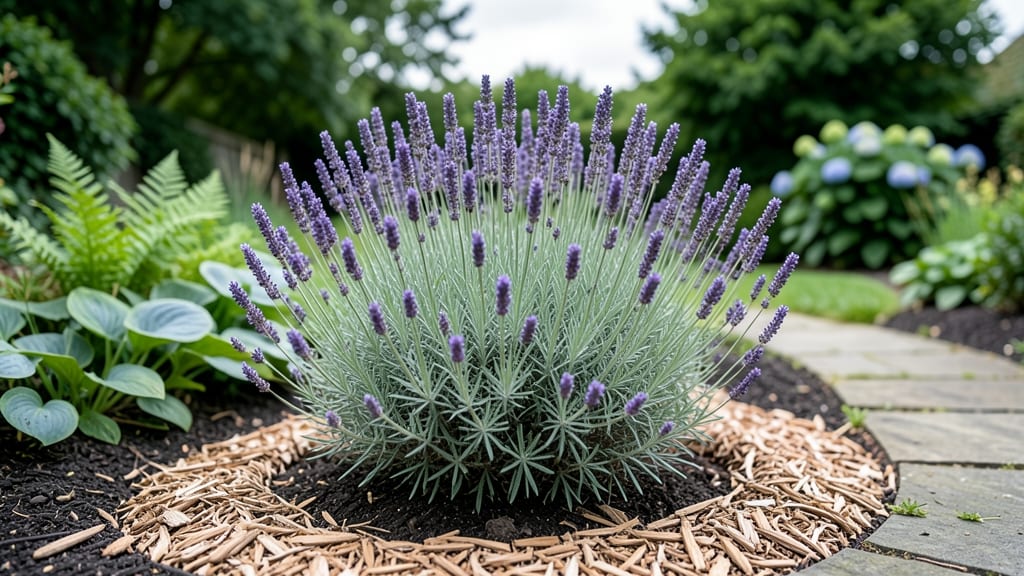
Can lavender grow in shade? Yes, but it thrives best with at least 6 hours of sunlight daily—partial shade (morning sun) suits varieties like Lavandula × intermedia ‘Grosso’ or Lavandula angustifolia ‘Munstead,’ while deep shade risks weak stems and poor blooms. Mulch and well-draining soil help in low-light conditions.
While lavender can adapt to shadier spots, it’s a Mediterranean plant at heart, meaning it naturally craves sunlight for photosynthesis. 🌿 Without sufficient light, its signature oils weaken, leading to fewer blooms and leggy growth.
I’ve seen shade-tolerant varieties like Lavandula stoechas handle 3-4 hours of filtered light better than others, but even they produce less fragrance. For indoor growers, a sunny windowsill or grow lights can make all the difference.
If you’re working with limited sunlight, focus on soil drainage and spacing. Lavender hates soggy roots, so raised beds or containers with gravel at the bottom become essential. I recommend amending the soil with perlite or sand to mimic its native rocky terrain—this helps prevent root rot in shadier conditions.
💡 In This Article
- How Shade Affects Lavender Growth and Flowering
- Top Shade-Tolerant Lavender Varieties for Low-Light Gardens
How shade affects lavender growth and flowering
Lavender’s growth is directly tied to its ability to perform photosynthesis, a process that requires intense sunlight to produce the energy it needs for flowering and oil production.
When exposed to less than 4 hours of direct sunlight daily, lavender plants struggle to synthesize enough chlorophyll, the green pigment that captures light energy. This leads to a chain reaction: weaker stems, reduced fragrance, and fewer blooms.
The plant’s signature essential oils, which give lavender its calming aroma, are produced through a complex biochemical pathway that demands ample sunlight.
In shadier conditions, lavender often develops long, spindly stems as it stretches toward any available light—a phenomenon called etiolation.
This weakens the plant’s structural integrity, making it more susceptible to wind damage or breaking under its own weight. 🌿 The blooms that do appear tend to be smaller and less vibrant, with reduced oil content.
For example, a lavender plant receiving only 2 hours of sunlight may produce flowers that are 30-50% less fragrant than one basking in full sun. This is because the secondary metabolites responsible for aroma require sunlight to trigger their production.
Chlorophyll isn’t the only player here—lavender also relies on photoperiodism, a biological response to daylight length that regulates flowering. Most lavender varieties need 12-14 hours of daylight to initiate blooming.
In deep shade, where daylight is filtered or indirect, the plant may miss these critical light cues, delaying or preventing flowering entirely. Even shade-tolerant varieties like Lavandula angustifolia ‘Munstead’ will produce sparser blooms if deprived of sufficient light, often with a less intense purple hue due to reduced anthocyanin production.
To mitigate these issues, gardeners can use reflective surfaces like white gravel or mirrors to bounce extra light onto the plants. Another trick is to prune strategically, removing leggy growth to encourage bushier, more compact forms that can better utilize available light.
However, even with these adjustments, lavender in deep shade will never reach its full potential compared to sun-exposed plants. The trade-off is often worth it for gardeners with limited space, but expect to compromise on fragrance and bloom abundance.
For those growing lavender indoors or in heavily shaded outdoor spots, consider supplementing with grow lights that emit a full spectrum, including red and blue wavelengths critical for photosynthesis. A 12-14 hour light cycle mimics natural daylight and can help maintain healthier growth.
Just be sure to position lights 6-12 inches above the plants to avoid overheating, which can stress lavender further.
What most people don’t realize is that lavender’s stress response to shade isn’t just about growth—it’s also about survival. In low-light conditions, the plant diverts energy away from oil and flower production toward basic metabolic functions, prioritizing root and stem development over fragrance and beauty.
This is why shade-grown lavender often smells milder and looks less lush, even with careful care.
If you’re determined to grow lavender in shade, focus on soil health and drainage as your best allies. Amend the soil with compost and perlite to improve aeration, and avoid overwatering, which can exacerbate the stress caused by insufficient light.
With the right conditions, even shade-tolerant varieties can produce some blooms and fragrance, but don’t expect the same abundance as sun-loving plants. 💫