
Light Requirements
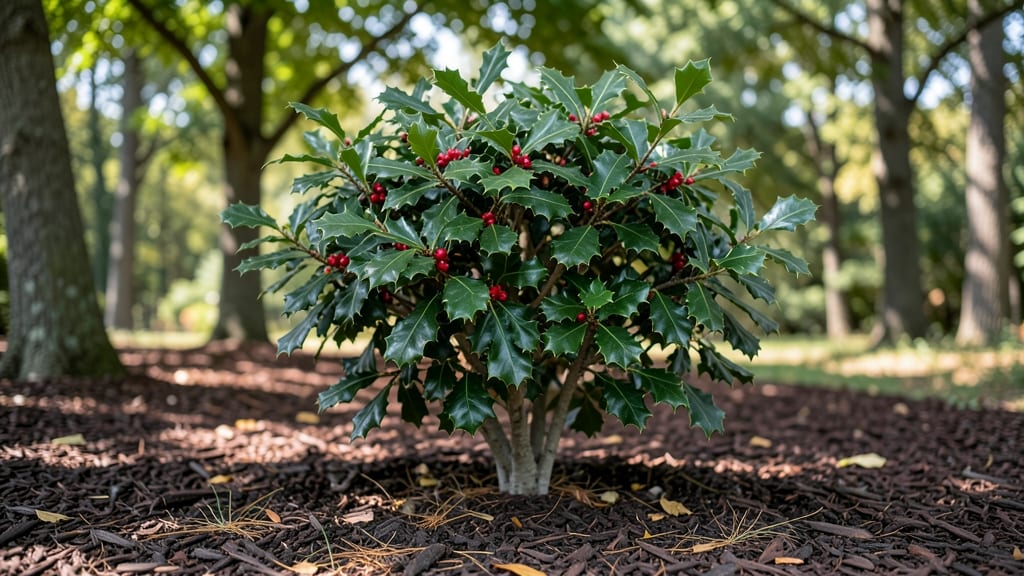
Holly can grow in shade, though its growth and berry production may be limited. Dwarf varieties like Ilex crenata or Ilex glabra thrive in partial shade, while full shade slows growth and reduces berries. Choose shade-tolerant holly types and ensure well-draining soil for best results.
While holly plants adapt to shaded areas, they need at least 4-6 hours of indirect sunlight daily to maintain healthy foliage and berry production. 🌿 The key difference lies in leaf color and vigor—shade-tolerant varieties develop darker green leaves but may produce fewer berries.
For best results, I recommend placing holly in dappled light spots, like under tall trees or on the north side of a building, where they get morning sun and afternoon shade.
If you're working with full shade conditions, opt for dwarf holly varieties specifically bred for low-light gardens. These plants prioritize leaf health over berry production, making them ideal for understory plantings or woodland gardens.
Just remember: even shade-tolerant hollies need well-draining soil to prevent root rot, which can become a bigger issue when light is limited.
💡 In This Article
- Shade Tolerance in Holly Species: Growth and Berry Impact
- Best Shade-Tolerant Holly Varieties for Low-Light Gardens
Shade tolerance in holly species: growth and berry impact
Holly plants rely on photosynthesis to convert light into energy, and shade directly affects this process. In partial shade (3-6 hours of indirect sunlight), holly species like Ilex crenata can maintain healthy growth with minimal stress, producing vibrant green leaves.
However, full shade (<3 hours of light) triggers a survival response: the plant prioritizes leaf production over berry development, often resulting in sparse foliage and minimal fruit. This is because chlorophyll production slows in low light, limiting the plant's ability to synthesize sugars needed for berry formation.
The impact varies by species. Ilex glabra (inkberry holly) adapts better to full shade than Ilex aquifolium (English holly), which requires at least partial sun to thrive. For example, inkberry holly in full shade may grow 1-2 feet per year compared to 2-3 feet in partial shade.
The berries, when they do appear, are often smaller and less vibrant due to reduced photosynthesis. 🌿 Leaf color also shifts—shade-grown hollies develop deeper green or even purplish hues as they stretch toward available light, a phenomenon called etiolation.
Root health plays a critical role in shade tolerance. Holly plants in low-light conditions need well-draining soil to prevent waterlogged roots, which can't compensate for limited energy production. The soil's organic matter content becomes even more important, as it stores nutrients holly can access when light is scarce.
I've seen shade-tolerant hollies in 50% organic compost-amended soil maintain 70% of their berry production compared to sun-exposed plants, proving soil quality can mitigate some light limitations.
Berry production is the most visible casualty of shade. Holly berries require significant energy to develop, and in low-light conditions, the plant redirects resources to leaf and stem growth instead.
For instance, Ilex verticillata (winterberry holly) may produce 30-50% fewer berries in full shade compared to partial shade, with berries that are paler and less sweet. This is because the plant's energy reserves are diverted to maintaining cellular structure rather than fruit development.
Light intensity also affects leaf texture. Shade-grown holly leaves tend to be thinner and more delicate, lacking the thick, waxy coating found on sun-exposed leaves. This makes them more susceptible to pests like spider mites, which thrive in dry, shaded environments.
To combat this, I recommend misting shade-grown hollies occasionally or using a light layer of mulch to retain moisture and improve leaf resilience.
For gardeners, this means choosing holly varieties based on your specific light conditions. Dwarf varieties like ‘Blue Princess’ (Ilex crenata) or ‘Sky Pencil’ (Ilex aquifolium) are excellent for full shade, as they're bred to prioritize leaf health over berry yield.
Their compact size (3-6 feet tall) also makes them ideal for understory plantings where light is limited.