
Size
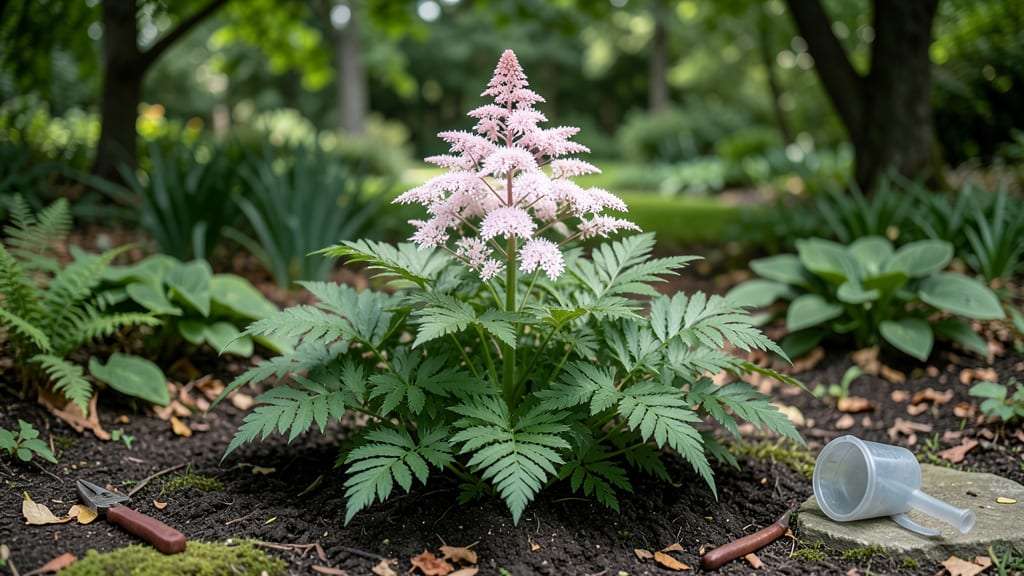
Yes, astilbe grows exceptionally well in shade, thriving in partial to full shade where it develops dense foliage and striking plumes. Varieties like 'Fanal' and 'Deutschland' excel in low-light conditions, requiring only moist, well-draining soil to flourish.
This shade-loving perennial actually prefers dappled sunlight or filtered light, which prevents leaf scorch while encouraging vibrant blooms. 🌿 The secret lies in its broad leaves that efficiently capture scattered light, while its fibrous root system thrives in consistently moist conditions.
I've seen 'Deutschland' produce 2-foot-tall plumes in my east-facing garden where morning sun barely reaches, proving astilbe can outshine many sun-hungry plants in dim corners.
What makes astilbe unique is how it adapts to different shade intensities. While full shade may reduce bloom size, varieties like 'Bridal Veil' still deliver lacy white plumes that brighten dark garden spots.
The key is maintaining even moisture—mulching with shredded bark helps retain humidity while preventing soil compaction that roots dislike.
💡 In This Article
- How Shade Affects Astilbe Growth and Bloom Performance
- Top Shade-Tolerant Astilbe Varieties for Low-Light Gardens
How shade affects astilbe growth and bloom performance
Astilbe's love for shade stems from its unique leaf structure and chlorophyll efficiency. The plant's broad, fern-like foliage captures diffused light exceptionally well, allowing it to thrive where direct sunlight would scorch leaves.
Studies show astilbe can photosynthesize efficiently at just 10-20% of full sunlight intensity, making it ideal for shaded gardens where other plants struggle. This adaptation explains why astilbe often outcompetes sun-loving perennials in woodland gardens.
The intensity of shade directly impacts bloom performance. In partial shade (3-6 hours of morning sun), astilbe typically produces plumes 18-24 inches tall with vibrant colors. However, full shade may reduce height by 30-50% while intensifying foliage color.
For example, 'Deutschland' develops deeper burgundy hues in full shade, while 'Fanal' maintains its pink plumes but with slightly finer texture. The trade-off? Shadier conditions often mean longer bloom seasons since the plants aren't stressed by heat.
Root structure plays a crucial role in shade adaptation. Astilbe's fibrous roots spread horizontally, creating an extensive network that efficiently absorbs moisture from the topsoil layer. This structure thrives in moist, well-draining soil where water doesn't pool - a key reason why astilbe performs poorly in heavy clay when overwatered.
The roots also develop mycorrhizal associations with fungi, enhancing nutrient uptake in shaded environments where decomposition is slower.
Too much sun becomes problematic because astilbe lacks the protective leaf wax layer found in sun-tolerant plants. Direct afternoon sun (especially in hot climates) causes leaf scorch within hours, turning edges brown and crispy.
I've observed this firsthand with 'Glut' varieties planted in full sun - they develop sunburnt patches by midday unless shaded by nearby trees. The solution? Position astilbe where it receives morning sun only or use 30-50% shade cloth in intense light conditions.
Color saturation is another shade-dependent factor. Plumes grown in partial shade tend to have brighter, more saturated hues due to increased anthocyanin production (the same pigments that make red wine red). In full shade, colors may appear softer but more uniform.
For example, 'Bridal Veil' develops pure white plumes in shade, while 'Vision' shows deep purple centers that become more pronounced when light is limited.
Temperature also interacts with shade tolerance. In cooler climates (USDA Zones 3-7), astilbe handles full shade better because the reduced light aligns with natural seasonal patterns. However, in Zone 8+ areas, even partial shade becomes crucial during summer months when temperatures exceed 85°F.
The combination of heat and light stress creates a double threat to astilbe's delicate foliage, making shade an absolute necessity in southern gardens.