
Light Requirements
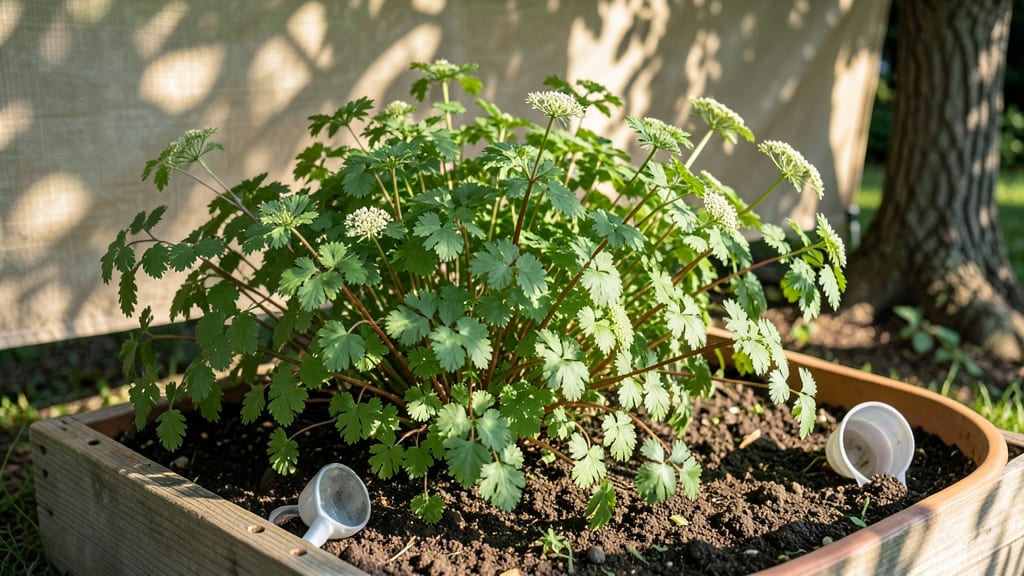
Cilantro grows in shade, but it won’t be the same plant you know from sunny windowsills. 🌿 I’ve tried forcing it in deep shade, and while it survives, it stretches tall and loses that bright, fresh flavor we all love.
The key is partial shade—4-6 hours of morning sun—to keep it compact and productive.
Leggy stems and bitter leaves are the biggest giveaways when cilantro doesn’t get enough light. I’ve seen it bolt prematurely in low-light spots, turning woody before it even gets a chance to mature.
The fix? Move pots or containers to a sunnier spot by midday, or thin seedlings to give them breathing room.
With the right balance, you’ll get bushier plants with bold, fresh flavor—perfect for garnishes or salsas. Keep soil consistently moist (never soggy) and harvest leaves regularly to encourage new growth. Even in partial shade, cilantro can be a garden star with a little extra care.
For true shade lovers, consider slower-growing herbs like parsley or mint instead. But cilantro? It’s worth the compromise for that unmistakable taste. Here’s how to make it work in your garden’s shadier corners.
Limited Light Triggers Growth Struggles
Cilantro thrives in bright, indirect sunlight, but when it’s deprived of adequate light, its growth suffers due to several key factors. Understanding these causes helps gardeners adjust conditions to support healthier plants. Here’s why shade stunts cilantro’s potential:
Cilantro, like most herbs, relies on photosynthesis—the process where sunlight converts carbon dioxide and water into glucose (energy) and oxygen. In low-light conditions:
- Chlorophyll production drops: Chlorophyll, the green pigment in leaves, absorbs light to fuel growth. Shade reduces chlorophyll synthesis, leading to pale, weak stems and leaves.
- Energy deficits slow metabolism: Without enough light, cilantro can’t produce sufficient glucose, stalling cell division and leaf expansion. This results in leggy, sparse foliage.
- Weak stems and etiolation: Stretched-out, thin stems (a condition called etiolation) occur as the plant searches for light, making it floppy and prone to breaking.
💡 Pro Tip: If your cilantro is already in shade, supplement with a grow light (12–16 hours/day) to mimic sunlight and boost photosynthesis.
Shade stress indirectly affects root development, which is critical for nutrient absorption:
- Reduced root growth: Cilantro allocates energy to stretching upward rather than growing roots. Weak roots struggle to uptake water and nutrients (like nitrogen and potassium), leading to stunted growth.
- Soil compaction and moisture issues: Shady spots often retain excess moisture, which can suffocate roots if drainage is poor. Waterlogged soil deprives roots of oxygen, further limiting nutrient uptake.
- Nutrient deficiencies: Without enough light, cilantro may develop yellowing leaves (chlorosis) due to iron or magnesium deficiencies, as these nutrients rely on light-dependent processes.
💡 Pro Tip: Test your soil’s pH (ideal: 6.0–7.0) and amend with compost or a balanced fertilizer (e.g., 10-10-10) to support root health in shady conditions.
Light regulates plant hormones, and shade disrupts this balance:
- Lower auxin levels: Auxin, a growth hormone, promotes cell elongation. In shade, auxin production decreases, leading to slower vertical growth and smaller leaves.
- Ethylene buildup: Shade-stressed plants often produce more ethylene, a hormone that accelerates aging and can trigger premature bolting (flowering) in cilantro—turning your herb into a bitter, woody plant.
- Stress hormones activate: Abscisic acid (ABA) accumulates in response to stress, slowing growth and diverting energy to survival rather than leaf production.
💡 Pro Tip: If your cilantro bolts in shade, harvest leaves promptly and avoid overcrowding to reduce stress hormones.
Weak, shade-stressed cilantro becomes an easy target for pests and pathogens:
- Soft, tender growth attracts aphids and spider mites: Low-light conditions make leaves less tough, inviting pests that sap nutrients and spread diseases like powdery mildew.
- Fungal infections thrive in damp shade: Poor airflow in shady areas creates a humid microclimate, ideal for fungal growth (e.g., downy mildew), which can rot leaves.
- Root rot from overwatering: Shade slows evaporation, so soil stays soggy longer. Pythium or Phytophthora fungi exploit this, killing roots and stunting the plant.
💡 Pro Tip: Improve airflow by spacing plants 6–12 inches apart and use mulch to regulate soil moisture without suffocating roots.
Boosting Cilantro Growth in Low-Light Spots
Growing cilantro in shade isn’t impossible—it just requires a few smart adjustments to mimic its ideal conditions. Whether you’re dealing with a shady balcony, a dense tree canopy, or a north-facing garden, these practical solutions will help your cilantro thrive even when sunlight is limited.
Cause: Too little light slows photosynthesis, leading to leggy, pale stems and slow development.
Solution:
- 🔥 Move to Partial Shade: Position your cilantro where it gets 3–4 hours of morning sun (the gentlest light) and dappled shade the rest of the day. Avoid deep shade—this mimics a forest understory, where cilantro naturally grows.
- 🌡️ Use Reflective Surfaces: Place a white tray, mirror, or aluminum foil near the plants to bounce extra light onto their leaves. This can add 10–20% more light exposure without direct sunburn.
- 🌿 Choose Compact Varieties: Some cilantro types, like ‘Calypso’ or ‘Santo’, are bred to tolerate lower light better than bolting-prone varieties. Opt for these if your space is perpetually shady.
Prevention Tip: ✨ If moving pots isn’t an option, rotate them weekly so all sides get equal, indirect light.
Cause: Shade-stressed cilantro may bolt (send up flowers) as a survival tactic, turning bitter and woody.
Solution:
- ⏰ Extend the Growing Season: Plant cilantro in early spring or late summer when temperatures are cooler (below 75°F/24°C). Heat triggers bolting, so shade alone won’t fix this—temperature control is key.
- 💧 Keep Soil Consistently Moist: Drought stress (even in shade) speeds up bolting. Use self-watering pots or a drip irrigation system to maintain even moisture. Let the top inch of soil dry out between waterings, but never stay bone-dry.
- 🌱 Succession Plant: Sow new seeds every 2–3 weeks for a continuous harvest. This way, you always have fresh, non-bolting leaves ready to pick.
Pro Tip: 💡 Mulch with straw or shredded leaves to retain moisture and regulate soil temperature—this reduces stress on the plant.
Cause: Overly shady conditions cause cilantro to stretch toward light, leading to weak stems and yellowing lower leaves.
Solution:
- 🍳 Supplement with Grow Lights: If natural light is insufficient, add a full-spectrum LED grow light (12–16 hours/day) 6–12 inches above the plants. Even a cheap clip-on bulb can help if positioned correctly.
- 🥗 Prune for Bushier Growth: Pinch off the top sets of leaves when the plant is 6 inches tall. This encourages branching and denser foliage, making the most of the available light.
- 🌿 Fertilize Lightly: Use a balanced, water-soluble fertilizer (like 10-10-10) every 3–4 weeks to support leafy growth. Avoid heavy nitrogen—it can make stems softer and more prone to stretching.
Prevention Tip: ✨ Harvest leaves from the outer edges to avoid overcrowding, which blocks even the little light the plant gets.
If your cilantro’s home is permanently shady (e.g., under a deck or between buildings), try these permanent fixes:
| Problem | Solution | Tools/Methods |
|---|---|---|
| No direct sunlight | Install a south-facing vertical garden | Trellis + reflective panels |
| Competition from trees | Remove nearby weeds/saplings | Pruners, mulch barrier |
| North-facing window | Use a sun-tracking light | Adjustable LED grow light on a timer |
| Urban concrete heat | Elevate pots with bricks | Prevents soil overheating |
Final Pro Tip: 🎯 Test your light levels with a light meter app (like Light Meter for smartphones). Aim for 1,000–2,000 foot-candles during growing hours—anything below 500 may require artificial help.
With these tweaks, your cilantro can not only survive but thrive in shadier spots—no sunny windowsill required! 🌿💚
Frequently asked questions
What's the best type of shade for cilantro?
Cilantro does best with partial shade—think 3-4 hours of morning sun paired with dappled shade the rest of the day. Avoid deep, dense shade (like under thick trees), which can make stems stretch and leaves turn pale. A north-facing window with filtered light works well too.
Will cilantro grow indoors without sunlight?
Yes, but you'll need to supplement with grow lights. Place a full-spectrum LED bulb 6-12 inches above the plants for 12-16 hours daily. Without light, cilantro will grow weak and leggy. Even a bright kitchen window gets only 10-20% of outdoor light, so artificial light is often necessary.
Why does my cilantro taste bitter in shade?
Low light triggers stress hormones that cause cilantro to bolt (flower) prematurely, which makes leaves turn bitter and woody. To fix this, move plants to brighter light immediately and harvest leaves regularly to encourage new growth. If bolting happens, cut back flowers and focus on using existing leaves before they fully harden.
Can I grow cilantro in a shady balcony?
Use reflective surfaces like white trays or aluminum foil near pots to bounce extra light onto leaves. Choose compact varieties like 'Calypso' and rotate pots weekly so all sides get equal light. For extra help, add a clip-on LED grow light during cloudy days or evening hours.
How often should I water shade-grown cilantro?
Check soil moisture daily in shade—it stays damp longer than sunny spots. Water when the top 1 inch of soil feels dry, but avoid soggy conditions that cause root rot. Shady cilantro needs consistent moisture (every 2-3 days) to prevent bolting and keep leaves tender. Mulch helps maintain even moisture levels.