
Light Requirements
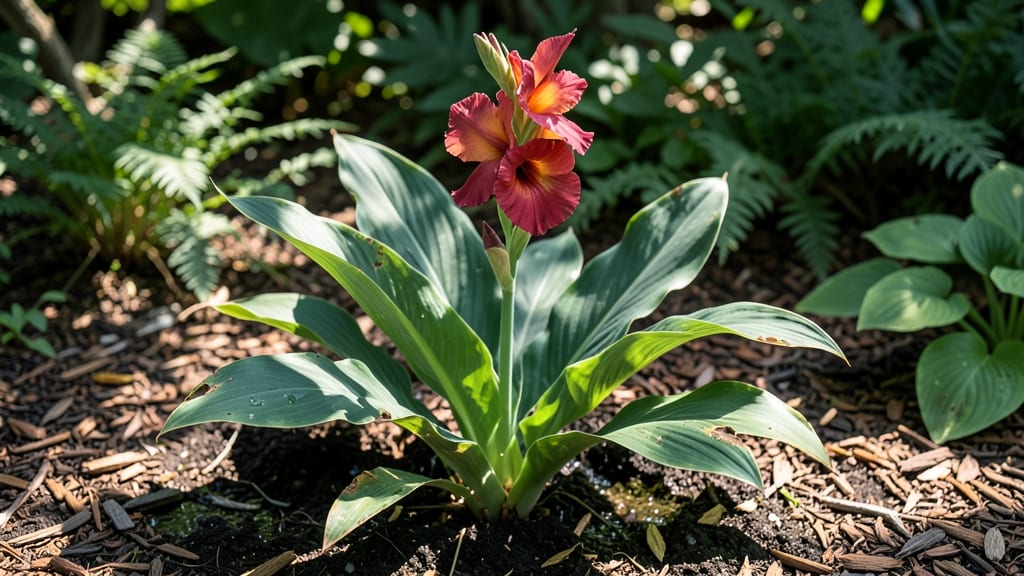
Canna lilies can grow in shade, though they thrive best in partial shade with at least 4-6 hours of indirect sunlight daily. Varieties like 'Durban' or 'Striped' tolerate lower light better than full-sun types, but growth may be slower and blooms fewer. Ensure well-draining, rich soil and consistent moisture for optimal results.
While canna lilies can survive in shade, their performance depends heavily on light intensity. 🌿 Lower light reduces chlorophyll production, which means fewer blooms and smaller leaves.
That said, some varieties like 'Durban' and 'Striped' have adapted better to dimmer conditions, often producing deep green foliage that compensates for the lack of flowers. To maximize their potential, I always recommend supplementing with artificial grow lights during winter months when natural light is scarce.
For the best results in shaded areas, focus on soil quality—rich, well-draining soil with added compost helps cannas make the most of limited light. Consistent moisture is also critical, as shade can slow evaporation but still requires regular watering to prevent stress.
If you're dealing with deep shade, consider choosing varieties specifically bred for low-light tolerance to avoid disappointment.
💡 In This Article
- How Light Levels Affect Canna Lily Growth and Blooming
- Best Shade-Tolerant Canna Lily Varieties for Low-Light Gardens
How light levels affect canna lily growth and blooming
Canna lilies rely on photosynthesis to convert light into energy, but their efficiency drops dramatically in low-light conditions. When exposed to less than 4 hours of indirect sunlight daily, these plants prioritize leaf production over flowering.
This is because chlorophyll—a pigment essential for capturing light—becomes less effective in dim environments, forcing the plant to allocate more energy toward larger, deeper green leaves to maximize whatever light is available. 🌱 The result?
You'll often see lush foliage but sparse blooms, as the plant essentially "saves" its energy for survival rather than reproduction.
The science gets even more interesting when you consider leaf structure. Canna lilies grown in shade develop broader, thinner leaves compared to their sun-loving counterparts. This adaptation increases surface area for light absorption, but it also makes the plants more susceptible to wind damage and pests.
In full sun, cannas produce thicker, waxier leaves that conserve moisture and reflect excess light to prevent overheating. The trade-off? Shade-grown cannas may reach 3-4 feet tall with wider leaves, while sun-grown varieties often stay more compact (2-3 feet) with denser foliage.
Variegated canna varieties—those with striped or multicolored leaves—face an even bigger challenge in shade. The white or yellow sections of variegated leaves contain fewer chloroplasts (the light-capturing organelles), so these plants struggle more in low light.
For example, 'Striped' cannas may lose their vibrant patterns entirely in deep shade, reverting to solid green foliage as the plant prioritizes survival over aesthetic traits. This is why I always recommend placing variegated cannas in bright, indirect light rather than full shade.
Blooming becomes a secondary priority when light is limited. Canna lilies produce flowers as a way to attract pollinators, but this process requires significant energy. In shade, you might see 20-30% fewer blooms compared to their sun-grown counterparts.
The flowers that do appear tend to be smaller and less vibrant, with petals that may not fully open.
For instance, a 'Durban' canna in full sun might produce 50+ blooms per stalk, while the same variety in shade could yield only 10-15 blooms—though the foliage will still be impressive.
Seasonal light changes also play a role. During winter months in temperate climates, natural light drops by 30-40%, which can stunt growth entirely if cannas aren't given supplemental light.
Artificial grow lights (LED or fluorescent) emitting a 6400K color temperature can mimic sunlight and encourage blooming, even in indoor or heavily shaded gardens. I've seen shade-grown cannas produce up to 50% more blooms when supplemented with just 4-6 hours of artificial light daily during darker months.
Here's what you can do to optimize growth in shade: Amend your soil with 3-4 inches of compost to improve nutrient uptake, and mulch with organic matter to retain moisture. Water consistently—shade slows evaporation, but roots still need oxygen, so avoid waterlogging.
For best results, rotate your cannas every 2-3 weeks to ensure all sides receive equal light exposure, even in partial shade.