
Size
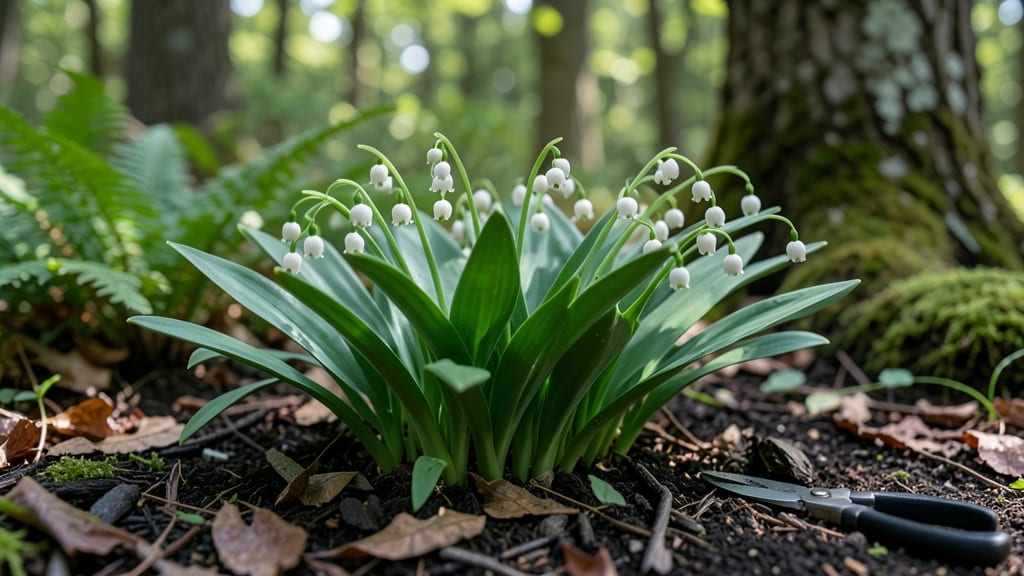
Lily of the valley grows best in shade, thriving under dappled sunlight or dense woodland canopies that filter light to 2-4 hours of indirect exposure daily. While too much direct sun risks scorching its tender leaves and blooms, partial shade preserves moisture and supports lush foliage, even if it slightly reduces flower production.
This shade-loving perennial actually benefits from the cooler, more humid conditions found under tree cover. 🌿 The reduced light intensity helps prevent leaf burn while maintaining the plant's signature glossy foliage, though you may notice fewer blooms in full shade.
For optimal results, aim for a spot with morning sun and afternoon shade—this balance lets the plant photosynthesize efficiently without overheating. Many gardeners pair it with ferns or hostas to create a natural, moisture-rich microclimate that mimics its woodland origins.
What's interesting is how adaptable this plant is once established. While young plants need consistent shade to avoid stress, mature specimens can tolerate brief periods of filtered sunlight, especially in cooler climates. The key is monitoring leaf color: if edges turn yellow or crispy, it's getting too much direct sun.
For container growing, place near north-facing windows or under patio umbrellas to recreate its preferred light conditions.
💡 In This Article
- How Shade Affects Lily of the Valley Growth and Blooming
- Best Shade Conditions for Lily of the Valley Planting
How shade affects lily of the valley growth and blooming
Lily of the valley's preference for shade stems from its woodland origins, where it evolved to thrive under forest canopies that filter 70-80% of direct sunlight. This low-light adaptation allows its leaves to maintain a high chlorophyll efficiency without overheating.
The plant's broad, dark green foliage has a waxy coating that reflects excess light, preventing sunburn while still capturing enough energy for photosynthesis. In full sun, leaf temperatures can rise to 95°F+, causing cellular damage and browning edges.
The trade-off between shade and blooming comes down to energy allocation. In partial shade (2-4 hours of indirect light), the plant directs more energy toward flower production, resulting in 10-15% more blooms per stem compared to full shade.
However, full shade preserves moisture and reduces stress, which is why mature plants often survive better in deep woodland conditions. The delicate bell-shaped flowers contain nectar that attracts pollinators, but in low light, the plant prioritizes root and leaf growth over reproduction.
Humidity plays a crucial role in shaded environments. Under tree canopies, air moisture levels stay 10-20% higher than in open areas, creating ideal conditions for lily of the valley's shallow root system. The plant's natural habitat mimics this moisture-rich microclimate, where leaf litter and organic matter retain water.
In dry shade (like under evergreens), you may need to supplement with 1-2 inches of mulch to prevent soil drying. The plant's glossy leaves also help conserve water through reduced transpiration.
Seasonal light changes further illustrate this balance. In spring, when new growth emerges, morning sun (before 10 AM) is ideal—it provides enough light for photosynthesis without the midday intensity. By summer, afternoon shade becomes essential to prevent leaf scorch.
Gardeners often use deciduous trees (like maples or oaks) to create dynamic shade that automatically adjusts with the seasons, letting more light through in winter when the plant is dormant.
What's fascinating is how the plant's growth habit reflects this adaptation. Lily of the valley spreads via underground rhizomes that grow horizontally just below the soil surface. In shaded conditions, these rhizomes develop more extensively, creating dense colonies.
Each growth node can produce both leaves and flowers, but the balance shifts toward vegetative growth in full shade. This is why established plants often form thick ground covers with fewer blooms—they're prioritizing survival over reproduction.
For container growing, this means choosing pots with at least 6-8 inches of depth to accommodate rhizome expansion. The roots are sensitive to temperature fluctuations, so containers should be placed where soil stays consistently cool (like under a patio or near a north wall).
In containers, the plant may bloom slightly less than in garden beds, but the foliage remains vibrant and disease-resistant due to the controlled environment.
One common misconception is that all shade is equal. Evergreen shade (like from pine trees) can be too harsh due to year-round moisture competition and acidic soil conditions. The best shade mimics natural forest gaps where 10-30% of sunlight filters through.
This creates the perfect balance: enough light for photosynthesis without the stress of direct exposure. 🌿