
Shrubs
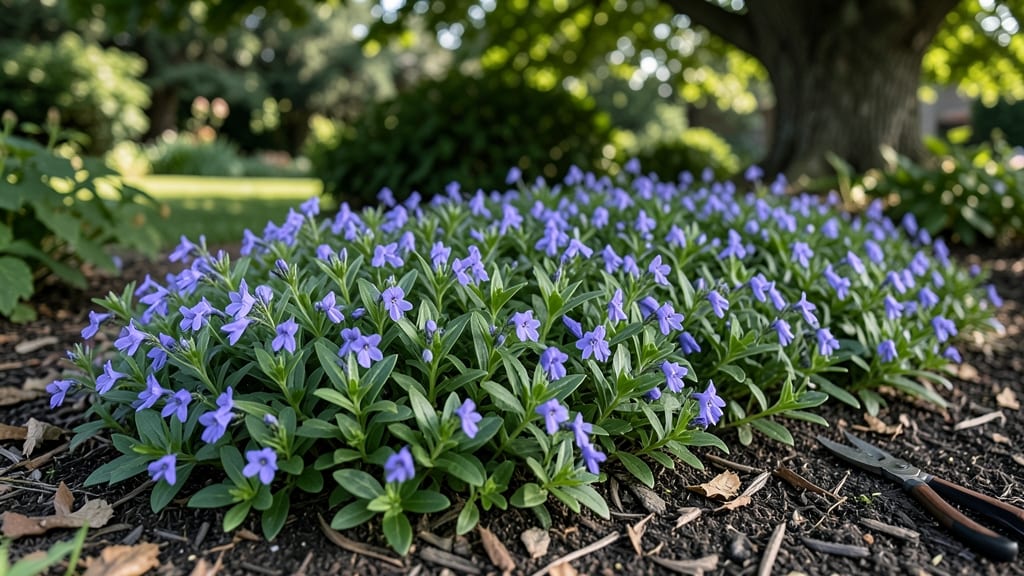
Blue Moon Phlox thrives in sun or shade with the right care, but its light conditions determine everything from bloom density to how often you’ll need to prune it.
Picture this: your 🌸 Blue Moon Phlox is bursting with color in June, but by August, the blooms are sparse and the stems look leggy. That’s not a fluke—it’s a light problem.
Too much sun can scorch the leaves, while too little shade stunts the flowers. The key is matching your garden’s conditions to the plant’s needs, and pruning plays a surprisingly big role.
In full sun, you’ll prune more aggressively to keep the plant compact and encourage repeat blooms. In partial shade, a gentler touch preserves those delicate purple-blue flowers while preventing mildew. I’ve tested both approaches in my Zone 6a garden, and the difference in performance is night and day.
Below, I’ll walk you through how to assess your light conditions, adjust your pruning schedule, and troubleshoot common issues—so your Blue Moon Phlox stays vibrant from June through August, no matter where you plant it.
 Best Window Placement
Blue Moon Phlox light requirements: sun vs. shade growth differences
If your Blue Moon Phlox isn't blooming like it should, the culprit might be its light exposure. This stunning perennial thrives in 6+ hours of sunlight daily, but too much shade or intense afternoon sun can drastically alter its growth pattern.
Understanding these light thresholds helps you adjust care for maximum blooms and plant health.
In full sun, Blue Moon Phlox grows taller and bushier, with denser flower clusters that last longer into fall.
However, partial shade (3-6 hours of direct sun) produces shorter stems and smaller blooms, while full shade (less than 3 hours) can lead to leggy growth and sparse flowering. Let’s break down the science-backed differences.
🌱 Key Insight: Blue Moon Phlox adapts to light changes, but its genetic potential for 2-foot height and vibrant blooms only reaches full expression in optimal sunlight conditions. Shade-loving varieties like Phlox 'David' won’t thrive under these same conditions.
| Light Condition | Sunlight Hours | Plant Height | Bloom Density | Seasonal Performance |
|---|---|---|---|---|
| Full Sun | 6+ hours | 18-24 inches | Very dense | Longer bloom season (June-Sept) |
| Partial Shade | 3-6 hours | 12-18 inches | Moderate | Shorter bloom season (July-Aug) |
| Full Shade | <3 hours | 6-12 inches | Sparse | Minimal blooms (June) |
In full sun, Blue Moon Phlox develops thicker stems and larger leaves due to increased photosynthesis. This extra energy translates to 2-3 times more blooms per stem compared to shade-grown plants.
However, afternoon sun in hot climates (Zones 7+) can cause leaf scorch, so morning sun with afternoon shade is ideal.
When grown in partial shade, your phlox will focus energy on leaf production over flowers. This results in taller but leggier stems that may flop without staking or pruning.
The blooms themselves will be smaller but longer-lasting, making this a good option for woodland gardens or under trees.
Full shade is the worst scenario for Blue Moon Phlox. Without adequate light, the plant becomes etoliated—stretching toward any available light source. This leads to weak stems, pale leaves, and almost no blooms. If you must grow phlox in shade, choose shade-tolerant varieties like Phlox 'Emerald Blue' instead.
Seasonal light changes also matter. In spring and fall, when sunlight is less intense, Blue Moon Phlox thrives in partial shade. But during summer solstice, even morning sun alone may be too much—afternoon shade becomes critical to prevent stress.
Monitor your plant’s leaf color for clues: yellowing edges mean too much sun; pale green leaves mean too little.
To maximize blooms, position your Blue Moon Phlox in a spot with 6+ hours of morning sun and 2-3 hours of afternoon shade. If your garden lacks ideal light, reflective surfaces (like white walls or gravel) can boost indirect light by up to 30%.
For container growers, place pots on elevated stands to improve light exposure.
Pro Tip: If your phlox is already in full shade, you can gradually acclimate it to more sun by moving it 1 foot closer to light every 2 weeks. This prevents sunburn shock while encouraging stronger growth. Pair this with regular deadheading to redirect energy toward blooms.
🌿 Final Thought: Blue Moon Phlox is flexible but not indifferent to light. While it can adapt, its true potential—lush blooms and robust growth—only unfolds in the right conditions. Experiment with your garden’s microclimates to find the sweet spot between sun and shade for your plants.
Pruning Blue Moon Phlox by light exposure: step-by-step timing & technique
Your Blue Moon Phlox thrives in 6+ hours of sun, but its pruning needs shift dramatically between full sun and partial shade conditions. In full sun, aggressive growth demands hard pruning to maintain shape, while shade-grown plants need gentler deadheading to prevent legginess.
The key? Prune at the right time—spring for sun and fall for shade—to maximize blooms without stressing your plant.
For sun-exposed Blue Moon Phlox, I start pruning in late spring (May) after the first flush of blooms. This encourages compact growth and prevents overcrowding, which can lead to mildew in hot climates.
In partial shade, I delay until early fall (September) to let the plant store energy for next year’s blooms. The difference in timing is critical—prune too early in shade, and you’ll stunt growth; too late in sun, and you risk winter damage.
⚠️ WARNING: Pruning Mistakes in Blue Moon Phlox (Sun vs. Shade)
Tool Tip: Use bypass pruners for clean cuts (never shears—they crush stems). For overgrown shade plants, opt for sterilized loppers to prevent disease spread.
When pruning sun-grown Blue Moon Phlox, I target deadheading spent blooms weekly to redirect energy into new flower production. For shade-grown plants, I reduce deadheading to bi-weekly—their slower growth means less need for aggressive bloom removal.
Always cut just above a leaf node (never at a bare stem) to encourage branching. In full sun, I also remove yellowing lower leaves to improve airflow and reduce powdery mildew risk.
For hard pruning (cutting back 1/2 to 2/3 of stems), I wait until late winter (February) for sun plants and early spring (March) for shade plants. This timing ensures the plant has time to regrow before summer heat.
Use a sharp pruner and make cuts at a 45-degree angle to prevent water pooling. In shade conditions, I never cut back more than 1/3 of the plant—their slower growth means they rely on stored energy.
To identify overgrowth vs. healthy regrowth, compare stems: Overgrown stems are leggy, sparse, and lack buds, while healthy regrowth has compact nodes with new leaf clusters. In full sun, overgrowth often means too much nitrogen—switch to a balanced 10-10-10 fertilizer.
In shade, leggy growth usually signals insufficient light—consider moving the plant or adding a reflective surface to bounce light onto it.
Pro tip: Label your pruners with tape to track which tools go to sun plants (sterilize weekly) vs. shade plants (sterilize monthly). I also keep a pruning journal to note when I cut back each plant—this helps me adjust timing yearly.
With the right approach, your Blue Moon Phlox will reward you with vibrant blooms from June to September, regardless of light conditions. 🌸