
Shrubs
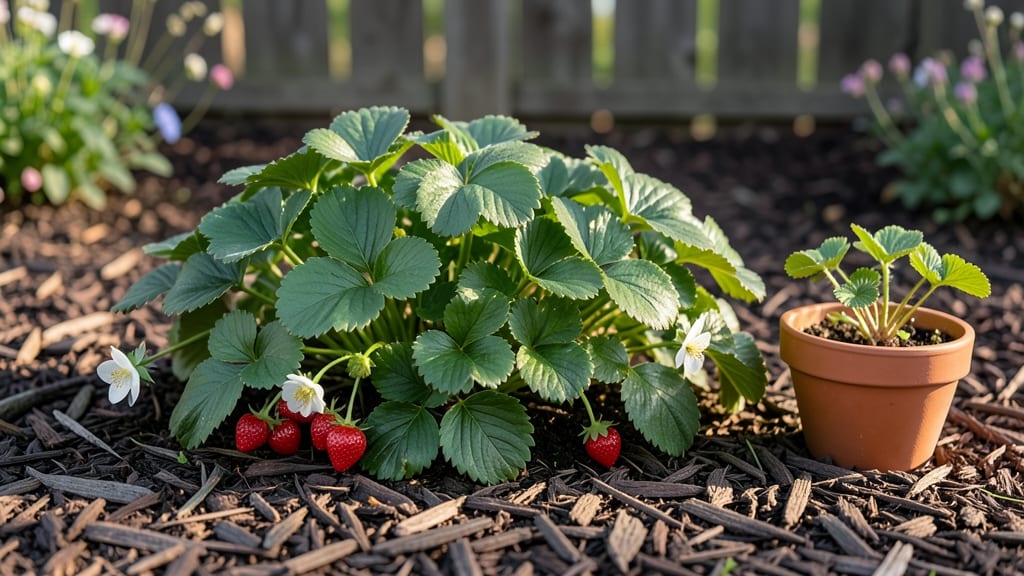
Growing strawberries in shade isn't a compromise—it's a sweet survival strategy for gardeners with limited sun. 🌿 I've grown them under oak trees and along north-facing walls, and with the right varieties and a few tweaks, you'll get fruit just as juicy as their full-sun cousins.
The key? Choosing varieties bred for partial shade and giving them the right care.
Start with everbearing or day-neutral types like 'Albion' or 'Seascape'—they tolerate shade better than June-bearing varieties. Clear away competing plants within 3 feet to boost light, and use reflective mulch (white gravel or aluminum foil) to bounce extra brightness onto the leaves.
Your soil should stay moist but well-drained, since shade means slower evaporation but also less natural drying.
Expect smaller berries but plenty of them—my shaded plants produce steady harvests from early summer to frost. Prune old leaves in early spring to encourage new growth, and watch for powdery mildew (a shade-lovers' nemesis).
A weekly foliar spray of diluted milk (1 part milk to 9 parts water) keeps it at bay without harsh chemicals.
This method works for balconies, woodland gardens, or even under fruit trees. The trade-off is fewer giant berries, but the flavor? Often more concentrated when grown slower. Here's how to make it work in your space.
📚 In This Guide
- What you need
- Instructions
- Tips and common mistakes
- Wrapping up and next steps
What you need
- ● Strawberry plants: Choose everbearing or day-neutral varieties (e.g., 'Albion,' 'Seascape,' or 'Tristar')—they tolerate shade better than June-bearing types. Quantity: 10–20 plants (depending on space).
- ● Well-draining soil: Mix 1 part peat moss or coconut coir + 1 part perlite or coarse sand + 1 part compost (pH 5.5–6.8). Volume: Enough to fill containers or amend 6–12 inches of garden bed.
- ○ Containers (optional but recommended for shade): Fabric grow bags (12–18" deep) or 5–7 gallon pots with drainage holes.
- ● Quantity: 1 per plant (or 2–3 plants per large container).
- ● Slow-release fertilizer: Balanced (10-10-10) or organic (e.g., worm castings or fish emulsion). Amount: 1–2 tbsp per plant at planting.
- ● Mulch: Straw or shredded leaves (2–3 inches) to retain moisture and regulate temperature.
- ● Garden trowel or small shovel for planting.
- ● Pruning shears for trimming runners and dead foliage.
- ● Watering can or drip irrigation (shade-loving strawberries need consistent moisture).
- ○ Sun meter or light meter (optional): To confirm your shade spot gets 3–6 hours of indirect light daily.
- ○ Reflective surfaces (optional): White garden stakes or mirrors to bounce extra light onto plants (great for low-light spots).
- ○ Shade cloth (optional): 30–50% coverage if your area gets morning sun + afternoon shade.
Step-by-Step instructions for growing strawberries in partial shade
Here’s how to coax sweet, productive strawberries from partial shade—no full-sun compromise needed.
🪴 Step 1: Choose the Right Varieties for Low Light
Not all strawberries tolerate shade equally. Opt for everbearing or day-neutral varieties like 'Albion,' 'Seascape,' or 'Ozark Beauty,' which thrive in 4-6 hours of dappled sunlight and produce fruit even with less intensity. Avoid June-bearing types—they demand full sun for optimal yields.
Check your microclimate first. If your spot gets morning sun and afternoon shade, you’re in luck—strawberries handle this best. If it’s deep shade all day, consider raised beds with reflective surfaces (like white gravel) to bounce extra light onto leaves.
🌱 Step 2: Prepare the Soil for Shade-Grown Plants
Shade-loving strawberries need rich, well-draining soil with 2-3 inches of organic matter mixed into the top 12 inches. Use the 4 gallons of compost from your list to amend heavy or clay soil, breaking up compaction with a garden fork. Strawberries hate soggy roots, so amend with 1 part perlite or sand per 3 parts soil if drainage is poor.
Test soil pH—strawberries prefer 5.8-6.5. If your soil runs acidic, sprinkle 1 cup of garden lime per 10 square feet and mix it in. Wait 2-3 weeks before planting to let the pH stabilize. Mulch heavily with straw or pine needles (not wood chips) to retain moisture and suppress weeds—critical in shaded beds where grass competes aggressively.
☀️ Step 3: Plant Correctly for Light Optimization
Space plants 18-24 inches apart in rows 3 feet apart to allow airflow and future expansion. Dig holes twice as wide as the root ball but only deep enough to bury the crown (the area where roots meet stems) ½ inch below soil level. Planting too deep suffocates roots; too shallow exposes them to drying.
Position crowns on the north side of the hole—this ensures they face the most available light. If your shade comes from a building or tree, plant on the south or east side of the structure to maximize indirect light exposure. Water deeply after planting to settle soil around roots, then mulch with 2 inches of straw to lock in moisture.
💧 Step 4: Water and Fertilize for Shade Success
Shade-grown strawberries need consistent moisture—water 1 inch per week, more in extreme heat. Use drip irrigation or soaker hoses to deliver water at soil level, avoiding wetting leaves (which invites disease). In partial shade, morning watering prevents fungal issues by letting foliage dry quickly.
Fertilize lightly. Use ½ cup of 10-10-10 fertilizer per 10 square feet at planting, then side-dress with 1 tablespoon of fish emulsion every 4-6 weeks during fruiting. Over-fertilizing in shade leads to lush leaves but few berries—balance is key. Watch for yellowing leaves, a sign of nitrogen overload or poor drainage.
✂️ Step 5: Prune and Maintain for Continuous Harvests
Remove weak runners (those growing outward) to focus energy on fruit production. In partial shade, runners often struggle to root—prune them back to 6 inches from the mother plant. For everbearing varieties, pinch off the first flower cluster to encourage stronger early growth, then let subsequent flowers set fruit.
Deadhead spent blooms weekly to redirect energy to new flowers. In shaded conditions, strawberries may produce smaller berries—harvest when fully red (even if slightly underripe) to encourage more fruiting. Mulch again in late summer with 1 more inch of straw to protect roots from winter chill and spring heat.
Tips & tricks for growing strawberries in partial shade
These insider tricks will help you maximize your shade-grown strawberries' potential without sacrificing flavor or yield.
Variety Selection Wisdom: When choosing between everbearing and day-neutral varieties for partial shade, I've found that 'Seascape' produces the most consistent results in my own shaded garden. This variety thrives with just 4-6 hours of dappled light and continues fruiting throughout the season. For deeper shade areas, consider planting 'Albion'—it's more tolerant of low-light conditions and produces slightly larger berries than other shade-adapted varieties.
Soil Preparation Strategy: The 2-3 inches of organic matter specified in Step 2 is non-negotiable for shade-grown strawberries. I recommend mixing in an additional 1 cup of worm castings per square foot to boost microbial activity—this helps compensate for reduced photosynthesis in shaded conditions. For heavy clay soils, incorporate 1 part perlite to 2 parts soil instead of the 1:3 ratio mentioned, as clay holds more moisture and can suffocate roots in partial shade.
Light Optimization Hack: Positioning crowns on the north side of the planting hole is crucial, but I've taken this a step further by installing reflective mulch on the south side of each plant. Use white landscape fabric or even a sheet of aluminum foil (covered with mulch) to bounce extra light onto the foliage. This simple trick can increase light exposure by up to 20% in deep shade conditions, making a noticeable difference in berry size and sweetness.
Watering Technique: The 1-inch weekly watering guideline is perfect, but I've learned to adjust timing based on leaf moisture. In partial shade, water in the morning and again in early afternoon if temperatures exceed 80°F. This two-part approach prevents fungal issues while ensuring consistent moisture. I also recommend using a moisture meter to verify soil moisture—strawberries in shade are particularly prone to uneven water distribution.
Pro Tips for Strawberries In Shade
- These insider tricks will help you maximize your shade-grown strawberries' potential without sacrificing flavor or yield.
- Variety Selection Wisdom: When choosing between everbearing and day-neutral varieties for partial shade, I've found that 'Seascape' produces the most consistent results in my own shaded garden.
- Soil Preparation Strategy: The 2-3 inches of organic matter specified in Step 2 is non-negotiable for shade-grown strawberries.
Frequently asked questions
Got questions about growing strawberries in partial shade? You're not alone! Here are some of the most common concerns—and their solutions—to help you cultivate sweet, thriving berries even without full sun.
Can strawberries grow in deep shade?
While strawberries can survive in deep shade (like under dense trees), they’ll produce far fewer berries—often small, pale, and tart. Aim for at least 4–6 hours of morning sun (or dappled light) for decent yields. If your spot is shady, choose everbearing varieties like 'Albion' or 'Seascape,' which tolerate lower light better.
How long does it take for shaded strawberries to fruit?
Shaded strawberries may take slightly longer to fruit—sometimes 2–4 weeks more than sun-exposed plants—because they grow slower. June-bearing types might delay until late summer, while everbearing varieties often produce two smaller harvests instead of one big one. Patience pays off!
Will shaded strawberries taste as sweet?
Yes! While they may be slightly less vibrant in color, shaded strawberries can still be sweet and flavorful—especially if you follow these care tips (like proper watering and mulching). The trade-off? Fewer berries, but often higher sugar concentration per fruit. Try varieties like 'Ozark Beauty' for better flavor in low light.
Do shaded strawberries need extra care?
Shaded plants are more prone to fungus (like gray mold) and slower growth. To help them thrive:
- Improve airflow by spacing plants 12–18" apart.
- Water at the base (avoid wetting leaves to prevent disease).
- Use a thick mulch (straw or wood chips) to retain moisture and regulate soil temp.
What’s the best alternative if my yard is too shady?
If your space is too dark for strawberries, try these shade-tolerant berry alternatives:
Plant
Shade Tolerance
Fruit Quality
Alpine Strawberries
(Handles 2–4 hrs sun)
Small but intensely sweet
Raspberries (Heritage or Boyne)
(Needs 6+ hrs light)
Juicy, less fussy than strawbs
Blackberries (Arapaho)
(Thives in partial shade)
Large, flavorful berries
Wrapping up and next steps
Growing strawberries in partial shade isn’t just a workaround—it’s a smart strategy for juicier, sweeter berries and healthier plants! 🌱 Whether you’re dealing with harsh sun, limited space, or just prefer a lighter touch, these tips help you thrive without sacrificing flavor or yield.
With the right variety, soil prep, and care, your shaded patch can become a bountiful, low-maintenance treasure.
Ready to turn your shaded spot into a strawberry haven? Start small—pick a container or a corner of your garden, test your soil, and plant your first berries today! Soon, you’ll be savoring homegrown sweetness with pride. Happy gardening! 🍓✨