
Light Requirements
Texas gardens face brutal sun and heat, but shade-tolerant plants can thrive even in the toughest conditions. These 10 drought-resistant picks bring color, texture, and life to your shady spots while surviving Texas’ extreme climate.
Cast Iron Plant (Aspidistra elatior)

If you’ve ever abandoned a plant because it seemed hopeless, Aspidistra elatior—better known as the cast iron plant—is your redemption. This hardy evergreen thrives in deep shade, where most plants wilt, and survives on minimal watering, making it perfect for Texas’ hot, dry corners under trees or along north-facing walls.
Native to Asia but adaptable to Texas’ climate, this plant tolerates neglect, poor soil, and even indoor conditions with ease. Its glossy, dark green leaves grow upright, reaching 2–3 feet tall, and its roots spread slowly, making it ideal for containers or tight spaces. Water only when the top inch of soil feels dry—overwatering is its only weakness.
This plant is a lifesaver for beginners or gardeners with shady, forgotten spots that need greenery without fuss. It’s also deer-resistant and pest-free, so you won’t lose it to critters or pests. 💪
Mexican Feather Grass (Nassella tenuissima)

If you're looking for a drought-tolerant ornamental grass that adds movement and texture to your shade garden without demanding constant attention, Mexican Feather Grass (Nassella tenuissima) is your answer. This airy, wispy grass thrives in partial shade while handling Texas heat and dry spells with ease.
With its delicate, feathery plumes that sway gently in the breeze, this grass reaches 1-2 feet tall and spreads 1-2 feet wide, making it ideal for borders, containers, or mass plantings. It requires minimal care—just occasional trimming to maintain shape and well-draining soil. Unlike many grasses, it tolerates foot traffic, so it’s perfect for pathways or high-traffic areas.
Urban gardeners and busy homeowners will appreciate how this grass stays green year-round in mild climates and adds a soft, ethereal touch to any landscape. It’s also deer-resistant, making it a practical choice for rural properties. 🌿
Frogfruit (Phyla nodiflora)

If you’re tired of battling erosion on slopes or shady hillsides, frogfruit (Phyla nodiflora) is your secret weapon. This native ground cover spreads aggressively (up to 3 feet per year) while staying low to the ground, creating a lush, green carpet that stabilizes soil and prevents runoff.
Thriving in full to partial shade, frogfruit handles Texas’ heat and drought once established, making it ideal for under trees or along retaining walls. Its tiny white flowers bloom year-round, attracting bees, butterflies, and hummingbirds—turning your shady spots into a pollinator paradise with almost no effort.
Perfect for eco-conscious gardeners or those with sloped yards, frogfruit’s zero-maintenance nature means no mowing, watering, or fussing—just a resilient, living ground cover that works with nature. 🌱
Japanese Fern (Athyrium niponicum)

Transform your shady garden beds into a lush, textured retreat with Japanese fern (Athyrium niponicum). This elegant perennial thrives in the moist, dappled shade found under live oaks or patio covers, offering delicate fronds that sway gently in the breeze.
To keep it happy, plant in well-draining, humus-rich soil and water consistently to maintain moisture—it won’t tolerate dry conditions. The silvery-green foliage adds a refined contrast to bold-leaved plants like hostas or ferns, while its compact habit (18-24 inches tall) makes it perfect for borders or woodland gardens. Mulch with organic material to retain moisture and suppress weeds.
Ideal for gardeners seeking low-maintenance texture, Japanese fern pairs beautifully with native Texas shade plants like Turk’s cap or dwarf yaupon holly. Its graceful appearance elevates any shady corner with minimal effort. 🌿
Turk’s Cap (Malvaviscus arboreus)

If you’re craving year-round color in your shady Texas garden without the fuss of seasonal blooms, Turk’s Cap (Malvaviscus arboreus) is the native shrub that delivers. Unlike many shade plants that fade in summer heat, this Texas native thrives in partial to full shade while producing vibrant red, trumpet-shaped flowers that bloom continuously—even through winter in mild climates.
This drought-tolerant shrub reaches 6–10 feet tall but stays compact enough for smaller spaces with pruning. It prefers well-draining soil and handles Texas’ alkaline soils better than many imports. Once established, it needs water only during prolonged dry spells, making it perfect for water-wise gardens. The glossy, dark green leaves add lush texture, and hummingbirds adore its nectar-rich blooms.
Landscape designers and homeowners with shady, hot corners (like under live oaks) will love how Turk’s Cap adds bold color without sun requirements. It’s also deer-resistant, so rural gardeners can relax knowing it won’t become a buffet. 🌻
Sweet Potato Vine (Ipomoea batatas)

If you love vibrant color but struggle with shade in your Texas garden, sweet potato vine (Ipomoea batatas) is your secret weapon. This fast-growing, trailing vine produces heart-shaped leaves in shades of purple, green, and yellow, creating a cascading display perfect for containers or hanging baskets—even in partial shade.
Native to warm climates, this vine thrives in partial shade (2-6 hours of sun) and tolerates Texas heat once established. It grows aggressively, reaching 6-10 feet long, making it ideal for spilling over planters, trellises, or balcony railings. For best results, plant in well-draining soil and water moderately—it’s drought-tolerant once roots are established.
Urban gardeners and patio enthusiasts will love how this vine adds instant color and texture without requiring full sun. Just be cautious—it’s edible (yes, the same plant that produces sweet potatoes!) but toxic if ingested in large amounts. 🌻
Dwarf Yaupon Holly (Ilex vomitoria ‘Nana’)

Tired of shady spots that look bare year-round? The dwarf yaupon holly (Ilex vomitoria ‘Nana’) is Texas’ secret weapon for evergreen structure in partial shade. Unlike many shade plants that fade in summer, this compact shrub stays lush and green through all four seasons, reaching just 3–4 feet tall—perfect for borders, foundation plantings, or even containers.
Native to Texas and drought-tolerant once established, it thrives in partial to full shade while handling heat and humidity better than most imports. Its glossy, dark green leaves provide a polished backdrop for brighter plants, and female varieties produce bright red berries in winter, adding seasonal interest. Prune lightly after flowering to maintain its neat, rounded shape.
Landscape designers and homeowners with small spaces or shady corners will love how this holly delivers year-round greenery with almost no maintenance. It’s also deer-resistant, making it a practical choice for rural properties. 🌱
Caladium (Elephant Ear)

Bring instant drama to your shady Texas patio or garden bed with caladiums (Elephant Ear), a tropical stunner that thrives where most plants fade. These showstopping foliage plants deliver vibrant pink, white, and green patterns that look like painted art—perfect for adding a splash of color under trees or in containers where direct sun is scarce.
Caladiums love bright, indirect light and well-draining, slightly acidic soil—ideal for Texas’ partial shade conditions. They’re tender perennials, so treat them as annuals or dig and store tubers in winter. Water consistently to keep the soil moist but not soggy, and fertilize lightly every 4-6 weeks during the growing season. Their arrowhead-shaped leaves reach 12-18 inches tall, making them perfect for borders or as a focal point in mixed containers.
Patio gardeners and urban dwellers will adore how caladiums create a tropical escape without needing full sun. Pair them with hostas or ferns for a lush, layered shade garden that feels like a jungle retreat. Just remember—these divas need protection from frost! 💚
Mexican Petunia (Ruellia brittoniana)

Forget the fuss of seasonal blooms—Mexican Petunia (Ruellia brittoniana) delivers nonstop color in partial shade while thriving on Texas’ heat and drought. Unlike many shade plants that fade in summer, this drought-tolerant perennial produces trumpet-shaped purple flowers from spring through fall, making it a standout for borders, foundation plantings, or containers.
This compact shrub grows 1-2 feet tall and wide, perfect for defining garden edges without overwhelming smaller spaces. It handles poor, rocky soil and requires minimal water once established—ideal for water-wise landscapes. Deadhead spent blooms to encourage even more flowers, and watch butterflies flock to its nectar-rich blooms.
Landscape designers and homeowners with shady borders or hot, dry corners will love how Mexican Petunia adds year-round interest with its glossy green leaves and cheerful blooms. It’s also deer-resistant, so rural gardeners can enjoy its beauty without worry. ✨
Oakleaf Hydrangea (Hydrangea quercifolia)

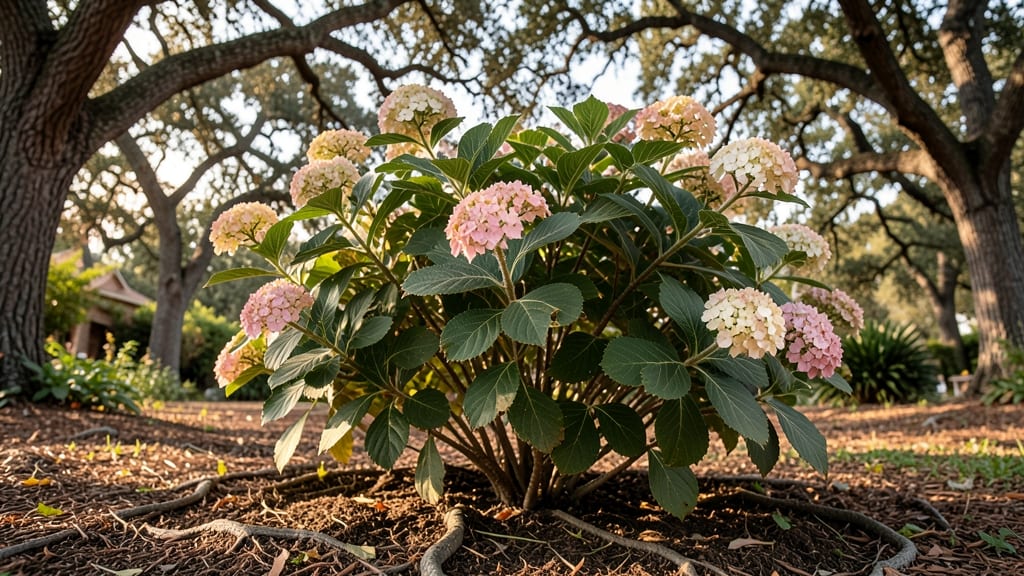
For a Texas shade garden that feels like a woodland retreat, Oakleaf Hydrangea (Hydrangea quercifolia) is the showstopper you’ve been waiting for. Unlike other hydrangeas, this deciduous shrub thrives in partial to full shade while handling Texas heat once its roots establish—making it perfect for under live oaks or along north-facing walls where other plants struggle.
Its lobed, oak-shaped leaves (hence the name) turn fiery red in fall, and clusters of fragrant white blooms appear in late spring to summer, attracting bees and butterflies. This shrub grows 6–12 feet tall but can be pruned to maintain a smaller size. Plant in well-draining, slightly acidic soil and water regularly until established—after that, it’s drought-tolerant and low-maintenance.
Landscape designers and homeowners with shady, hot corners will love how Oakleaf Hydrangea adds year-round interest with its seasonal color shifts. It’s also deer-resistant, so rural gardeners can enjoy its beauty without worry. 🌷