
Plants
Zone 4 gardeners know shade and cold can stifle most vines—but these hardy climbers thrive in both. Discover 10 frost-resistant, low-light vines that add vertical beauty without demanding full sun or tender care.
Clematis Jackmanii For Frost-Resistant Vertical Drama

Looking for a shade-loving vine that refuses to surrender to winter? Clematis Jackmanii delivers frost-resistant drama with deep purple blooms that reappear from early summer until frost. Unlike many vines, this classic thrives in Zone 4’s harsh winters (down to -30°F) and even flourishes in deep shade where others struggle.
Plant it near a trellis, arbor, or fence—its vigorous growth (10-15 feet) creates a lush vertical backdrop. For best results, pair it with a low-growing partner (like hostas) to hide its leggy early-season stems. Prune in late winter to remove dead wood and encourage fresh blooms, but avoid heavy cuts—this vine rewards patience with months of continuous color.
Perfect for gardeners who want year-round structure without fuss, Clematis Jackmanii is the ultimate shade garden workhorse. 🌱
Honeysuckle Lonicera Sempervirens Twilight Zone

If you're looking for a vine that brings life to shady corners while needing almost no attention, Lonicera sempervirens—commonly called coral honeysuckle—is your perfect match. This native Zone 4 beauty thrives in partial shade, making it ideal for north-facing walls or woodland edges where other vines struggle.
Its fragrant tubular flowers bloom from late spring to summer, attracting hummingbirds and butterflies with their sweet nectar. Once established, it’s drought-tolerant, requiring water only during dry spells. For best results, plant near a trellis or fence—it climbs using twining stems and can reach 15-20 feet with minimal support.
This evergreen vine offers year-round interest, with glossy leaves that stay green even in winter. It’s especially great for urban gardeners or those with limited space, as it adapts well to containers and tolerates city pollution. 🌱
Virginia Creeper Parthenocissus Quinquefolia

Tired of poison ivy taking over your shade garden? Virginia creeper (Parthenocissus quinquefolia) is the safe, stunning alternative that thrives where others fail. This hardy vine tolerates urban pollution, grows in full to partial shade, and delivers vibrant red fall foliage that outshines its toxic lookalike.
Perfect for covering fences, walls, or arbors in Zone 4, it uses suction cup-like tendrils to cling without damaging surfaces. Plant in well-drained soil and water regularly until established—after that, it handles drought and cold snaps with ease. The five-leaflet leaves turn brilliant red in autumn, providing seasonal color without the risks of poison ivy.
Ideal for urban gardeners or anyone seeking a low-maintenance, non-toxic vine, Virginia creeper transforms dull spaces into lush vertical gardens. 🌿
Actaea Simplex Atropurpurea For Dark Foliage Impact

Tired of shade gardens that blend into the background? Actaea simplex 'Atropurpurea'—also called black baneberry—transforms dull corners into dramatic focal points with its deep purple-black foliage. Unlike most shade plants that fade into green, this woodland native creates bold contrast while requiring almost no maintenance.
This hardy perennial thrives in Zone 4’s cold winters (down to -30°F) and prefers dappled shade to partial sun, making it ideal for understory plantings. In late summer, it produces delicate white flower spikes followed by striking red berries (though note these are toxic if ingested). For best results, plant in moist, well-draining soil and pair with hostas or ferns to enhance its rich color.
Woodland gardeners and those seeking year-round structure will love how its foliage retains its deep hue even after flowering. It’s also deer-resistant, making it a practical choice for rural properties. 💚
Climbing Hydrangea Hydrangea Petiolaris

Transform bare walls into lush vertical gardens with Hydrangea petiolaris, the only hydrangea that climbs without trellis support. Its self-clinging stems grip surfaces like brick or stucco, creating a dramatic living tapestry in partial shade—perfect for urban spaces with limited sunlight.
This shade-loving vine thrives in Zone 4 winters (down to -20°F) and produces airy white lacecap blooms from midsummer to fall. For best results, plant in well-draining soil and water consistently until established. Prune in late winter to shape growth, but avoid heavy cuts—its natural habit creates organic, textured beauty.
Ideal for modern gardeners with small spaces, this vine adds architectural interest without overwhelming surroundings. Its low-maintenance nature makes it perfect for busy urban dwellers who want vertical beauty with minimal effort. ✨
Gooseberry Ribes Uva-Crispa For Edible Shade Cover

Want a vine that doubles as both a shade-loving cover and a fruit-bearing powerhouse? Gooseberry (Ribes uva-crispa) delivers tart, nutrient-rich berries while thriving in partial shade—making it a permaculture dream for Zone 4. Unlike sun-hungry vines, this cold-hardy plant (down to -25°F) flourishes under trees or along north-facing fences, where most climbers fail.
Plant in well-drained soil with a sturdy trellis—its thorny stems need support but reward you with glossy leaves year-round and summer-to-fall fruit. Prune in late winter to shape growth and improve airflow, which reduces fungal risks. For small spaces, dwarf varieties like 'Pixwell' stay compact (4-5 feet) while still producing pounds of berries per plant.
Permaculture enthusiasts and urban gardeners will love how gooseberries feed wildlife (birds adore the berries) while adding edible beauty to shaded corners. 🌱
Passionflower Passiflora Incarnata

Want to grow a vine that looks like it belongs in a tropical paradise but thrives in your Zone 4 garden? Passiflora incarnata, or maypop passionflower, delivers exotic beauty with intricate purple and white blooms that hummingbirds adore. This vine handles shade better than most, making it perfect for north-facing walls or woodland edges where other climbers fail.
To protect it through Zone 4 winters, apply a thick layer of mulch around the base before frost, then uncover in spring. The vines die back annually but regrow vigorously from the roots. In late summer, you’ll be rewarded with edible maypop fruit—a tangy, grape-like treat when fully ripe—plus continuous blooms that attract pollinators. Train it on a trellis or let it sprawl for a lush, informal look.
This vine is a game-changer for gardeners who crave tropical drama without the fuss of tender perennials. Its dual role as both a pollinator magnet and edible crop makes it a standout for sustainable shade gardens. ✨
Winter Jasmine Jasminum Nudiflorum

Want to beat winter blues with a splash of sunshine? Winter jasmine (Jasminum nudiflorum) is the unsung hero of early spring gardens, bursting into bright yellow blooms along bare stems before most plants even think about waking up. Unlike other vines that wait for summer, this cold-hardy beauty thrives in Zone 4 winters (down to -20°F) and flourishes in full to partial shade where others struggle.
Plant it near a trellis, fence, or pergola—its arching stems create a cheerful canopy that brightens dreary corners. For best results, prune in late winter to encourage fresh growth, but avoid heavy cuts. The flowers may fade quickly, but they’re replaced by glossy green leaves that add summer interest. Mulch heavily in fall to protect roots from freeze-thaw cycles.
Perfect for gardeners who crave early color, winter jasmine is especially rewarding in urban courtyards or woodland edges where other vines fail. Its cheerful blooms signal spring’s arrival and bring pollinators back to your garden. 🌻
Coral Honeysuckle Lonicera Sempervirens Drupacea

Want a shade-loving vine that hummingbirds can't resist and thrives in Zone 4 winters? Coral honeysuckle (Lonicera sempervirens 'Drupacea') delivers vibrant red-orange tubular blooms from late spring to summer, creating a magnet for pollinators while staying evergreen year-round. Unlike many vines, it handles partial shade beautifully—ideal for north-facing walls or woodland edges where sunlight is limited.
This native North American vine is remarkably low-maintenance once established, requiring only occasional watering during dry spells. Plant it near a trellis, arbor, or fence—it climbs using twining stems and can reach 15 feet with minimal support. The drought-tolerant variety 'Drupacea' produces slightly larger flowers than the species, making it a standout choice for gardeners who want both beauty and resilience.
Perfect for urban gardeners, pollinator enthusiasts, and those with limited space, coral honeysuckle adds year-round interest with glossy leaves and seasonal blooms. Its fragrant flowers even attract butterflies, making it a dual-purpose powerhouse. 🌻
Star Jasmine Trachelospermum Jasminoides

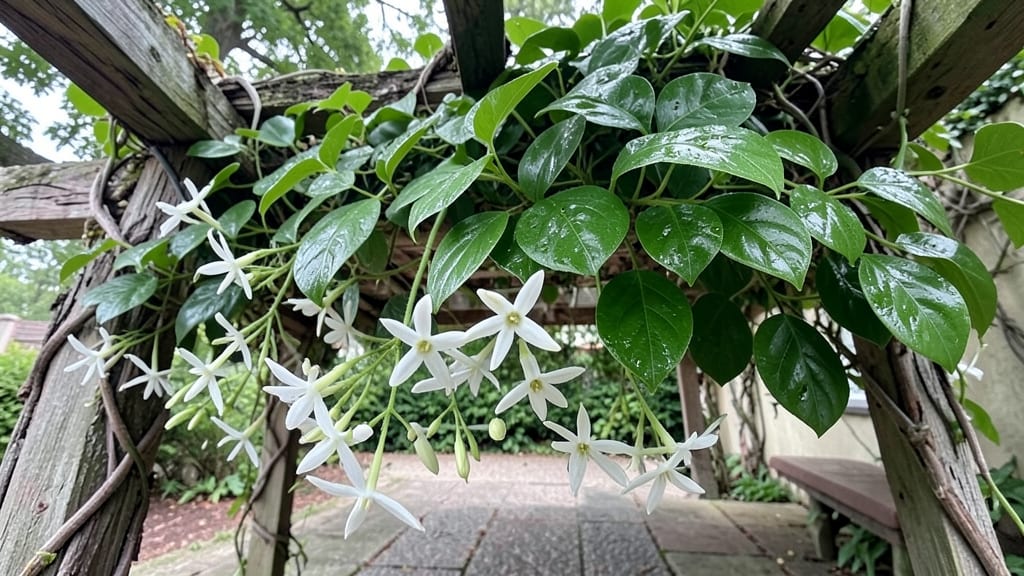
Craving a vine that fills your shaded patio with a soothing, jasmine-like fragrance while surviving Zone 4 winters? Star jasmine (Trachelospermum jasminoides) delivers sweet, star-shaped white blooms from summer to fall, thriving where other vines fail. Its glossy evergreen leaves provide year-round interest, and with proper winter protection (like mulch or burlap wraps), it handles temperatures down to -15°F.
This versatile climber adapts to partial shade, making it perfect for pergolas, trellises, or even container training. Prune lightly after flowering to maintain shape, and watch as hummingbirds and butterflies flock to its nectar-rich blossoms. For best results, plant in well-drained soil and water moderately—once established, it's remarkably drought-tolerant.
Ideal for gardeners who want low-maintenance elegance with a fragrant touch, star jasmine transforms shaded spaces into tranquil retreats. Its adaptability makes it a standout for both urban balconies and rural gardens alike. 🌿