
Plants
Transform your shady garden into a pollinator paradise with these 10 native perennials that thrive in low light while attracting bees, butterflies, and hummingbirds. Perfect for woodland gardens, under trees, or north-facing beds where sunlight is scarce.
Virginia Bluebells for Woodland Gardens

When early spring arrives, most gardeners are still waiting for their shade plants to wake up—but Virginia bluebells (Mertensia virginica) burst into color weeks ahead of schedule. These woodland natives produce delicate bell-shaped flowers that transform from soft pink to vibrant blue as they age, creating a magical color shift that few plants can match.
Thriving in moist, shady spots with well-draining soil, Virginia bluebells are perfect for understory plantings, rain gardens, or along woodland edges. Their 4-6 inch spikes emerge in late March or April, often before tree leaves fully unfurl, giving bumblebees their first reliable food source of the season. To encourage robust blooms, keep the soil consistently moist (but not soggy) and avoid over-fertilizing—these plants prefer lean, natural conditions.
This early-season pollinator magnet is ideal for gardeners who want to support bees before other flowers appear, and its graceful foliage remains attractive even after blooming. Perfect for woodland gardens, cottage-style borders, or naturalized areas, Virginia bluebells prove that shade doesn't mean sacrificing color or pollinator power. 🌷
Foxglove Beardtongue for Hummingbird Visits

If you want to turn your shady garden into a hummingbird hotspot, foxglove beardtongue (Penstemon digitalis) is your secret weapon. This striking perennial produces tall spikes of tubular, two-lipped flowers in shades of purple, pink, or white—each one packed with nectar that hummingbirds can't resist.
Unlike many pollinator plants, foxglove beardtongue thrives in partial shade (3-6 hours of sun) and even tolerates drier soils once established. Its upright growth habit (2-4 feet tall) adds dramatic vertical interest to layered garden beds, making it perfect for back borders or woodland edges. For best results, deadhead spent blooms to encourage continuous flowering from late spring through summer.
This plant is especially rewarding for gardeners who want to attract hummingbirds without sacrificing shade tolerance. Pair it with moisture-loving companions like asters or ferns for a pollinator-friendly understory that hums with activity. 🌻
Wild Ginger for Ground Cover Beauty

Tired of patchy ground cover that fades under trees? Wild ginger (Asarum canadense) delivers a lush, evergreen carpet of heart-shaped leaves that thrives in deep shade while supporting pollinators. Unlike many shade plants, it handles both dry and moist soil conditions, making it one of the most adaptable options for problem areas.
This native perennial spreads slowly but densely, creating a low-maintenance living mulch that suppresses weeds while adding texture. In late spring, small white flowers peek through the foliage, attracting native bees—especially early-season pollinators when few other blooms are available. Perfect for garden borders, woodland edges, or understory plantings, it pairs beautifully with ferns and hostas.
Wild ginger is ideal for gardeners who want year-round interest without the fuss of high-maintenance ground covers. Its ability to thrive in full to partial shade makes it a standout for pollinator-friendly shade gardens. 🌿
Culver's Root for Late Season Pollinators

When summer wanes and most flowers fade, Culver's root steps in as a dramatic late-season star. This native perennial stands 3-5 feet tall with fuzzy, globe-shaped blooms that monarchs and other butterflies adore—making it a must-have for gardens that want to keep pollinators fed into September.
Thriving in partial shade (3-6 hours of sun), Culver's root tolerates average garden soil and even drought once established. Its velvety stems and unique flower heads create striking backdrops for borders, while the late-summer nectar supports migrating butterflies. Simply deadhead spent blooms to encourage more flowers.
Perfect for gardeners who want height and drama without high-maintenance care, this plant thrives in cottage gardens, meadows, or as a focal point near patios. 🌻
Bloodroot for Early Spring Blooms

When early spring arrives, bloodroot (Sanguinaria canadensis) steals the show with its stunning white blooms that unfurl before the leaves even appear. This native woodland beauty thrives in dry to medium shade, making it perfect for understory plantings where sunlight is limited but pollinators are eager for nectar.
The delicate yellow-centered flowers attract early bees when few other blooms are available, and its minimal care requirements make it ideal for busy gardeners. Simply plant the rhizomes in well-drained soil and let nature take its course—this shade lover spreads slowly but reliably, creating a carpet of lush foliage by summer.
Perfect for woodland gardeners or those with north-facing beds, bloodroot adds a touch of elegance while supporting pollinators before the growing season peaks. 🌿
Joe Pye Weed for Butterfly Magnets

If your garden feels like a highway with no traffic lights, Joe Pye weed (Eutrochium purpureum) is the missing signpost for butterflies. This native powerhouse produces towering spikes of pink-purple flowers that transform shady corners into buzzing oases, especially during late summer when other blooms have faded.
Thriving in partial to full shade and moist soils, Joe Pye weed tolerates both wet feet and average garden conditions once established. Its 6-foot-tall stems create vertical drama while providing nectar for monarchs, swallowtails, and migrating butterflies—making it a critical late-season fuel stop. Simply cut back foliage in early spring to encourage fresh growth and more blooms.
This plant is a game-changer for gardeners with moist, shady spots who want to support pollinators without sacrificing beauty. Pair it with asters or goldenrod for a butterfly banquet that lasts through fall. 🌟
Wild Bergamot for Bee-Friendly Fragrance

Looking for a fragrant pollinator powerhouse that thrives where others struggle? Wild bergamot (Monarda fistulosa) brings a double benefit: its lavender-scented purple flowers attract bees and butterflies while its adaptability makes it perfect for partial shade. Unlike sun-loving lavender, this native perennial handles 3-6 hours of sunlight daily and even tolerates drier soils once established.
The flat-topped flower clusters (2-4 inches wide) bloom from mid-summer through fall, providing nectar when many other shade plants have finished. Its aromatic foliage also deters some pests while adding a subtle fragrance when brushed. For best results, plant in groups of 3-5 for maximum pollinator appeal and deadhead spent blooms to encourage more flowers. This plant thrives in cottage gardens, pollinator pathways, or as a border plant.
Wild bergamot is especially rewarding for gardeners who want to create scented pollinator havens without sacrificing shade tolerance. Its drought-resistant nature makes it ideal for low-maintenance gardens, while its long bloom time supports bees throughout the growing season. 🌿
Solomon's Seal for Vertical Interest

Looking to add vertical drama to your shady garden without sacrificing pollinator power? Solomon's seal (Polygonatum spp.) is the answer—its graceful, arching stems create natural layers while dangling clusters of bell-shaped white flowers sway in the breeze, beckoning early-season bees before other blooms appear.
This shade-loving perennial thrives in partial to full shade (2-6 hours of sun) and tolerates a range of soils, making it ideal for understory plantings or woodland gardens. Its year-round interest comes from the distinctive seed pods that follow the flowers, adding texture even after blooming season ends. Simply plant rhizomes in spring or fall, water moderately, and let its clumping habit fill gaps over time.
Perfect for gardeners who want elegant structure without high-maintenance care, Solomon's seal pairs beautifully with ferns or hostas while providing a pollinator-friendly vertical element that keeps your shade garden buzzing from spring through summer. 🌱
Great Blue Lobelia for Hummingbird Havens

While most pollinator plants demand full sun, great blue lobelia (Lobelia siphilitica) thrives in the damp, shady spots others avoid—making it a game-changer for woodland gardens and pond edges. Its vibrant blue, bell-shaped flowers bloom from mid-summer through fall, producing nectar so rich that hummingbirds will return again and again, often hovering just inches from the blooms.
This native perennial handles moist, acidic soils and even tolerates occasional flooding, making it perfect for rain gardens or areas where water pools after rain. Plant it in groups along garden borders or near seating areas to create a hummingbird feeding station—just keep the soil consistently damp (but not soggy) for best results. Deadheading spent blooms encourages continuous flowering, while its arching stems add movement to shady borders.
Great blue lobelia is ideal for gardeners with tricky, moist shady spots who want to attract hummingbirds without sacrificing beauty. Pair it with ferns or asters for a layered look that keeps pollinators buzzing all season long. 💚
Partridgeberry for Evergreen Ground Cover

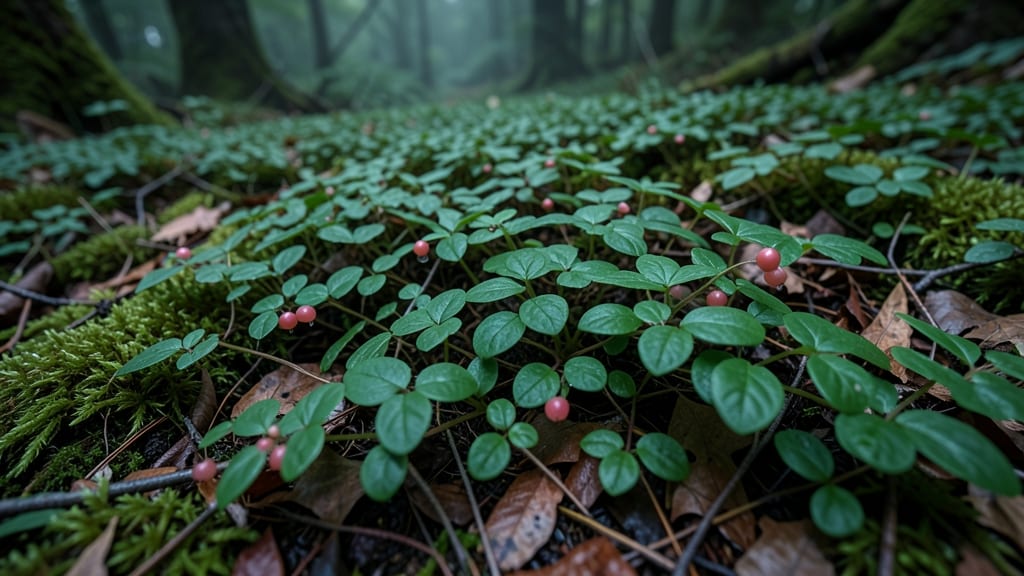
If you dream of a shady garden that stays lush and alive even in winter, partridgeberry (Mitchella repens) is your secret weapon. This native evergreen ground cover spreads slowly but reliably, creating a dense, year-round green carpet that thrives in deep shade where most plants struggle.
The plant produces delicate white, bell-shaped flowers in late summer that transform into bright red berries—a rare treat for pollinators and wildlife. Native bees adore its nectar, while birds enjoy the berries, making it a dual-purpose plant for food and shelter. Partridgeberry handles dry to moist, acidic soils and even tolerates occasional foot traffic, perfect for woodland gardens, understory plantings, or as a living mulch.
This low-maintenance beauty is ideal for gardeners who want permanent ground cover without the upkeep of high-maintenance options. Its evergreen foliage and seasonal interest make it a standout for pollinator-friendly shade gardens that stay vibrant all year. 💚