
Flowers
Transform dull walls and shaded patios into lush vertical gardens with these 10 shade-tolerant flower box ideas. Each design thrives in low light while creating dramatic cascading displays that rival sunlit blooms—perfect for balconies, porches, or under trees.
Heuchera and Fern Cascade Combo

Turn your shadiest balcony corner into a lush, velvety oasis with a heuchera and fern cascade combo—a dynamic duo that thrives where most plants struggle. The drought-tolerant heuchera, with its deep purple or silver foliage, pairs perfectly with delicate ferns to create a textured, layered look that spills gracefully over edges.
Plant heuchera at the back for its upright growth, then tuck fern varieties like maidenhair or Japanese painted fern in front to soften the edges. This combo thrives in deep shade with just one watering per week once established, making it ideal for urban balconies with limited sunlight. Use a well-draining potting mix to prevent soggy roots, and fertilize lightly in spring for vibrant foliage.
Perfect for renters or small-space gardeners, this low-maintenance duo delivers year-round texture without the fuss. Add a few moss accents at the base for extra charm and a cohesive, woodland-inspired look. 🌿
Ivy and Begonia Spillover Design

Create an enchanting, ivy-draped look for your north-facing walls with this effortless combo of trailing English ivy and wax begonias. The glossy green ivy forms a living curtain, while begonias burst with pink, white, or red blooms that last all season—even in shady spots where other plants struggle.
Start by lining your box with well-draining soil mixed with compost, then tuck ivy plants along the back edges so their vines spill gracefully over the sides. Place wax begonias near the front for maximum visibility. Both thrive in morning sun or dappled shade, making this ideal for urban balconies or tree-lined patios where light is limited.
This design requires minimal upkeep—just occasional pruning to shape the ivy and deadheading spent begonia blooms. Perfect for renters or gardeners who want romantic, low-light beauty without the fuss of high-maintenance plants. ✨
Caladium and Coleus Color Block

Skip the sun and still get a tropical paradise—caladiums and coleus thrive in shade while delivering bold, patterned leaves that scream "summer vacation." These plants are the perfect solution for renters or small spaces where direct sunlight is scarce but visual impact is a must.
Start with caladiums, known for their heart-shaped leaves in shades of pink, white, and deep green, which add dramatic texture. Pair them with coleus varieties in burgundy, lime, or burgundy with lime edges for a vibrant contrast. Both plants prefer bright, indirect light and well-draining soil—water when the top inch feels dry to avoid soggy roots. With minimal pruning, they’ll spill over edges like a living watercolor palette.
This combo is ideal for gardeners who want instant color without the fuss of high-maintenance blooms. Perfect for window boxes, balcony planters, or even indoor pots near bright windows, it’s your secret weapon for turning shady spots into showstoppers. ✨
Sweet Potato Vine and Lobelia Mix

Turn your shady patio or tree-filtered space into a lush green oasis with a sweet potato vine and lobelia mix—a dynamic duo that thrives in dappled light. The fast-growing vine creates a dramatic waterfall effect, while lobelia’s delicate blue flowers add pops of color that catch the eye from below.
Plant the sweet potato vine at the edges of your hanging box so its trailing tendrils spill over gracefully, while tucking lobelia toward the center for a cascading bloom display. Both plants love well-draining soil and benefit from a light feeding every 4-6 weeks during the growing season. This combo is ideal for hanging boxes under large trees, where other plants might struggle.
Perfect for gardeners who want quick impact with minimal effort, this mix offers year-round greenery and seasonal blooms. The lobelia’s flowers will attract hummingbirds, adding an extra layer of charm to your shaded retreat. 🌿
Hostas and Astilbe Shadow Garden

Elevate your formal entryway or traditional garden with a hostas and astilbe shadow garden—a timeless combo that thrives in deep shade while delivering sophisticated structure. The broad, arrow-shaped hosta leaves create a lush green foundation, while feathery astilbe plumes add vertical interest and delicate texture that catches the light.
For best results, plant hostas at the back of your raised box or container, where their sturdy foliage anchors the design. Tuck astilbe varieties like 'Fanal' or 'Brussels Lace' in front, letting their 18-36 inch stems rise above the hostas. Both plants prefer moist, well-draining soil—amend with compost to retain moisture—and thrive in 4-6 hours of filtered light daily. Mulch annually to protect roots and extend the season.
This elegant pairing is perfect for gardeners who want low-maintenance structure with year-round interest. The hostas' foliage stays vibrant even in winter, while astilbe blooms in late spring to early summer, making it ideal for traditional landscapes or as a focal point near patios. 💚
Creeping Jenny and Impatiens Bright Spill

Brighten up your shady balcony or patio in minutes with a creeping jenny and impatiens combo that looks like a burst of sunshine. The golden-yellow creeping jenny creates a sunburst effect as it cascades over edges, while impatiens add vibrant red, pink, or white blooms that last all season—even in deep shade where other plants fade.
Start by planting creeping jenny along the edges of your shallow box so its trailing stems spill gracefully over the sides. Tuck impatiens toward the center for a pop of color that contrasts beautifully with the golden foliage. Both thrive in partial to full shade and prefer consistently moist soil—water whenever the top inch feels dry to keep them lush. This combo is perfect for renters or urban gardeners who want instant color without the fuss of high-maintenance plants.
Ideal for small spaces, this design delivers a cheerful, sunlit look year-round with minimal effort. The impatiens will bloom continuously, while the creeping jenny adds texture and movement to create a dynamic, living tapestry. 🌻
Hellebore and Cyclamen Winter Bloom

Bring life to your darkest corners with hellebore and cyclamen, two of nature’s most resilient winter bloomers that defy the cold. While other plants sleep through winter, these shade stars deliver delicate pink, white, and green blooms from late winter through spring, creating a magical contrast against frost-kissed foliage.
Plant hellebores (also called Lenten roses) at the back of your flower box for their upright stems, then tuck cyclamen in front for its heart-shaped leaves and nodding blooms. Both thrive in deep shade to partial sun, making them perfect for north-facing walls or under dense tree canopies. Use a moist, well-draining soil mix enriched with compost, and water sparingly—these plants prefer consistency over soggy conditions. A light mulch layer helps retain moisture and protect roots from winter chill.
This combo is ideal for gardeners who want low-maintenance, four-season interest without sacrificing beauty. Perfect for traditional gardens, woodland edges, or even container displays on covered porches, these plants reward patience with months of effortless elegance. 💚
Peperomia and Fittonia Miniature Box

Turn your tiny office windowsill or urban balcony into a miniature jungle with a peperomia and fittonia combination that thrives in low light. These compact plants pack a punch with their intricate foliage—peperomia’s waxy leaves in shades of green, pink, and silver contrast beautifully with fittonia’s delicate nerve-patterned leaves, creating a lush, textured display that fits in even the smallest spaces.
Plant peperomia varieties like 'Watermelon' or 'Hope' at the back of your shallow box for their upright growth, then tuck fittonia (also called nerve plant) in front to spill over the edges. Both love bright, indirect light and well-draining soil—water when the top inch feels dry to avoid soggy roots. This combo is perfect for office windowsills, apartment balconies, or sunrooms where space is limited but you crave greenery.
Ideal for beginners or busy gardeners, this design delivers year-round interest with minimal effort. The fittonia’s intricate patterns add visual intrigue, while peperomia’s glossy leaves bring a touch of tropical elegance—all without needing direct sunlight. 💚
Fuchsia and Dusty Miller Contrast

Want to add old-world elegance to your entryway or porch? The pairing of trailing fuchsias with silvery dusty miller creates a dramatic yet refined contrast that thrives in partial shade. Fuchsias spill over edges with their vibrant red or pink blooms, while dusty miller’s velvety silver foliage adds a sophisticated backdrop that catches the light beautifully.
Plant dusty miller at the back of your flower box for its upright growth, then tuck trailing fuchsia varieties like 'Giant Marmalade' or 'Lady Boothby' along the edges. Both plants love morning sun with afternoon shade and well-draining soil—water when the top inch feels dry to prevent soggy roots. This combo blooms from early summer through fall, offering continuous color with minimal maintenance.
Perfect for gardeners who love romantic, historic charm, this pairing works beautifully in wrought-iron planters or wooden boxes near doorways. The silvery foliage contrasts stunningly with fuchsia’s bright blooms, creating a look that feels both timeless and effortlessly chic. 🌷
Moss and Miniature Orchid Terrarium Box

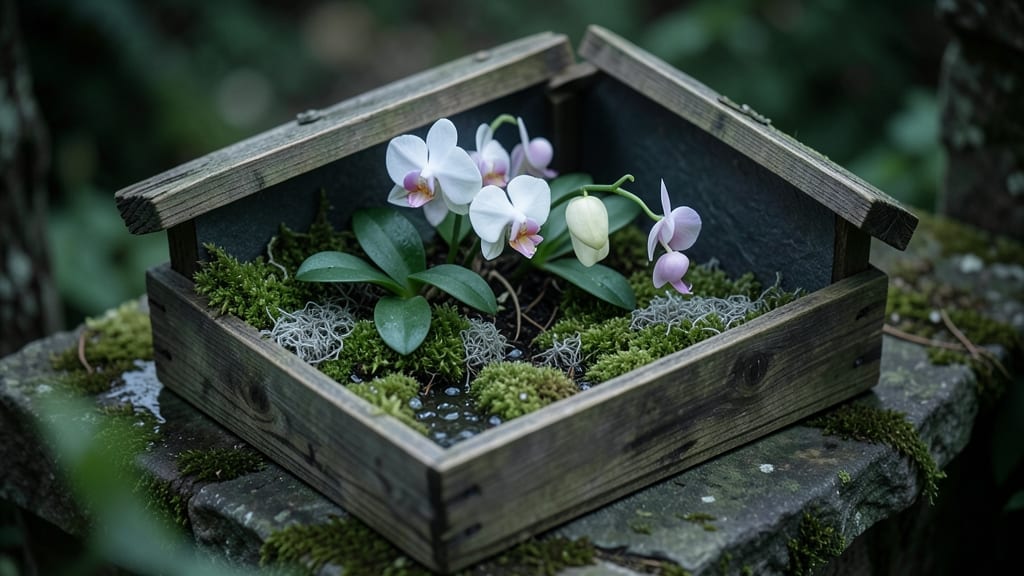
Step into a fairy-tale garden without stepping outside—this moss and miniature orchid terrarium box transforms any shady corner into an enchanting micro-world. Unlike traditional flower boxes, this design thrives in deep shade where most plants struggle, creating a lush, self-contained ecosystem that feels like a secret garden.
Start with a glass-fronted box lined with sphagnum moss to retain moisture, then tuck air plants or miniature orchids like Phalaenopsis or Paphiopedilum into the mossy base. These orchids love indirect light and high humidity, making them perfect for terrariums. Mist the moss weekly and avoid direct watering to prevent root rot—let the enclosed environment regulate itself. Add decorative elements like tiny pebbles or driftwood for a whimsical touch.
This design is ideal for creative gardeners who want a low-maintenance centerpiece that doubles as a conversation starter. Perfect for offices, bathrooms, or sunless patios, it brings nature indoors while requiring just a few minutes of care each week. 🌟