
Companion Plants
Clematis vines thrive with root shade but struggle when exposed to direct sunlight. These 10 ground-cover plants and companions create the perfect microclimate to protect clematis roots while adding beauty to your garden.
Hostas for Year-Round Root Protection

Struggling with clematis vines that wilt in summer heat? Hostas offer a clever solution—dense shade when it matters most, then natural light exposure when the leaves die back in winter. Their broad, lush foliage blocks harsh sunlight from clematis roots while still allowing the climbing stems to soak up winter rays for vigorous growth.
Plant hostas in a circular pattern around your clematis base, spacing them 12-18 inches apart for full coverage. Varieties like 'Blue Angel' or 'Francee' provide extra shade with their large leaves. Since hostas are deciduous, they automatically adjust to clematis' needs—keeping roots cool in summer and letting sunlight through in winter when the vine needs it most.
This dynamic duo works especially well for gardeners with partial shade conditions or those who want low-maintenance root protection. The best part? Hostas thrive in most soils and add striking foliage color to your garden. 🌱
Ferns as Natural Root Mulch

If your clematis vines look stressed from too much sun, ferns are nature’s answer—creating a lush, woodland-inspired microclimate right at their roots. Their delicate fronds mimic the dappled shade of a forest floor, keeping soil cool and moist while suppressing weeds that compete for nutrients.
Opt for non-invasive varieties like Japanese painted fern (with striking silver-and-green foliage) or maidenhair fern (for finer texture). Plant them within 12–18 inches of the clematis base, ensuring their shallow roots don’t disrupt the vine’s deeper system. Water consistently to maintain humidity, and mulch with wood chips to retain moisture and regulate temperature.
This combo is ideal for gardeners in humid climates or shady spots—ferns thrive where clematis roots need relief, adding texture and a woodland aesthetic without the upkeep of dense shrubs. 🌿
Heuchera for Colorful Root Coverage

Want to protect your clematis roots from harsh sunlight while adding a splash of color? Heuchera—commonly called coral bells—is the perfect solution. These stunning perennials grow in a low, mounding habit, creating a natural sun shield that keeps roots cool without blocking essential airflow.
With varieties offering foliage in shades of purple, lime green, and deep burgundy, heuchera adds visual interest while its shallow root system ensures it won’t compete with clematis for nutrients. Plant them within 12-18 inches of your clematis base, and they’ll thrive in partial to full shade conditions, making them ideal for both urban gardens and woodland settings.
Perfect for gardeners who want both function and beauty, heuchera’s vibrant leaves will keep your clematis happy while transforming your garden into a colorful masterpiece. 💚
Ajuga as Living Root Mulch

If you're tired of battling wilting clematis from scorching roots, ajuga (creeping bugleweed) is your secret weapon. This hardy ground cover spreads rapidly to form a lush, insulating blanket that shields roots from heat stress while locking in moisture—no mulch required.
Ajuga thrives in partial to full shade, making it perfect for clematis beds that get afternoon sun. Its deep roots prevent competition with clematis while its dense foliage suppresses weeds. In spring, cheerful purple flower spikes add vertical interest without overpowering your vine. Simply plant ajuga in a 12-inch-wide band around the clematis base for maximum protection.
This low-maintenance plant is ideal for gardeners who want zero upkeep—once established, ajuga spreads effortlessly while keeping roots cool and hydrated. 💚
Lungwort for Moisture Retention

If your clematis roots dry out too quickly or struggle with inconsistent moisture, lungwort (Pulmonaria) is the secret weapon you’ve been missing. This shade-loving perennial acts like a natural water reservoir—its thick, silver-spotted leaves absorb moisture and release it slowly, creating a consistently damp (but not soggy) environment that clematis roots adore.
Plant lungwort within 12–18 inches of your clematis base in partial to full shade, where it thrives in well-draining, humus-rich soil. Varieties like 'Silver Spots' or 'Rosenrot' add early spring blooms in pink or blue, while their foliage stays lush even in dry spells. Unlike thirsty ground covers, lungwort’s moisture-retaining leaves reduce your watering frequency while keeping roots hydrated.
This is a game-changer for gardeners in dry climates or those who struggle with uneven watering—lungwort acts as both a living mulch and a drought buffer, ensuring your clematis stays vibrant without the risk of root rot. 💚
Sedum for Drought-Tolerant Shade

For gardeners with inconsistent watering schedules, sedum (stonecrop) offers a game-changing solution—it thrives in dry conditions while providing just enough shade to protect clematis roots from scorching. This succulent ground cover creates a low, dense mat that blocks harsh sunlight without smothering the vine, making it ideal for sunny beds where other shade plants might wilt.
Choose varieties like 'Dragon's Blood' for its striking red-tipped foliage or 'Autumn Joy' for late-season color. Plant sedum in a 12-inch-wide band around clematis roots, spacing plants 6-8 inches apart. Its shallow roots won't compete with clematis, and its drought tolerance means you won't need to water as frequently—perfect for busy gardeners or drought-prone areas.
This pairing is especially great for minimalist gardens or gravel beds, where sedum's modern look complements clematis' climbing elegance. Plus, its ability to survive neglect makes it a stress-free choice for any gardener. 🌻
Astilbe for Airy Root Cover

Tired of clematis roots suffering from fungal issues in humid climates? Astilbe offers the perfect solution with its feathery plumes that create light, airy shade without smothering airflow. Unlike dense ground covers, astilbe’s delicate foliage allows moisture to evaporate while still shielding roots from harsh sunlight—ideal for preventing the black spot and powdery mildew that plague clematis in sticky summer conditions.
Plant astilbe in clusters around your clematis base, spacing them 12–18 inches apart for balanced coverage. Varieties like 'Fanal' (deep pink) or 'Deutschland' (white) thrive in partial shade and moist, well-draining soil. Their upright growth habit keeps stems from tangling with clematis vines while their blooms attract pollinators, adding seasonal color to your garden.
This is a game-changer for gardeners in humid regions or those battling fungal diseases—astilbe’s breathable canopy keeps roots cool and dry without sacrificing beauty. 🌻
Sweet Woodruff for Fragrant Shade

Looking for a fragrant, low-maintenance way to shield your clematis roots from harsh sunlight? Sweet woodruff (Galium odoratum) is the answer—this delicate ground cover creates a lush, vanilla-scented carpet that blocks unwanted rays while suppressing weeds naturally. When crushed, its leaves release a sweet, aromatic fragrance that adds a sensory delight to your garden.
Plant sweet woodruff in partial to full shade, where it thrives in moist, well-draining soil. Its dense, spreading habit forms a protective mat that insulates roots from heat while allowing airflow to prevent fungal issues. In early spring, it produces delicate white flowers that add a touch of elegance before fading into its fragrant foliage.
This plant is perfect for gardeners who want multi-sensory shade—combining visual appeal with a pleasant scent. Its non-invasive nature makes it ideal for containers or borders near clematis, ensuring roots stay cool without competition. 🌿
Coral Bells for Seasonal Protection

Looking for a shade solution that works year-round without smothering your clematis? Coral bells (Heuchera) deliver a dual-season advantage: their deep, colorful foliage absorbs excess heat in summer while their winter dormancy lets sunlight reach clematis stems when they need it most. This clever seasonal shift makes them one of the most adaptable shade companions for your vine.
Plant Heuchera varieties like 'Palace Purple' or 'Lime Rickey' within 12-18 inches of your clematis base, where their low-growing habit creates a natural sun shield. The dark foliage colors (purple, burgundy, lime) absorb up to 30% more heat than lighter plants, while their shallow roots won't compete with clematis for nutrients. In winter, when Heuchera's leaves die back, your clematis stems get the sunlight boost they need for spring growth.
This is ideal for gardeners with variable sunlight conditions—whether you have afternoon sun or full shade, Heuchera adapts while keeping roots cool. Their striking foliage also adds seasonal color that complements any garden design. 🌷
Creeping Thyme for Pollinator-Friendly Shade

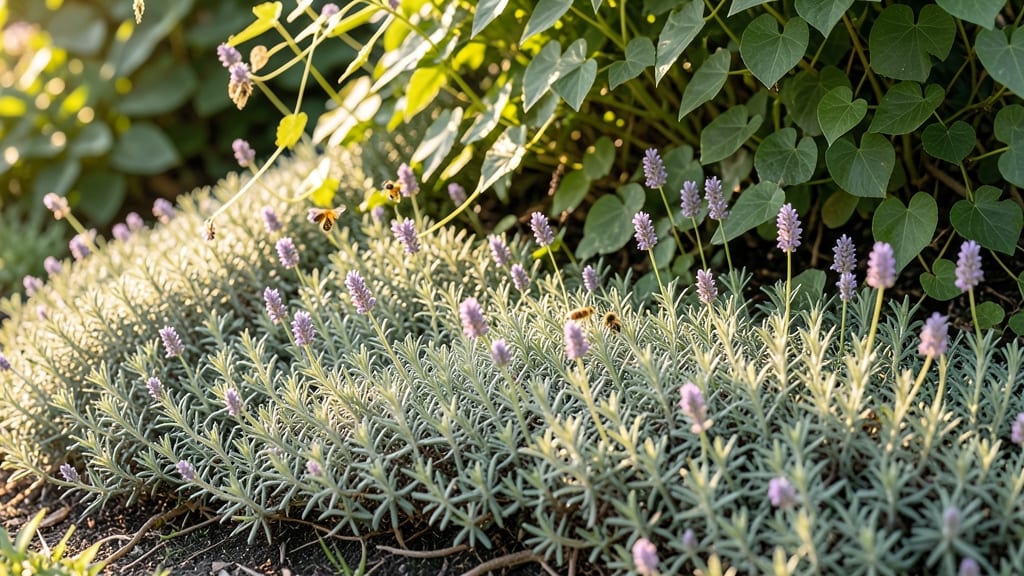
Looking for a pollinator magnet that also protects your clematis roots? Creeping thyme is the ultimate dual-purpose ground cover, offering light shade while attracting bees, butterflies, and other beneficial insects to your garden. Its low, spreading habit creates a fragrant, drought-resistant carpet that blocks harsh sunlight without smothering the vine.
Plant creeping thyme in a 12-inch-wide band around your clematis base, spacing plants 6-8 inches apart. This hardy perennial thrives in well-draining soil and full sun to partial shade, making it perfect for sunny beds where other shade plants might struggle. Its aromatic foliage deters pests while its tiny purple flowers bloom from late spring to fall, providing nectar for pollinators.
This is a must-have for gardeners who want low-maintenance beauty with ecological benefits. Creeping thyme’s drought tolerance and pollinator appeal make it a standout choice for any clematis garden. 🌻