
Companion Plants
Struggling to make your shady garden spots thrive? These 10 hardy plants transform neglected corners into vibrant, low-maintenance foliage displays that even the darkest areas can't defeat.
Hostas for Textured Shade Garden Drama

Turn your darkest garden corners into a textured foliage showpiece with hostas, the ultimate shade superstars. These perennials offer hundreds of varieties—from deep blues and purples to golden chartreuse—each with unique leaf shapes and sizes to layer your garden with drama.
Hostas thrive in deep to partial shade (even under trees) and reward you with summer blooms on stalks that rise above their lush foliage. For maximum impact, plant them in odd-numbered groupings (3, 5, or 7) along borders or in containers, where their bold colors contrast beautifully with ferns and astilbes. Mulch annually to protect their crowns and keep soil consistently moist.
Whether you're a beginner or seasoned gardener, hostas deliver year-round interest—their foliage stays vibrant through summer, and some varieties even develop stunning fall colors. They’re the perfect foundation for any shade garden, offering both beauty and low-maintenance reliability. 🌿
Japanese Painted Fern with Delicate Lacy Fronds

Tired of barren shady spots where most plants refuse to grow? The Japanese painted fern (Athyrium niponicum var. pictum) is your secret weapon—its silvery-green fronds create a magical, airy effect while thriving where sunlight barely reaches.
This woodland native loves consistently moist, dark conditions and even tolerates soggy soil, making it perfect for understory planting or rain gardens. Its delicate, lacy foliage adds ethereal texture to borders, containers, or as a focal point in deep shade. For best results, pair it with hostas or bleeding hearts for a layered woodland effect.
Ideal for gardeners with dark corners or those seeking low-maintenance shade plants, this fern brings year-round interest with minimal care—just keep the soil moist and watch it flourish. 🌿
Foxtail Fern for Vertical Shade Accents

Need to add drama to your darkest garden corners without relying on bold foliage? Foxtail fern (Asparagus densiflorus 'Meyersii') delivers striking vertical structure with its feathery, plume-like fronds that reach up to 3 feet tall—perfect for creating focal points where sunlight barely touches.
This evergreen fern thrives in deep shade and even tolerates indoor conditions, making it ideal for containers, hanging baskets, or tucked into shady garden nooks. Its airy texture contrasts beautifully with darker hostas or ferns, while requiring minimal care—just keep the soil consistently moist and fertilize lightly in spring. The fronds remain lush year-round, providing winter interest when other plants fade.
Urban gardeners and small-space enthusiasts will love how this fern transforms neglected corners into architectural statements. Try pairing it with Japanese painted fern for a layered, textured effect that feels like a mini woodland garden. ✨
Hellebores for Early Spring Color

When your garden feels like it’s still in winter while everything else wakes up, hellebores are the unsung heroes—blooming as early as late winter in deep shade where most plants refuse to grow. These winter-hardy perennials defy the cold with nodding flowers in soft pinks, whites, and purples, often appearing before snow melts completely.
Thriving in USDA zones 3-9, hellebores prefer moist, well-draining soil and dappled to full shade, making them ideal for understory planting beneath trees or along north-facing walls. Their evergreen foliage provides year-round structure, while their late-winter blooms attract early pollinators like bees. Deadhead spent flowers to encourage more blooms, but avoid cutting back foliage until spring—it protects the plant’s crown.
Perfect for gardeners who want color without competition, hellebores are low-maintenance and deer-resistant, making them a smart choice for both woodland gardens and urban courtyards. 🌷
Caladiums for Tropical Shade Statement

Bring a slice of the tropics to your shady garden with caladiums, the ultimate bold-patterned foliage plants that thrive where most others fade. These showstoppers—with their pink, red, and white marbled leaves—flourish in hot, humid shade, making them perfect for containers or garden beds under trees where direct sunlight never reaches.
Caladiums love moist, well-draining soil and prefer temperatures above 60°F, making them ideal for USDA zones 9-11 or as seasonal potted plants in cooler climates. Plant them in groups of 3-5 for maximum impact, and keep the soil consistently damp (but not soggy) to mimic their tropical habitat. Their striking foliage adds drama to patios, porches, or shaded borders, especially when paired with ferns or hostas.
Perfect for gardeners who want instant tropical vibes without the sun exposure, caladiums are also great for renters or urban gardeners who can move them indoors in winter. Just remember: they’re tender perennials, so treat them as annuals in colder zones. 🌻
Astilbes for Feathery Shade Blooms

Bring soft elegance to your woodland garden edges with astilbes, the unsung heroes of shade gardening. These feather-like plumes burst into color from early summer through fall, defying the "no flowers in shade" myth with their pink, white, red, or lavender blooms that sway gently in the breeze.
Astilbes thrive in moist, well-draining soil and partial to full shade, making them perfect for understory planting where they'll outperform sun-loving annuals. Choose from dwarf varieties (12-18 inches) for borders or tall types (24-36 inches) as dramatic backdrops. Deadhead spent blooms to encourage more flowers, and divide clumps every 3-4 years to maintain vigor.
These perennials are ideal for beginner gardeners and urban spaces** with limited sunlight—just remember to keep their roots consistently moist. Their delicate plumes pair beautifully with hostas and ferns, creating a lush, layered woodland effect that thrives where others fail. 🌻
Lungwort for Medicinal Shade Beauty

Looking for a shade plant that’s as practical as it is pretty? Lungwort (Pulmonaria) delivers both with its striking silver-spotted foliage and early spring blooms—plus, it has a surprising medicinal history dating back to ancient herbalists.
This hardy perennial thrives in deep to partial shade, making it perfect for understory planting or cottage gardens where it spreads slowly (12-18 inches) to create lush ground cover. Its unique foliage develops silvery spots that fade to green as summer progresses, while delicate blue or pink flowers appear in early spring, attracting early pollinators. Lungwort also self-seeds modestly, adding to its low-maintenance appeal.
Herbalists have long valued lungwort for its traditional medicinal uses, though modern gardens appreciate it for its year-round interest and drought tolerance once established. Cottage gardeners and woodland enthusiasts will love how it pairs beautifully with hostas and ferns. 💚
Sweet Woodruff for Fragrant Ground Cover

Turn your dark, weed-infested garden corners into a fragrant sanctuary with sweet woodruff (Galium odoratum), a delicate yet hardy ground cover that thrives where sunlight barely touches. This charming perennial spreads effortlessly in deep shade, creating a lush, green carpet that suppresses weeds while releasing a subtle vanilla-like scent when brushed or crushed—like nature’s own air freshener.
Ideal for USDA zones 4-8, sweet woodruff loves moist, well-draining soil and tolerates both dry shade and damp woodland conditions, making it perfect for understory planting or as a living mulch. Its tiny white flowers in late spring add a delicate touch, while its fine, fern-like foliage stays green year-round in milder climates. For best results, plant it in clumps of 5-7 along borders, under trees, or in containers where its scent can be fully enjoyed.
Perfect for urban gardeners, cottage-style plots, or woodland gardens, sweet woodruff is also deer-resistant and thrives with minimal care—just keep it moist and watch it fill in bare spots effortlessly. It’s the ultimate low-maintenance, sensory-rich addition to any shady garden. 🌿
Bleeding Heart for Romantic Shade Drama

Craving a touch of old-world romance in your shady garden? The bleeding heart (Dicentra spectabilis) delivers dreamy, cascading blooms that feel like a secret from a Victorian garden—without needing a single ray of sunlight. Its iconic heart-shaped flowers in soft pink or white appear in late spring, dangling from arching stems like delicate chandeliers in your darkest corners.
This moisture-loving perennial thrives in woodland conditions, making it perfect for understory planting where it pairs beautifully with ferns and hostas. For best results, plant it in well-draining, humus-rich soil and keep it consistently moist (but not soggy). Its 3-foot-tall stems create vertical drama, while its semi-evergreen foliage adds year-round texture. Divide clumps every 3-4 years to maintain vigor and encourage more blooms.
Perfect for cottage gardeners, woodland enthusiasts, and anyone who wants to add whimsical charm to shady spots, bleeding heart is a must-have for creating a lush, romantic understory. Just be prepared to fall in love with its ethereal beauty. 🌷
Dwarf Mondo Grass for Evergreen Elegance

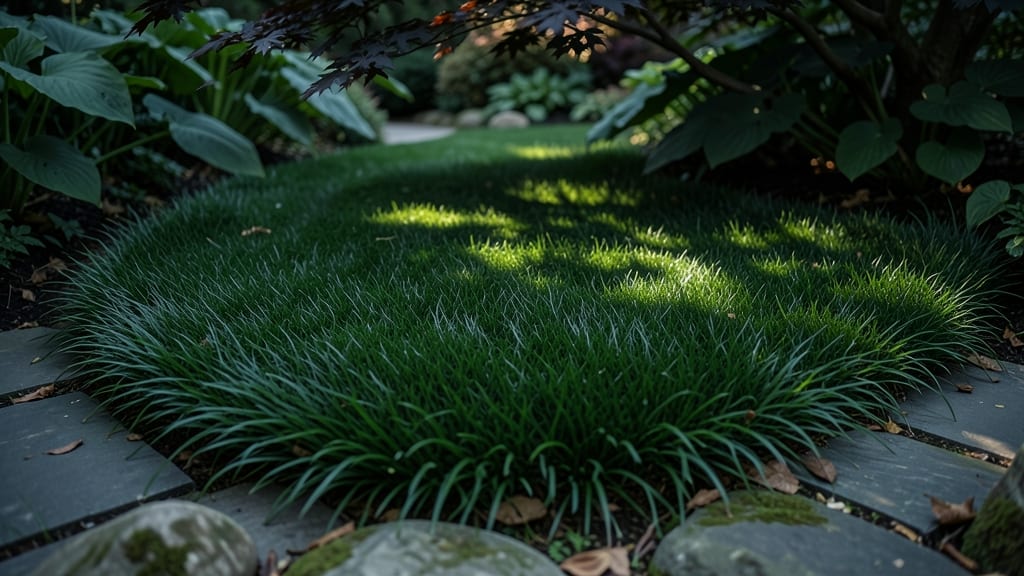
Tired of patchy ground cover that fades in shade? Dwarf mondo grass (Ophiopogon japonicus 'Nana') delivers a velvety green carpet that stays lush year-round—even where other grasses give up. This evergreen gem thrives in deep shade, making it ideal for edging pathways, filling gaps between rocks, or creating a polished look in containers where sunlight barely reaches.
Growing just 3-6 inches tall with a spreading habit, dwarf mondo grass forms dense mats that suppress weeds naturally. It tolerates moist to dry conditions (though it prefers consistent moisture) and handles foot traffic better than most shade ground covers. For best results, shear back in spring to encourage fresh growth, and pair it with hostas or sweet woodruff for a layered, textured effect.
Perfect for urban gardeners, small-space enthusiasts, and low-maintenance landscapes, this grass brings polished elegance without the upkeep of traditional lawns. Whether you're framing a tree base or adding a modern touch to a shady patio, dwarf mondo grass delivers clean lines and year-round color with minimal effort. 💚