
Flowers
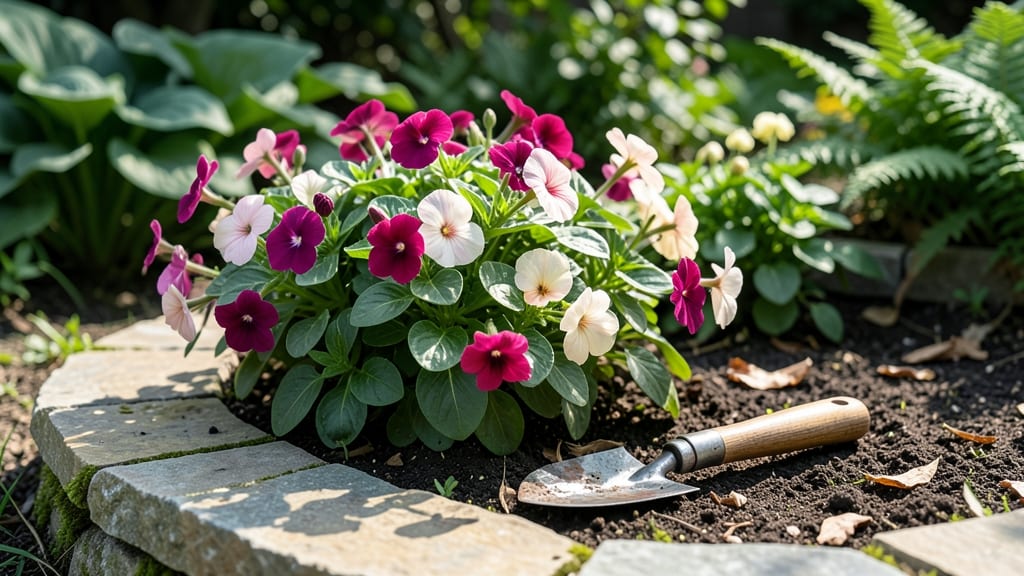
Low shade flowers bring color to your yard’s darkest corners—where sunlight barely reaches. 🌿 I’ve transformed my own shady spots into vibrant displays using plants that thrive where others fade, and I’ll show you exactly how to create a year-round bloom recipe that outshines the competition.
The secret lies in choosing the right mix: impatiens for bold color, heuchera for textured foliage, and astilbes for feathery plumes that dance in the breeze. These plants handle partial to full shade, need minimal fuss, and pair beautifully with ferns or hostas for layered interest.
Most do well in USDA zones 5-9, making them versatile for nearly any climate.
You’ll end up with borders that burst with color, containers that spill over with texture, and under-tree spaces that feel like hidden gardens. The key? Matching plants to light levels and using 3-4 inches of mulch to keep roots cool and moist.
These combinations work in sunny edges of forests, north-facing yards, or even deep shade from tall buildings.
Start small with a single pot or a 3-foot border, then expand as confidence grows. The payoff? A garden that blooms when others sleep, proving shade isn’t a limitation—it’s a canvas for creativity. Let’s bring your dark corners to life.
Why Flowers Struggle In Shade
If your low-light gardens are producing sparse, weak blooms—or worse, no flowers at all—it’s usually due to a mix of environmental and care-related factors. Understanding these causes is the first step to transforming your dark corners into a vibrant, year-round floral display.
Let’s break down the science behind why shade-loving flowers sometimes underperform.
While some flowers thrive in shade, most still need some light to power their growth. Here’s why too little light stalls blooms:
- Limited energy production: Photosynthesis requires light to convert CO₂ and water into glucose—the fuel flowers need to grow, set buds, and bloom. In deep shade, plants often revert to survival mode, prioritizing leafy growth over flowers to maximize whatever light they can capture.
- The "shade tolerance" myth: Even "low-light" flowers (like impatiens or ferns) have thresholds. Dappled shade (filtering sunlight) is ideal, but dense shade (like under a thick tree canopy) can starve them of the 50–70% of full sun many need to trigger flowering.
- Weak stems and buds: Low light reduces auxin (a plant hormone), leading to leggy, floppy stems and underdeveloped buds that never open. Think of it like a human trying to build muscle in a dimly lit room—progress grinds to a halt.
💡 Pro Tip: Use a light meter (or the "shadow test") to gauge your shade. If your hand’s shadow is barely visible at noon, your flowers are likely light-deprived. Consider reflective surfaces (mirrors, white walls) or grow lights for extreme cases.
Shade creates a double-edged sword for moisture: too much or too little can both sabotage blooms. Here’s how it happens:
| Issue | Why It Kills Flowers | Signs to Watch For |
|---|---|---|
| Overwatering |
|
|
| Poor Drainage |
|
|
💡 Pro Tip: Test your soil’s drainage by digging a 6-inch hole, filling it with water, and timing how long it takes to drain. If it’s more than 4 hours, amend with perlite, sand, or organic matter (compost, coconut coir). For overwatering, water only when the top 2 inches of soil are dry—shade slows drying!
Shady areas often have cooler, more humid microclimates, which can disrupt flowering even for shade-tolerant plants. Here’s how:
- Cooler temps delay blooming: Many flowers require warmth to trigger flowering (a process called vernalization or thermophotoperiodism). In consistently cool shade, plants may never receive the temperature cues needed to set buds.
- High humidity encourages pests: Damp, shaded spots are pest and disease magnets. Spider mites, aphids, and fungal infections (like powdery mildew) sap energy from the plant, leaving little for blooms.
- Low airflow stunts growth: Shady, enclosed spaces (like under a tree) have poor circulation, which can lead to weak, etiolated (stretched-out) stems and fewer flower nodes.
💡 Pro Tip: Improve airflow with pruning nearby branches or adding a small fan (for container plants). For humidity, avoid overhead watering and use fungicide sprays (like neem oil) preventatively. If your shade is too cold, try heat-loving varieties (e.g., caladiums or begonias) or move pots to sunnier spots in winter.
Shade-loving flowers often compete with trees or turf for nutrients, leading to deficiencies that direct energy away from blooms. The biggest culprits:
- Low phosphorus: This nutrient is critical for flowering (it’s the "P" in NPK ratios). Shady soil often lacks phosphorus because it binds tightly to organic matter and isn’t released as quickly as in sunny conditions.
- Magnesium or iron deficiencies: These show up as yellowing between leaf veins (a classic sign of chlorosis), which means the plant can’t photosynthesize efficiently—even in shade.
- Over-fertilizing with nitrogen: Too much N promotes leafy growth at the expense of flowers. Shade-stressed plants overreact to nitrogen, growing big leaves but no blooms.
💡 Pro Tip: Test your soil’s pH and nutrient levels (ideal for flowers: pH 6.0–7.0). Amend with bone meal (for phosphorus) or Epsom salt (for magnesium). For shade, use a balanced, slow-release fertilizer (like 10-10-10) in spring and early summer to encourage blooming without leafy overgrowth.
Not all "shade flowers" are created equal—and misjudging your shade type can doom your blooms. Here’s how to match plants to your conditions:
- 🔥 Boost Indirect Light Move pots or containers closer to a bright window (south- or west-facing is ideal). If natural light is limited, supplement with a grow light (LED or fluorescent) for 6–8 hours daily. Aim for 1,000–2,000 lux—just enough to mimic early morning or late afternoon sun.
- 🍳 Prune for Bushiness Trim back leggy stems by one-third just above a leaf node (where new growth emerges). This encourages branching and a fuller shape. Use clean, sharp pruners to avoid damaging the plant.
- 👨🍳 Fertilize Smartly Use a balanced, water-soluble fertilizer (like 10-10-10) diluted to half-strength every 4–6 weeks. Focus on nitrogen to support leafy growth, but avoid over-fertilizing—it can burn roots in low light.
- 🌿 Switch to a Blooming Formula Replace your general fertilizer with one higher in phosphorus (e.g., 5-10-5 or 7-9-5). This signals the plant to produce flowers instead of just leaves.
- 🎯 Pinch Back New Growth When your plant sends out fresh stems, snip off the top 1–2 inches to redirect energy toward blooming. Do this in early spring or after a flush of new growth.
- ✨ Mimic Seasonal Changes Some shade flowers (like heuchera or astilbe) bloom best with a cool-season trigger. Move them outdoors in fall/winter if possible, or give them a 2-week chill in a garage (50–60°F) before spring.
- 🌱 Choose the Right Plants
Not all shade flowers are equal! Opt for native or shade-tolerant varieties like:
- Impatiens (for deep shade)
- Hosta (for partial shade)
- Begonias (for humidity-rich spots)
- Foxglove or lungwort (for dappled light)
- 🏺 Upgrade Your Containers Use pots with reservoirs for water (like self-watering planters) to prevent drought stress. Terracotta dries out faster—great for plants that hate soggy roots.
- 🍄 Improve Soil Drainage Amend heavy or compacted soil with compost or coconut coir to aerate roots. For container plants, mix in 30% perlite or orchid bark for airflow.
- 🌡️ Monitor Temperature Swings Shade plants often struggle with cold drafts or hot indoor air. Keep them away from vents, AC units, or glass doors that create temperature fluctuations.
Revive & Protect Your Shady Blooms
Even the hardiest low-light flowers need a little TLC to thrive in dim corners. Below, we’ve mapped out practical fixes for common issues—plus prevention tips to keep your garden flourishing all year. Think of this as your cheat sheet for shade-loving plant success!
If your flowers stretch toward the light like they’re reaching for a sunbeam (but never quite get there), the problem is likely etiolation—weak stems caused by insufficient light. Here’s how to correct it:
💡 Pro Tip: Rotate your plants weekly so all sides get even light exposure. This prevents uneven growth and keeps stems sturdy.
Yellow leaves or drooping foliage often signal overwatering, underwatering, or nutrient deficiencies. Here’s how to diagnose and fix it:
| Symptom | Cause | Solution |
|---|---|---|
| Yellow lower leaves, crispy edges | Underwatering or low humidity | ⏰ Water deeply when the top 1–2 inches of soil feels dry. Group plants together to raise humidity, or use a pebble tray with water. |
| Mushy stems, yellowing leaves | Overwatering or poor drainage | 🔪 Let the soil dry out between waterings. Repot in well-draining soil with perlite or sand, and ensure pots have drainage holes. |
| Pale green/yellow leaves, slow growth | Nitrogen deficiency | 💪 Apply a low-light fertilizer (like fish emulsion or seaweed extract) once a month. Avoid high-phosphorus blends—they’re for blooming, not foliage. |
🌡️ Pro Tip: Test your soil’s moisture with your finger—don’t rely on a schedule. Shade-loving plants often prefer consistently moist but not soggy conditions.
Some shade flowers (like impatiens or ferns) prioritize leaves over blooms when light is lacking. To trigger flowers, try these tricks:
💡 Pro Tip: Deadhead spent blooms regularly—this removes energy drains and encourages new flowers. Use clean scissors or your fingers for a gentle touch.
An ounce of prevention keeps your shade garden thriving with minimal effort. Here’s how to set your plants up for success:
🎯 Final Tip: Keep a plant journal! Note what works (or fails) each season—light levels, watering habits, and blooming patterns. Over time, you’ll crack the code for your specific shade conditions.
Frequently asked questions
What’s the difference between partial shade and full shade for flowers?
Partial shade means 3–6 hours of morning/evening sun with afternoon shade—ideal for most shade-loving flowers like heuchera or astilbe. Full shade (0–3 hours of light) works only for tough varieties like impatiens or ferns. Test your spot: if your hand’s shadow is barely visible at noon, it’s full shade.
Can I grow low-shade flowers in containers?
Use 12–18 inch pots with drainage holes and well-draining soil mixed with 30% perlite. Choose compact varieties like begonias or coleus for containers. Water when the top 1–2 inches of soil dry out—containers dry faster than garden beds.
Why aren’t my shade flowers blooming?
Most shade flowers need more light than you think—even "low-light" plants may need dappled sun. Try moving them to a brighter spot or use a phosphorus-rich fertilizer (like 5-10-5) to encourage blooming. Also, pinch back leggy stems to redirect energy.
What’s the best mulch for shade flowers?
Use 3–4 inches of organic mulch like shredded bark or wood chips to retain moisture and regulate soil temperature. Avoid dark mulches (they absorb heat)—opt for lighter colors like straw or pine needles. Replenish annually to maintain coverage.
Are there any shade flowers that attract pollinators?
Yes! Try foxglove (for hummingbirds), bee balm (for bees), or columbine (for butterflies). Even impatiens can attract hoverflies. Plant near other pollinator-friendly foliage like heuchera or hostas to create a mini ecosystem.