
Companion Plants
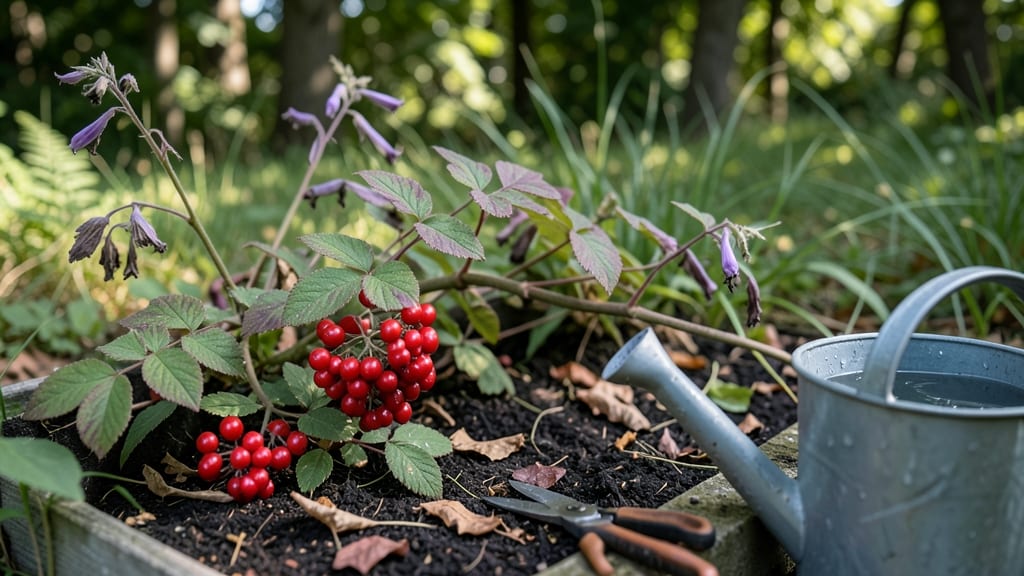
Identifying nightshade plants can save your garden—and your health. 🌿 The wrong plant in your tomato bed could mean toxic berries instead of juicy fruit, and I've seen gardeners confuse deadly nightshade with edible varieties more times than I can count.
The key lies in leaf shape, stem texture, and flower structure, but you don't need a botany degree to master it.
Start with the leaves: smooth-edged, oval leaves with a slightly waxy finish are your first clue for edible nightshades like tomatoes or peppers. Toxic varieties often have deeply lobed or hairy leaves—think of those jagged, uneven edges as nature's warning sign.
Then check the stems: edible nightshades have sturdy, slightly fuzzy stems, while toxic ones are often smooth and glossy.
Flowers and fruit seal the deal: edible nightshades bloom in clusters of small, star-shaped flowers that develop into familiar fruits. Toxic varieties produce single, bell-shaped flowers that turn into shiny black or red berries—never eat these, even if they look tempting.
A quick photo comparison with a field guide or plant ID app can confirm your guess in seconds.
Why this matters: misidentifying nightshades means wasted garden space, accidental poisoning, or even attracting pests that target toxic plants. Once you spot the differences, you'll recognize nightshades in your garden—and everywhere else—with confidence. Here's how to tell them apart for good.
📚 In This Guide
- What you need
- Instructions
- Tips and common mistakes
- Wrapping up and next steps
What you need
- ● Hand lens or magnifying glass (3x–10x magnification) – for inspecting fine details like leaf veins or stem hairs.
- ● Pruning shears or small knife – to safely snip leaves/stems for closer inspection (sterilize with rubbing alcohol).
- ● Notebook & pen – to jot down observations (leaf shape, color, hairiness, etc.).
- ● Ruler or measuring tape – to check leaf width/length (nightshades often have specific ratios!).
- ● Digital camera or smartphone – for photos of key features (compare later with guides!).
- ○ Gloves (optional but recommended) – some nightshades (like deadly nightshade) can irritate skin.
- ● Nightshade ID guidebook or app (e.g., Peterson Field Guide to Edible Wild Plants or iNaturalist app).
- ● Internet access – for cross-referencing with databases like blank">GRIN or blank">MBG Plant Finder.
- ● Local gardening group or forum – post photos for second opinions (e.g., r/Gardening on Reddit).
- ● Sunny day (or grow light) – nightshades thrive in full sun; inspect plants mid-morning for best visibility.
- ● Never taste-test plants—many nightshades (e.g., Atropa belladonna) are highly toxic.
- ● Wear long sleeves/pants if handling unknown plants (some cause skin irritation).
- ● Keep kids/pets away while identifying—curiosity can be dangerous!
Step-by-Step guide to identifying nightshade plants in your garden
Nightshades are sneaky—some are edible, others toxic. Here’s how to spot them using leaf shape, stem texture, and growth habits.
🌿 Step 1: Examine Leaf Shape and Arrangement
Nightshade leaves are almost always alternate (one leaf per node, spiraling up the stem) and lance-shaped or oval with smooth or slightly wavy edges. Tomato and pepper leaves, for example, have a hairy or slightly rough texture—run your fingers over them to check. Deadly nightshade (Atropa belladonna) leaves are glossy and egg-shaped, while poison hemlock (Conium maculatum) leaves are fern-like with finely divided segments.
Look for prominent veins that branch out from the central stem. If the leaves are deep green and leathery, it’s likely a cultivated nightshade (like eggplant or potato). If they’re pale or mottled, proceed with caution—it could be a wild, toxic lookalike.
🌱 Step 2: Inspect Stem Texture and Growth Pattern
Nightshade stems are usually hollow or slightly ridged, especially in wild varieties. Gently squeeze the stem—if it feels slightly spongy or fibrous, that’s a red flag. Cultivated nightshades (tomatoes, peppers) have sturdy, woody stems as they mature, while toxic ones like bittersweet nightshade (Solanum dulcamara) have thin, vine-like stems that twine around other plants.
Check for hairiness—most edible nightshades have fine, soft hairs on stems and leaves, but toxic ones like jimsonweed (Datura stramonium) have stiff, bristly hairs. If the stem exudes a milky or sticky sap when broken, it’s almost certainly toxic.
☀️ Step 3: Observe Flower and Fruit Characteristics
Nightshade flowers are star-shaped with five petals, often in white, purple, or yellow. Tomato and pepper flowers grow singly at leaf nodes, while toxic nightshades like deadly nightshade have bell-shaped flowers in clusters. If you see berry-like fruits that are green turning red, black, or yellow, be wary—many toxic nightshades produce shiny, glossy berries that look tempting.
Edible nightshades (like tomatoes) have fruits that attach directly to the stem, while toxic ones often have fruits on long stalks. Never eat a nightshade fruit unless you’re 100% certain of its identity—some, like bittersweet nightshade berries, are deadly if ingested.
✂️ Step 4: Dig Deeper (Literally)
If you’re still unsure, dig up the plant and examine the roots and tubers. Potatoes and sweet potatoes are round, knobby tubers, while toxic nightshades like black nightshade (Solanum nigrum) have small, egg-shaped tubers that look like miniature potatoes. If the roots smell bitter or acrid, it’s a strong sign of toxicity.
Take a photo of the plant from multiple angles and compare it to a reputable field guide or app like iNaturalist or PlantNet. If you’re in doubt, do not consume—some nightshades (like jimsonweed) can cause hallucinations, seizures, or even death.
🔍 Step 5: Cross-Reference with Local Flora
Nightshades thrive in warm, temperate climates and often grow as weeds in gardens. If you’re in the eastern U.S. or Europe, deadly nightshade and bittersweet nightshade are common. In the western U.S. or South America, look for jimsonweed or angel’s trumpet (Brugmansia), which are highly toxic.
Check your region’s invasive plant database or ask local gardeners—some nightshades are region-specific. If you’re growing edible nightshades, isolate them from wild areas to prevent cross-contamination with toxic lookalikes.
Tips & tricks for identifying nightshade plants with confidence
Nightshade identification can feel overwhelming, but these precision tips will help you distinguish between edible and toxic varieties like a botanist.
Leaf Texture is Your First Clue: In Step 1, when examining leaf texture, focus on the difference between fine hairs (safe nightshades like tomatoes) and stiff bristles (toxic varieties like jimsonweed). Run your thumb gently along the leaf underside—if it feels like sandpaper, it's likely safe. The key is to notice how the hairs lie flat on edible plants versus standing up on toxic ones. This tactile check is faster than visual inspection alone.
Stem Sap Test for Toxicity: The stem examination in Step 2 includes a critical test: break the stem and watch for sap. While most edible nightshades won't produce sap, toxic varieties like angel's trumpet will exude a milky white or sticky yellow liquid. This is your definitive red flag. I've seen gardeners miss this step entirely—don't make that mistake. The sap test works even better when you break the stem near a leaf node where the plant's defenses are strongest.
Flower Cluster Patterns Matter: When observing flowers in Step 3, pay special attention to how they grow. Edible nightshades typically have single flowers at each leaf node, while toxic varieties often grow flowers in dense clusters at the stem tips. This cluster pattern is particularly noticeable in deadly nightshade. I recommend photographing any suspicious clusters from multiple angles—some toxic flowers mimic edible ones until you see this growth pattern.
Root Smell is Non-Negotiable: The root examination in Step 4 deserves extra emphasis. While many gardeners focus on tuber shape, the smell test is equally important. Toxic nightshade roots often emit a bitter almond or rotten odor when crushed. If you're unsure about the smell, compare it to known safe tubers like potatoes. This sensory check can prevent dangerous misidentifications that visual inspection alone might miss.
Pro Tips for Identify Nightshade Plants
- Nightshade identification can feel overwhelming, but these precision tips will help you distinguish between edible and toxic varieties like a botanist.
- Leaf Texture is Your First Clue: In Step 1, when examining leaf texture, focus on the difference between fine hairs (safe nightshades like tomatoes) and stiff bristles (toxic varieties like jimsonweed).
- Stem Sap Test for Toxicity: The stem examination in Step 2 includes a critical test: break the stem and watch for sap.
Frequently asked questions
Got questions about spotting nightshades? Here are some of the most common ones—plus quick answers to help you navigate your garden with confidence!
What are the most common nightshade plants I should watch for?
Nightshades include deadly nightshade (Atropa belladonna), jimsonweed (Datura stramonium), bittersweet nightshade (Solanum dulcamara), and poison hemlock (Conium maculatum). Even edible nightshades like tomatoes, potatoes, and peppers share similar leaf shapes—so always double-check stems, flowers, and growth habits!
When is the best time of year to identify nightshades in my garden?
Spring and early summer are ideal! That’s when nightshades are actively growing, with clear leaf patterns and visible stems. Avoid winter—many plants lie dormant, making identification trickier. If you’re unsure, dig up a small section of the root to check for characteristic tuberous growth (common in toxic varieties).
How can I tell the difference between toxic nightshades and edible ones like tomatoes?
Edible nightshades (tomatoes, peppers, eggplants) have hairless stems, deeply lobed leaves, and bright flowers. Toxic nightshades often have smooth, shiny leaves, purple-black berries, and milky sap. When in doubt, cross-reference with a plant ID app or consult a local nursery expert!
What should I do if I accidentally ingest part of a nightshade plant?
If you suspect poisoning, call Poison Control immediately (U.S.: 1-800-222-1222). Symptoms like dizziness, nausea, or dilated pupils may appear within hours. Never induce vomiting unless instructed by a professional. Keep nightshade plants away from pets and children—curiosity can be dangerous!
Are there any nightshade-free alternatives for companion planting?
Swap nightshades for marigolds (repel pests), basil (boosts tomato flavor), or nasturtiums (edible and pest-deterring). If you love the nightshade family but want safer options, try peppers (milder toxicity) or ground cherries—both are less likely to be confused with toxic lookalikes.
Wrapping up and next steps
Mastering the art of identifying nightshade plants—whether for gardening, foraging, or safety—just got easier! 🌱 By focusing on leaf shape, stem texture, and growth habits, you can confidently distinguish these plants from look-alikes.
Remember, when in doubt, always double-check with a trusted guide or expert—your garden (and health) will thank you!
Now that you’re equipped with these tricks, why not put your new skills to use? Start by auditing your garden or local green spaces—you might discover hidden treasures (or surprises!) lurking among the foliage. Happy identifying! 🕵️♂️