
Plants
Part-shade gardens often struggle with finding hardy, lush groundcovers that tolerate moisture without becoming invasive. These 10 low-maintenance plants will transform your shady spots into vibrant, weed-resistant landscapes with minimal effort.
Creeping Jenny (Lysimachia nummularia)

Transform dull, shady corners into a golden sunburst with Creeping Jenny, a groundcover that turns ordinary spaces into living art. Its bright yellow foliage cascades beautifully over walls, edges of ponds, or between stepping stones, creating a warm contrast against darker surroundings.
This moisture-loving plant thrives in consistently damp soil and part shade, making it ideal for areas where other plants struggle. Simply plant cuttings in spring, space them 6-12 inches apart, and let them spread naturally. Creeping Jenny handles foot traffic surprisingly well, perfect for high-use areas like garden paths.
Urban gardeners and cottage-style enthusiasts will love how it softens hard edges while requiring almost no maintenance. Just keep it evenly moist—it won’t tolerate drought—and watch your shady spots glow. 🌟
Hosta Varieties (Hosta spp.)

If you love the look of lush, verdant foliage but struggle with shady spots in your garden, hostas are your secret weapon. These versatile perennials offer a stunning array of leaf shapes—from broad and rounded to narrow and wavy—and colors ranging from deep green to blue-green, gold, and even variegated patterns.
Hostas thrive in part to full shade and naturally suppress weeds by forming dense foliage that blocks light from reaching unwanted plants. They prefer moist, well-draining soil but can tolerate occasional dry spells once established, making them perfect for woodland gardens, under trees, or along north-facing foundations. Varieties like 'Halcyon' or 'Francee' add height and texture, while 'Blue Angel' or 'Patriot' bring bold contrast.
Whether you're a beginner looking for low-maintenance groundcover or an experienced gardener seeking year-round interest, hostas deliver both beauty and functionality without the fuss. 🌿
Sweet Woodruff (Galium odoratum)

If you love the scent of a freshly mown meadow but want something more refined for your garden, sweet woodruff (Galium odoratum) delivers a subtle, vanilla-like fragrance that releases when the foliage is crushed or brushed. This delicate groundcover thrives in the dappled light of understory planting, making it perfect for areas beneath trees where moisture lingers.
The plant spreads gently through rhizomes, creating a lush, weed-suppressing carpet without becoming invasive. Its delicate white flowers appear in late spring, adding a touch of elegance to shady borders. Sweet woodruff prefers well-drained but consistently moist soil, making it ideal for woodland gardens or areas with natural spring runoff.
Gardeners who value low-maintenance beauty and a sensory experience will adore this plant—it’s especially charming when planted near seating areas or pathways where the scent can be enjoyed up close. 🌿
Lungwort (Pulmonaria spp.)

If you're looking for a groundcover that feels like a living piece of art, lungwort (Pulmonaria spp.) delivers with its silver-spotted leaves that shift to solid green as summer progresses. This unique foliage isn't just pretty—it's a magnet for early-season pollinators when its pink and blue blooms appear before many other plants wake up.
Thriving in consistently damp, well-drained soil, lungwort is perfect for woodland edges, rain gardens, or beneath deciduous trees where moisture lingers. It spreads slowly (about 12 inches per year) to form a dense, weed-suppressing mat without becoming invasive. For best results, plant in partial to full shade and enrich the soil with compost before planting.
Woodland gardeners and pollinator enthusiasts will love this plant's dual appeal—season-long interest from foliage plus early spring color. It's also deer-resistant, making it a practical choice for rural properties. 🌿
Alum Root (Heuchera spp.)

Skip the boring green and add a splash of drama to your shady garden with alum root (Heuchera spp.), where foliage comes in every color but green—think deep purple, silvery-blue, or even lime-green. These perennials thrive in moist, well-drained soil under trees or along foundations, turning dull corners into vibrant focal points with almost no effort.
Once established, Heuchera requires almost no maintenance—just occasional watering during dry spells and an annual top-dressing of mulch. The key to their success is planting in part shade (3-6 hours of sun) where their colors pop against darker surroundings. Varieties like 'Palace Purple' or 'Lime Rickey' add unexpected contrast, while 'Plum Pudding' brings rich burgundy tones that glow in low light.
Container gardeners and small-space enthusiasts will love how Heuchera thrives in pots, while woodland gardeners can use it to edge paths or fill gaps between hostas. Its year-round interest makes it a standout for low-maintenance beauty. 💚
Wild Ginger (Asarum europaeum)

Tired of battling weeds in those perpetually damp, shady corners of your garden? Wild ginger (Asarum europaeum) is the quiet hero you’ve been missing—its glossy, evergreen heart-shaped leaves spread slowly but deliberately to create an impenetrable mat that crowds out unwanted plants naturally.
This shade-loving perennial thrives in consistently moist soil, making it perfect for woodland gardens, under trees, or along foundation plantings where water pools. Unlike aggressive spreaders, wild ginger grows at a steady pace (about 6 inches per year), so you won’t need to worry about containment. It also handles foot traffic surprisingly well, making it ideal for pathways or garden edges where weeds typically take over.
Woodland gardeners and those with moist, shaded spaces will appreciate its low-maintenance nature—just plant in well-draining soil and let it do the work. The bonus? Its subtle, spicy scent when leaves are crushed adds a sensory delight. 🌿
Foamflower (Tiarella cordifolia)

Bring ethereal elegance to your moist, acidic garden corners with foamflower (Tiarella cordifolia), a groundcover that feels like a breath of fresh air. Its delicate fern-like foliage and airy white flower spikes create a dreamy, frothy effect that contrasts beautifully with darker surroundings, making it perfect for woodland gardens or boggy areas where other plants falter.
This shade-loving perennial thrives in consistently damp, well-drained soil with a pH between 5.0 and 6.5—ideal for pairing with rhododendrons, azaleas, or other acid-loving plants. Plant in partial to full shade (3-6 hours of sun) and space them 12-18 inches apart to let their foliage fill in naturally. Deadhead spent blooms in early summer to encourage a second flush of flowers, and mulch with leaf litter or pine needles to maintain moisture and acidity.
Gardeners who love textural contrast and season-long interest will adore foamflower—its foliage stays attractive even after blooms fade, and it spreads slowly to form a dense, weed-suppressing mat. Perfect for understory planting or as a border in cottage-style gardens. 🌷
Bugbane (Actaea simplex)

Ready to add drama to your shady garden without sacrificing elegance? Bugbane (Actaea simplex) stands tall with striking lacy white flower spikes that rise above dark green foliage, creating a vertical focal point that other groundcovers can't match. Unlike flat-spreading plants, bugbane adds height and architectural interest while thriving in the damp conditions many gardeners struggle with.
This moisture-loving perennial handles wet soils beautifully, making it perfect for rain gardens, woodland edges, or areas where water pools. Plant it in part to full shade where it will reach 2-3 feet tall, providing a stunning backdrop for shorter groundcovers. The flowers appear in late summer, attracting pollinators while adding a dreamy, ethereal quality to your garden. Simply divide clumps every few years to maintain vigor.
Woodland gardeners and those with moist, shaded spaces will appreciate how bugbane elevates the vertical layer of their plantings while requiring minimal care. It's the perfect choice for creating naturalistic borders that feel both wild and refined. 🌿
Coral Bells (Heuchera micrantha)

Want a groundcover that’s as tough as it is beautiful? Coral Bells (Heuchera micrantha) delivers vibrant foliage colors in shades of purple, silver, or lime—plus a bonus: subtle red stems that add winter interest when many plants fade. This isn’t just another shade plant; it’s a year-round performer that thrives in moist soil but won’t wilt if summer brings a dry spell.
The key to its success is planting in part shade (3-6 hours of sun) where its colors pop against darker surroundings. Once established, it’s drought-tolerant, making it ideal for woodland gardens, under trees, or along foundations where moisture lingers. Mulch heavily to retain moisture and suppress weeds, and watch as its textured leaves create a lush, weed-free carpet that stays stunning through all four seasons.
Perfect for gardeners who want low-maintenance beauty with seasonal surprises, Coral Bells pairs well with hostas, ferns, or other shade-loving perennials. Its compact size (12-18 inches tall) makes it versatile for borders, containers, or filling gaps between larger plants. 🌟
Japanese Painted Fern (Athyrium niponicum)

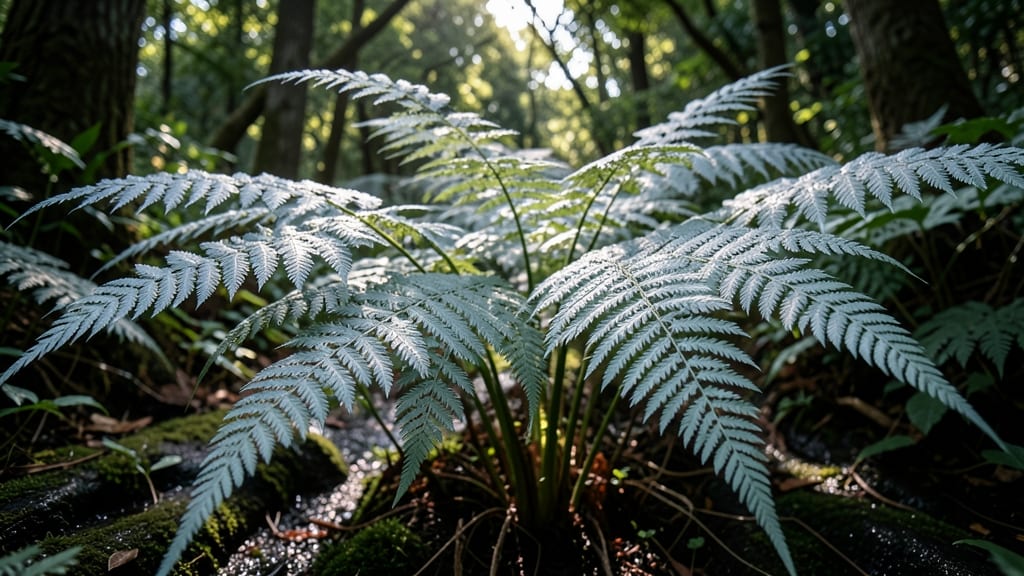
Want to add a touch of whimsical elegance to your shady garden without the fuss? The Japanese painted fern (Athyrium niponicum) delivers with its silvery-blue fronds that shimmer like moonlight through the trees. Unlike many shade plants, it thrives in consistently moist conditions—perfect for woodland gardens, under large trees, or near water features where other plants might struggle.
This pest-resistant fern spreads slowly to form a lush, textured clump that suppresses weeds naturally. Its arching fronds create movement and contrast beautifully against darker hostas or purple heucheras. Plant in partial to full shade with well-draining, humus-rich soil, and keep it evenly moist (but not soggy) for best results. With minimal care, it rewards you with year-round interest, as its foliage turns a subtle bronze in winter.
Woodland gardeners and those with moist, shaded spots will love how this fern adds textural depth without competing with other plants. It’s also deer-resistant, making it a practical choice for rural properties. 💚