
Light Requirements
Zone 8 gardens with limited sunlight don’t have to be dull. These 10 full shade shrubs thrive without direct sun, require minimal water, and deliver year-round beauty—perfect for low-maintenance landscapes and challenging spots.
Dwarf Fothergilla with Fragrant Spring Blooms

Looking for a fragrant, pollinator-friendly shrub that thrives in full shade and stays compact? Dwarf fothergilla (Fothergilla gardenii) delivers three seasons of interest—sweet spring blooms, glossy summer foliage, and fiery fall colors—all without needing afternoon sun.
This 3-4 foot tall shrub blooms in late spring with bottlebrush-like white flowers that attract bees and butterflies, while its leaves turn brilliant burgundy in fall. Plant it in moist, well-draining soil with morning sun or dappled shade—it’s perfect for small gardens, borders, or woodland edges. Prune lightly after flowering to maintain its tidy shape.
Urban gardeners and beginners will love its low-maintenance nature—just mulch around the base to retain moisture. It’s a standout for adding fragrance and texture to shade gardens without the fuss. 🌿
Oakleaf Hydrangea for Year-Round Interest

If you want a foundation planting that stays stunning through all four seasons, oakleaf hydrangea is your answer. Unlike other hydrangeas, this shade-lover delivers white summer blooms, fiery red-orange fall foliage, and even textured exfoliating bark in winter—all while being drought-tolerant once established.
Plant it in well-draining soil with morning sun and afternoon shade for best results. The large, oak-shaped leaves add architectural interest, and its mounding habit (6-8 feet tall and wide) makes it ideal for anchoring garden beds. Prune lightly in late winter to shape and encourage new growth.
This hydrangea thrives in Zone 8’s humidity and is perfect for gardeners who want low-maintenance beauty without sacrificing seasonal interest. 🌻
Japanese Holly Fern for Lush Greenery

Tired of sparse, dull corners in your shade garden? The Japanese holly fern (Cyrtomium falcatum) transforms dark, forgotten spaces into lush, tropical oases with almost no effort. Unlike other shade plants that struggle, this evergreen fern thrives in deep shade while staying deer-resistant—a rare win for both gardeners and wildlife.
With its arching, leathery fronds, this fern adds texture and height to borders or woodland gardens, reaching 2-3 feet tall when mature. Once established, it needs minimal watering, making it ideal for Zone 8’s dry spells. Plant it in well-draining, slightly acidic soil and mulch with organic matter to retain moisture while suppressing weeds.
Perfect for beginners or busy gardeners, this fern delivers year-round greenery without the fuss of seasonal color changes. Pair it with hostas or astilbes for a layered, low-maintenance shade garden that feels alive. 🌿
Inkberry Holly for Privacy Screens

Struggling to create a privacy screen in your Zone 8 yard without sacrificing sunlight for your other plants? Inkberry holly (Ilex glabra) is the answer—a native evergreen that thrives in full shade while growing into a dense, wind-blocking hedge with striking dark berries and glossy leaves.
This 3-6 foot tall shrub tolerates poor soil and drought once established, making it perfect for urban yards or woodland edges. Its dark purple-black berries (edible for birds) add winter interest, while its leathery, glossy foliage stays vibrant year-round. Plant 3-4 feet apart for a fast-growing, low-maintenance hedge that outshines traditional privacy plants.
Ideal for gardeners who want natural noise reduction and wildlife support without high maintenance, inkberry holly is a Zone 8 staple that keeps your space both private and lush. 💚
Dwarf Plum Yew for Ground Cover

Struggling with barren slopes or shady patches where grass refuses to grow? The dwarf plum yew (Taxus x media 'Plumosa') is your secret weapon—a slow-spreading ground cover that thrives in deep shade while demanding almost no water once established.
This evergreen forms a dense, blue-green carpet with fine, feathery needles that stay vibrant year-round. Unlike grass, it handles drought, foot traffic, and even Zone 8’s clay soils with ease. Plant it in well-draining soil and space plants 12-18 inches apart for full coverage in 3-5 years. Its low-growing habit (1-2 feet tall) makes it ideal for understory planting, slopes, or as a living mulch.
Perfect for eco-conscious gardeners, this yew requires zero fertilizer and minimal pruning—just occasional trimming to maintain its shape. It’s also deer-resistant, making it a practical choice for rural or suburban landscapes. 🌱
Mountain Laurel with Bell-Shaped Flowers

Want a shade-loving shrub that steals the show in spring with fragrant, bell-shaped flowers while keeping its glossy evergreen leaves all year? Mountain laurel (Kalmia latifolia) is your perfect match—it thrives in full shade and handles Zone 8’s dry spells with ease.
This native beauty blooms in late spring with clusters of pink or white flowers that hum with pollinators, while its thick, leathery leaves stay vibrant even in deep shade. Plant it in well-draining, acidic soil (pH 4.5-6.0) and water deeply once established—it’s surprisingly drought-tolerant once roots settle in. Prune lightly after flowering to maintain its rounded shape.
Ideal for gardeners who love low-maintenance shrubs with high impact, mountain laurel adds structure and color to borders, woodland gardens, or foundation plantings without demanding sunlight. 🌷
Oregon Grape Holly for Native Beauty

Want a native shrub that thrives in deep shade while feeding birds and butterflies? Oregon grape holly (Mahonia aquifolium) delivers bright yellow spring flowers, edible blue berries, and glossy evergreen leaves—all without needing extra water once established. Unlike other shade shrubs, it’s drought-proof and supports local ecosystems by providing food for wildlife.
This 3-5 foot tall holly handles Zone 8’s dry spells with ease, making it perfect for woodland gardens, slopes, or understory plantings. Its spiny leaves deter deer, while its compact growth fits snugly in borders. Plant it in well-draining soil with partial to full shade, and mulch with organic matter to retain moisture while suppressing weeds.
Perfect for eco-conscious gardeners or those seeking low-maintenance native plants, Oregon grape holly adds year-round interest with minimal effort. 🌿
Boxwood for Structured Elegance

Want a structured, timeless look for your shade garden that requires almost no upkeep? Boxwood is the classic evergreen solution—its neat, compact growth makes it perfect for topiary, formal hedges, or clean foundation plantings, all while thriving in full shade.
Once established, boxwood becomes remarkably drought-resistant, making it ideal for Zone 8’s dry spells. Choose varieties like 'Green Velvet' for dense foliage or 'Winter Gem' for cold hardiness. Prune lightly in late spring to maintain shape, and mulch with organic material to retain moisture while suppressing weeds.
This shrub is a beginner-friendly staple—its versatility and low-maintenance nature make it a top pick for borders, containers, or even as a living accent in garden beds. 💚
Dwarf Ninebark with Peeling Bark

Want a shade-loving shrub that stays interesting even when your garden sleeps? Dwarf ninebark (Physocarpus opulifolius 'Little Devil') delivers with its exfoliating cinnamon bark that peels dramatically in winter, revealing fresh green layers in spring. This compact shrub (3-4 feet tall) thrives in full shade while adding unexpected texture to containers or small gardens.
Its white spring blooms attract pollinators, and the deep green foliage turns brilliant red in fall. Unlike larger ninebark varieties, this dwarf version stays manageable—ideal for urban balconies or tight borders. Plant in well-draining soil and water occasionally once established; it tolerates drought once roots settle. Prune lightly after flowering to maintain its tidy shape.
Perfect for gardeners with limited space or artificial shade, dwarf ninebark brings winter drama without demanding sunlight. Add it to containers or pair with hostas for a low-maintenance, high-impact shade garden. ✨
Pieris Japonica for Early Spring Color

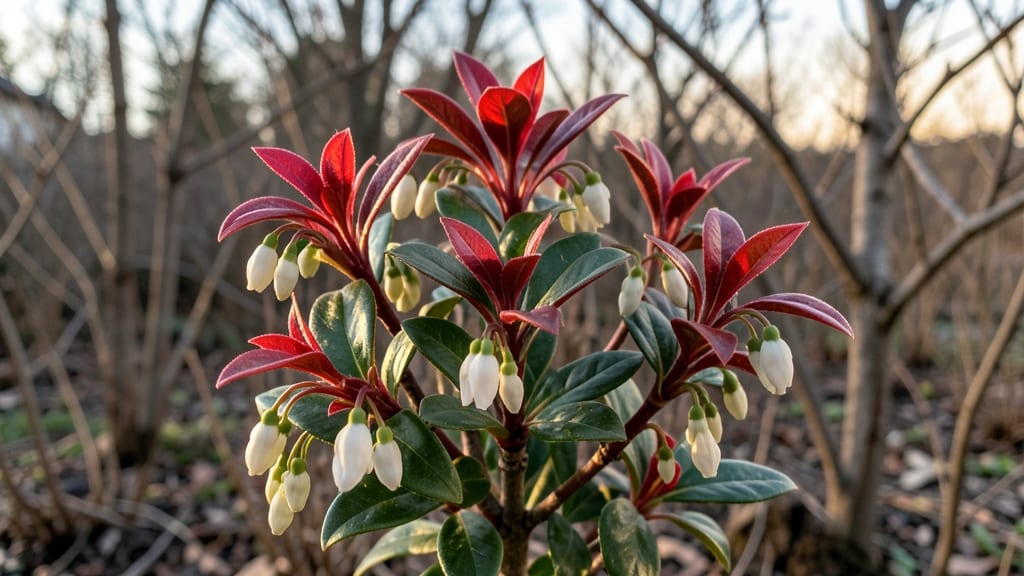
If you crave early spring color when most gardens are still bare, Pieris japonica delivers a dramatic show with its vibrant red new growth that emerges before leaves even unfurl. This shade-loving shrub is a game-changer for Zone 8 gardens, offering white bell-shaped flowers in late winter and glossy evergreen foliage that stays lush year-round.
Thriving in full to partial shade, Pieris japonica requires almost no water once established—making it perfect for dry spells. Plant it in well-draining, acidic soil (pH 4.5-6.0) and mulch to retain moisture. Prune lightly after flowering to maintain its natural shape, and watch as it becomes a magnet for pollinators in early spring. Its compact size (6-10 feet tall) makes it ideal for borders, foundation plantings, or as a focal point in shade gardens.
For gardeners who want low-maintenance beauty without sacrificing color, Pieris japonica is a standout choice that brightens dark corners and adds texture to any landscape. 🌱