
Light Requirements
Tired of battling weeds in your shady garden? These 10 full-shade ground cover plants create dense, living carpets that suppress weeds naturally while adding beauty and texture to your landscape. Perfect for under trees, along fences, or in woodland gardens.
Sweet Woodruff Ground Cover for Fragrant Shade Gardens

Transform your shady garden into a fragrant retreat with sweet woodruff, a delicate European native that thrives in full shade while filling the air with a subtle coconut-like scent. Its airy white flowers and heart-shaped leaves create a soft, textured carpet perfect for formal edges or woodland borders.
This low-maintenance plant spreads slowly but steadily, forming a dense mat that outcompetes weeds naturally. It prefers moist, well-drained soil and tolerates dry shade once established, making it ideal for understory planting. The foliage stays attractive year-round, though it may turn brown in winter but regrows in spring.
Perfect for gardeners who love sensory experiences, sweet woodruff adds a unique fragrance to shady spots without demanding attention. Pair it with hostas or ferns for a lush, layered look. 💚
Hosta Varieties with Blue-Green Foliage for Year-Round Color

If you crave year-round color in deep shade without the fuss of high-maintenance plants, hosta varieties like 'Blue Angel' deliver a stunning solution. Their dense, blue-green foliage creates a lush carpet that naturally blocks weeds while thriving where other plants struggle.
These hostas handle dry soil better than most competitors, making them ideal for understory planting or areas with poor drainage. Varieties like 'Blue Angel' or 'Halcyon' develop broad, arrow-shaped leaves with striking blue-green hues that stay vibrant even in low light. For best results, plant in well-draining soil and mulch to retain moisture—though they’re surprisingly drought-tolerant once established.
Perfect for gardeners who want low-maintenance elegance, these hostas add texture and color to shady spots while suppressing weeds naturally. 💚
Creeping Jenny for Bright Yellow Cascading Ground Cover

Looking for a dramatic pop of color in your shady garden without the fuss of perennials? Creeping Jenny (Lysimachia nummularia) is the answer—its bright chartreuse-yellow foliage cascades like liquid sunshine, perfect for spilling over container edges or softening steep slopes.
This fast-spreading annual thrives in full to partial shade, tolerating moist to average soil as long as it’s well-drained. Plant it in containers, rock gardens, or along pathways where its trailing habit creates a lush, golden waterfall effect. For maximum impact, pair it with dark-leaved plants like heuchera or ferns to make its color truly sing.
Ideal for renters or impatient gardeners, Creeping Jenny delivers instant drama with minimal care—just trim back leggy stems in late summer to encourage bushier growth. It’s the secret weapon for adding vibrant texture to shady corners. 🌟
Ajuga or Bugleweed for Purple Flowering Spread

If you're tired of bare soil under large trees where nothing seems to grow, ajuga (or bugleweed) is your secret weapon. This hardy perennial thrives in full shade, spreading aggressively to create a dense, weed-blocking mat while adding striking purple flower spikes in spring.
Ajuga handles dry to moist soil and even tolerates some foot traffic, making it perfect for high-traffic areas under trees. The dark green foliage develops coppery tones in winter, adding seasonal interest. To control its spread, simply trim back stems after flowering or use edging barriers if needed.
Pollinator-friendly and deer-resistant, ajuga is ideal for gardeners who want low-maintenance beauty with minimal effort. It’s especially valuable for naturalizing under oaks or maples where other plants struggle. 🌟
Lungwort for Unique Spotted Leaves and Spring Blooms

Want to add textural intrigue to your shady garden with minimal effort? Lungwort (Pulmonaria) delivers silver-spotted foliage that catches the light and vibrant blue spring blooms that attract pollinators—all while creating a dense, weed-blocking mat under trees or along fences.
This native woodland plant thrives in moist, shady conditions (think understory or north-facing borders) where other plants struggle. Its heart-shaped leaves develop striking silver spots as they age, creating a dynamic two-tone effect, while the early spring flowers transition from pink to blue for prolonged color. For best results, plant in rich, well-draining soil and water regularly until established—after that, it spreads slowly but steadily to form a lush, self-sustaining carpet.
Perfect for gardeners who love low-maintenance beauty with a touch of whimsy, lungwort adds seasonal interest without demanding attention. Pair it with ferns or hostas for a layered woodland effect that stays vibrant year-round. 🌱
Sweet Woodruff Alternatives: Wild Ginger for Textured Spread

When you want a fragrant, pest-deterring ground cover that thrives in deep shade without the fuss of sweet woodruff, wild ginger (Asarum canadense) is your answer. This native woodland plant forms dense, textured mats with broad, heart-shaped leaves that stay lush year-round, while its subtle white flowers add delicate interest in spring.
Unlike faster-spreading options, wild ginger grows at a moderate pace, making it ideal for controlled areas where you want natural suppression without invasion. The aromatic foliage naturally repels pests like slugs and deer, and it handles moist to average soil—perfect for understory planting or along shady borders. For best results, plant in well-draining soil and mulch to retain moisture, though it tolerates occasional dry spells once established.
This low-maintenance workhorse is perfect for gardeners who love native plants and want a textured, evergreen alternative to sweet woodruff. Pair it with ferns or lungwort for a layered woodland effect that stays vibrant and pest-free. 🌿
Foamflower for Delicate White Blooms in Deep Shade

Bring ethereal beauty to your darkest garden corners with foamflower (Tiarella cordifolia), a native woodland gem that thrives where sunlight barely reaches. Its airy white flower clusters resemble delicate foam, creating a dreamy canopy that dances in the dappled shade of deciduous trees.
This low-growing perennial forms dense mats that naturally suppress weeds while providing habitat for beneficial insects like bees and butterflies. Unlike moisture-loving plants, foamflower handles dry shade beautifully once established, making it perfect for understory planting where other ground covers fail. Its heart-shaped leaves add textural contrast, turning brown in winter but regrowing vibrantly in spring.
Ideal for gardeners seeking effortless elegance, foamflower blends seamlessly into woodland gardens while attracting pollinators. Pair it with ferns or wild ginger for a layered, naturalistic look that thrives with minimal care. ✨
Pachysandra for Evergreen Weed-Suppressing Ground Cover

Struggling with stubborn weeds in deep shade where nothing else seems to take hold? Pachysandra is the unsung hero of shady gardens, creating a thick, evergreen carpet that outcompetes weeds while requiring almost no maintenance. Unlike seasonal ground covers, its glossy leaves stay vibrant year-round, making it perfect for problem areas like under large trees or along fences where other plants fail.
This classic shade plant thrives in full to partial shade and spreads aggressively through underground runners, forming a dense mat that chokes out weeds naturally. It handles average to moist soil and tolerates dry spells once established, though it prefers consistent moisture. For best results, plant in well-draining soil and mulch to retain moisture—though it’s surprisingly adaptable. Its small white flowers in spring add subtle charm without demanding attention.
Ideal for gardeners who want low-maintenance, weed-proof ground cover with year-round appeal, pachysandra is especially valuable in urban gardens or understory planting where other options struggle. Pair it with hostas or ferns for a layered, lush effect that stays green even in winter. 🌿
Alum Root for Unique Fern-Like Foliage Spread

Looking to add a whimsical, fern-like texture to your shady garden without the fuss of fast-spreading invasives? Alum root (Heuchera americana) delivers delicate, airy foliage that creates dense mats over time—perfect for moist, woodland-inspired borders where its unique structure catches the light.
This native perennial thrives in moist, well-draining soil and full to partial shade, making it ideal for understory planting or along damp garden edges. Its fern-like leaves add visual interest year-round, while small white flowers in spring provide subtle contrast. Unlike aggressive spreaders, alum root grows at a moderate pace, giving you control over its expansion while still forming a lush, weed-blocking carpet.
Perfect for gardeners who love textural contrast in shady spots, alum root pairs beautifully with hostas or ferns for a layered, naturalistic look. Its slow, steady spread makes it ideal for contained borders or as a focal point in woodland gardens. 🌿
Liriope for Grass-Like Edging in Shady Areas

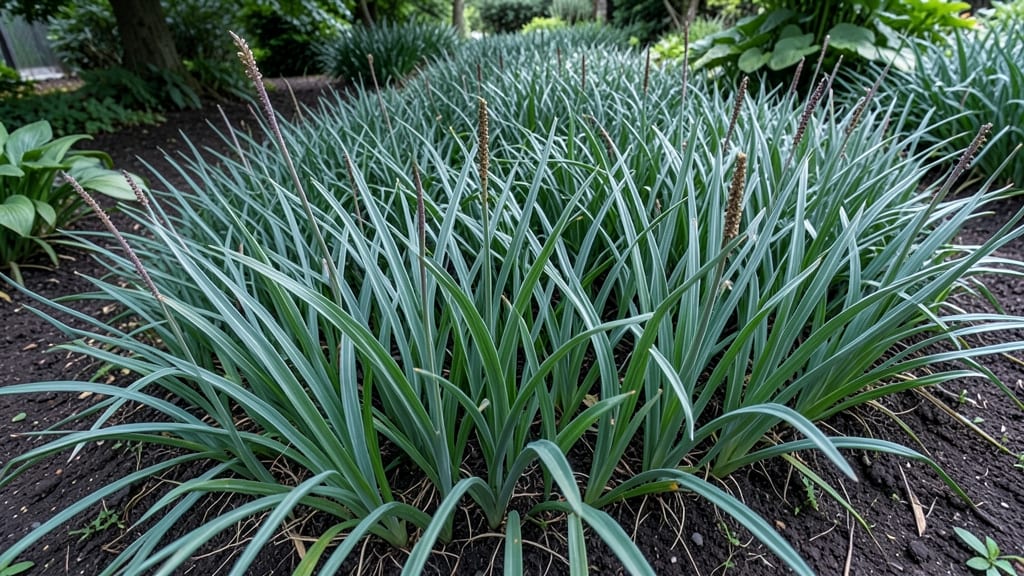
Need a clean, structured edge for your shady garden beds that also suppresses weeds? Liriope (often called "monkey grass") delivers the perfect solution with its semi-evergreen, grass-like foliage that spreads aggressively to form dense, weed-blocking mats. Unlike traditional grass, it thrives in full to partial shade, making it ideal for areas under trees or along north-facing walls where sunlight is scarce.
This hardy perennial handles dry to moist soil and tolerates occasional foot traffic, making it perfect for high-traffic areas like pathways or patio borders. In late summer, it produces striking purple flower spikes that add vertical interest, followed by black berries that provide winter structure. For best results, plant in well-draining soil and water regularly until established—after that, it requires minimal care beyond occasional trimming to maintain its shape.
Perfect for gardeners who want structured, low-maintenance edging without the fuss of traditional grass, liriope creates a polished look that stays green year-round in mild climates. It’s especially valuable for urban gardens where space is limited but definition is key. 🌱