
Light Requirements
Struggling with dark garden corners? These 10 full shade crops thrive where sunlight barely reaches, offering bountiful harvests with minimal care. Perfect for urban balconies, forest edges, or north-facing beds.
Leafy Green Lettuce Varieties

Forget the sun-starved garden blues—lettuce thrives in deep shade where most crops give up. Buttercrunch and Oakleaf varieties grow lushly with just 2-3 hours of indirect light per day, making them perfect for under trees or north-facing beds. Their loose, tender leaves stay crisp even in cooler temperatures, unlike bolt-prone varieties.
Sow seeds every 2-3 weeks for continuous harvests, as these varieties mature in just 30-45 days. Keep soil consistently moist (but not soggy) and mulch to retain moisture. For extra shade tolerance, choose Oakleaf varieties, whose crinkled leaves handle low light better than smooth-leaved types.
These cold-hardy greens are ideal for urban gardeners with limited sunlight or beginners wanting quick wins. They’re also pest-resistant and perfect for container growing—just add a side of salad to your shade garden! 🌱
Spinach with Broad Leaves

If you’re craving a nutrient-packed green that refuses to bolt in the heat, broad-leaf spinach is your answer. Unlike its bolt-prone cousins, varieties like Bloomsdale Long Standing or Tyee stay tender and productive in cool, shaded spots where other greens struggle.
This shade-loving superfood thrives in 30 days or less, making it ideal for quick harvests. Plant seeds directly in containers or garden beds with well-draining soil and consistent moisture—it prefers cooler temps (50–75°F) and partial shade to full shade. For continuous harvests, sow every 2 weeks in spring or fall, and protect young plants from slugs with organic barriers.
Urban gardeners and small-space growers will love spinach’s compact growth—it’s perfect for 5-gallon containers or raised beds. With double the vitamin K of lettuce and a mild, sweet flavor, it’s a must-have for shade gardens. 🌱
Microgreens for Quick Harvests

Need a harvest in record time? Microgreens are the fastest shade crop you can grow—ready to pick in just 10-14 days—and packed with 4-40 times more nutrients than their mature counterparts. These tiny powerhouses thrive under fluorescent lights or in dappled shade, making them perfect for balconies, windowsills, or even your basement.
Start with easy-to-grow varieties like radish (peppery kick), broccoli (mild, slightly bitter), or pea shoots (sweet and tender). Soak seeds overnight, spread them on a damp paper towel or tray, and keep them moist under 12-16 hours of light daily. Harvest with clean scissors just above soil level for continuous regrowth.
Urban gardeners and beginners will love this zero-waste, space-efficient crop—ideal for adding fresh greens to salads, sandwiches, or smoothies without waiting months. 🌱
Swiss Chard with Rainbow Stems

Want a vegetable that doubles as a living centerpiece while thriving in your shadiest spot? Swiss chard—especially the Bright Lights variety—delivers bold colors and thick, flavorful stems even where sunlight barely reaches. Its rainbow-colored stalks (purple, yellow, pink, and white) make it a standout in containers or garden beds, while its large, dark leaves provide continuous harvests.
This drought-tolerant crop handles full shade where lettuce and spinach wilt, making it ideal for north-facing gardens or under large trees. Plant seeds ½ inch deep in well-draining soil with rich compost, spacing them 12 inches apart. Harvest outer leaves first to encourage regrowth, and snip thick stems (cooked like celery) for a mild, earthy flavor. Bright Lights matures in 50-60 days, but you can start harvesting leaves as early as 30 days for baby greens.
Perfect for urban gardeners with limited sun or beginner growers who want both beauty and bounty, Swiss chard’s versatility makes it a must-have for shade gardens. Plus, its pest-resistant nature means fewer headaches than fussy greens. 🌻
Asian Pac Choi for Dense Growth

Want a fast-growing, space-saving green that thrives where sunlight barely reaches? Asian pac choi delivers dense, tender leaves in just 30 days—perfect for shade gardens, balconies, or even windowsills. Unlike its sun-loving cousins, this compact Chinese cabbage adapts beautifully to partial or full shade, making it ideal for under trees or north-facing beds.
Sow seeds every 2 weeks for continuous harvests, as baby leaves are ready in 30 days while mature heads take 45-50 days. Space plants 6 inches apart in moist, well-draining soil enriched with compost. For extra shade tolerance, choose varieties like Tatsoi or Tokyo Bekana, which stay tender even in cooler temps (50–75°F). Harvest outer leaves first to encourage regrowth.
This versatile green is a game-changer for urban gardeners or anyone with limited sunlight. Its mild, slightly sweet flavor works raw in salads or stir-fried—plus, it’s packed with vitamin C and calcium. Add it to your shade garden for a quick, low-maintenance harvest that keeps coming. 🌱
Radishes with Early Maturity

Tired of shade gardens that only produce greens? Radishes are the secret weapon for quick, colorful harvests under trees or in dark corners. Unlike most root vegetables, Cherry Belle and French Breakfast varieties thrive in low light, delivering crisp, sweet roots in just 25 days—faster than lettuce or spinach.
Sow seeds directly in loose, well-draining soil when temperatures are between 50–75°F, and keep the area consistently moist but not soggy. For shade tolerance, plant in early spring or late summer when ambient light is gentler. Thin seedlings to 2 inches apart to prevent crowding and encourage larger roots. These varieties also handle cooler temps better than hot-weather radishes, making them ideal for spring or fall planting.
Perfect for urban gardeners with limited space or beginners craving fast results, radishes add a pop of color and crunch to salads or snacks. Try interplanting them with lettuce or spinach for a layered shade garden that keeps producing all season. 🌻
Strawberries in Containers

Say goodbye to sun-starved strawberries—alpine varieties like 'Mignonette' prove you don’t need full sun for sweet, juicy fruit. These compact plants thrive in partial shade (3-6 hours of light) and are perfect for balconies, patios, or windowsills where traditional strawberries would struggle.
Plant them in hanging baskets or window boxes filled with well-draining potting mix, and keep soil consistently moist (but not soggy). Alpine strawberries produce smaller but intensely flavorful berries in just 60-70 days, making them ideal for container gardens. Choose varieties like 'Mignonette' or 'Alpine White' for shade tolerance, and fertilize lightly with a balanced organic feed every 4-6 weeks.
This is the perfect solution for urban gardeners with limited space or those with shady patios. With minimal care, you’ll enjoy fresh strawberries year-round—even in low-light conditions! 🌻
Mushroom Growing Kits for Indoor Shade

Skip the sunlight—oyster mushrooms are the ultimate zero-sun crop for urban gardeners and basement growers. These adaptable fungi thrive in dark, humid spaces like basements, closets, or under kitchen sinks, making them perfect for apartments or homes with limited natural light. Unlike sun-dependent crops, mushrooms grow on pasteurized straw or hardwood logs, requiring no soil or outdoor space.
Most kits produce harvests in just 7-14 days after inoculation, with clusters of delicate, meaty mushrooms ready to pick every few days. Maintain 60-75% humidity (use a spray bottle or humidifier) and keep temperatures between 55–75°F. For best results, opt for blue or pink oyster varieties, which are milder and more flavorful than white types. Avoid overwatering—the substrate should stay moist but not soggy.
This is the ultimate low-maintenance crop for beginners or anyone with limited space. Mushrooms add a sustainable, protein-rich harvest to your shade garden without needing sunlight—ideal for year-round growing indoors. 💚
Celeriac with Thick Roots

Looking for a hidden-gem root vegetable that thrives in your garden’s darkest corners? Celeriac—the celery’s underground cousin—produces thick, knobby roots and tender stalks in full shade, making it a perfect match for north-facing beds or tree canopies. Unlike its sun-loving relatives, this hardy biennial adapts to 2-3 hours of indirect light or less, delivering a harvest that’s as nutritious as it is versatile.
Plant seeds or transplants in well-draining, compost-rich soil when temperatures are cool (50–70°F), spacing them 12–18 inches apart. The roots take 100–120 days to mature, but you can harvest stalks (like celery) as early as 60 days for a mild, crunchy snack. To prevent bolting, avoid planting in hot summers—opt for spring or fall crops instead. Once harvested, the rough-skinned roots store well in a cool, dark place for months.
This low-maintenance, high-reward crop is ideal for gardeners with limited sunlight who want a dual-purpose harvest (roots and stalks). Its earthy, celery-like flavor elevates soups, stews, and remoulade—proving that even the shadiest spots can yield gourmet results. 🌱
Edible Flowers for Shade Gardens

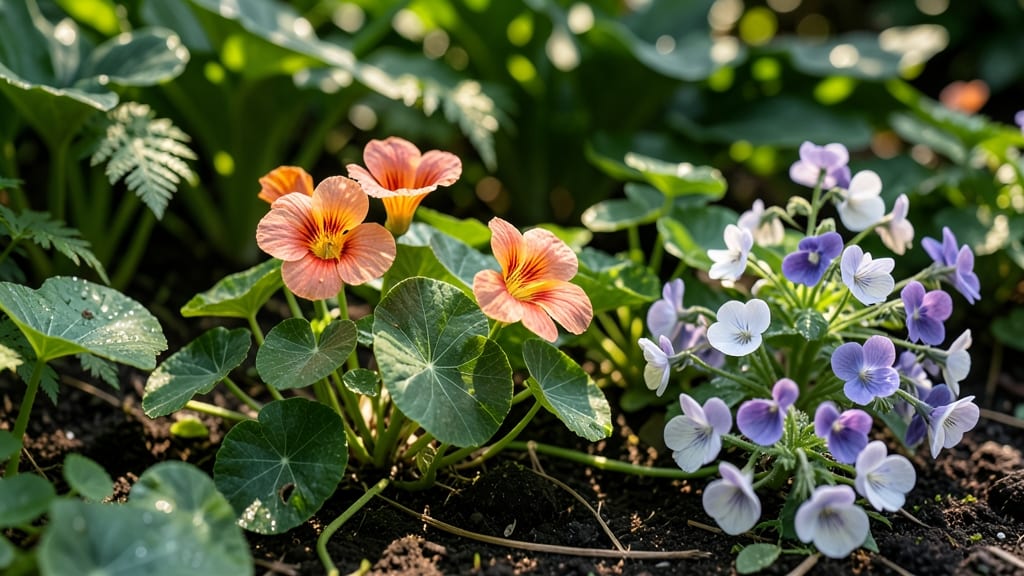
Transform your shady garden into a culinary canvas with nasturtiums and violets, two edible flowers that thrive where sunlight is scarce. Their vibrant blooms—orange nasturtiums with peppery leaves and delicate violets with subtle floral notes—add both beauty and flavor to salads, garnishes, and teas. Unlike sun-loving flowers, these varieties tolerate partial to full shade, making them perfect for forest edges, north-facing beds, or containers under trees.
Plant nasturtiums in well-draining soil for a fast-growing ground cover that deters pests like aphids and squash bugs with its strong scent. Violets, with their perennial nature, return year after year in zones 4–9, while nasturtiums self-seed prolifically. Harvest young leaves and flowers for their mild, peppery kick (nasturtiums) or sweet, floral taste (violets), and let others bloom to attract pollinators. Both thrive in moist but not soggy conditions, making them ideal for urban gardeners with limited sunlight.
These dual-purpose plants are a game-changer for shade gardeners who want both edible harvests and pollinator support. Tuck them into borders, window boxes, or hanging baskets for a burst of color and flavor—no sun required! 💚