
Flowers
Dark garden corners don’t have to stay bare in fall. These 10 shade-loving flowers thrive in low light, offering vibrant blooms and seasonal interest when sunlight fades. Perfect for adding color to patios, woodland edges, or under trees.
Japanese Anemone for Late-Season Elegance

When your garden seems to fade as summer ends, Japanese anemone steps in with its delicate pink or white blooms, turning late-season shadows into a dreamy display. This hardy perennial thrives in dry shade, making it perfect for understory planting where most flowers struggle.
Plant it in well-draining soil and give it space to spread—its elegant stems reach 2-4 feet tall, creating a natural focal point. The flowers bloom from late August through frost, attracting butterflies while adding soft color to cottage gardens or woodland edges. Deadhead spent blooms to encourage more flowers, but otherwise, it’s nearly maintenance-free.
This is the secret weapon for gardeners who want color in shady spots without the fuss. Pair it with hostas or ferns for a lush, layered look that keeps blooming until winter. 🌷
Heuchera Coral Bells for Foliage Drama

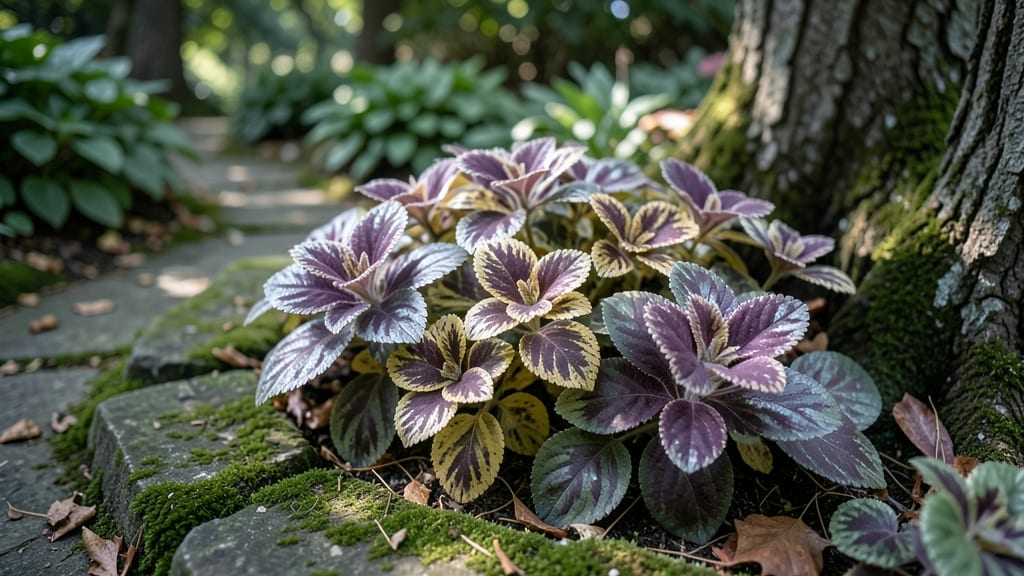
If you’ve ever struggled to find plants that bring color to shady spots without relying on flowers alone, Heuchera Coral Bells is your secret weapon. This perennial steals the show with its bold, evergreen foliage in shades of purple, silver, or burgundy—perfect for adding drama where sunlight is scarce.
While its small, delicate blooms appear in late summer, the real star is the foliage, which stays vibrant year-round. Plant it in containers for patios or as ground cover under shrubs to create lush, textured layers. Just ensure well-draining soil and partial to full shade—it thrives where many flowers would wilt.
This is the ideal choice for gardeners who love low-maintenance plants with high visual impact, especially in urban gardens or under trees. 🌟
Toad Lily for Moisture-Loving Shade Gardens

If your garden has damp, shady spots where most plants refuse to thrive, toad lily (Tricyrtis) is your secret weapon. This underrated perennial produces striking purple or yellow flowers that resemble lily pads, emerging from lush green foliage in late summer to fall—just when other shade plants are fading.
Thriving in moist, acidic soil with partial to full shade, toad lily is ideal for bog gardens, pond edges, or woodland floors. Its unique, spider-like blooms attract pollinators and add a whimsical touch to wetland landscapes. With minimal care—just consistent moisture and well-draining soil—it rewards you with bold, long-lasting flowers that few other shade plants can match.
Perfect for gardeners who want low-maintenance drama in tricky spots, toad lily is a standout for those with damp, shady corners. 🌿
Astilbe Feathered Plumes for Airy Texture

When you crave soft, billowy blooms that sway in the breeze without needing full sun, astilbe delivers effortless elegance. These feathery plumes in pink, white, or red emerge in early summer and keep dancing through fall, creating a cloud-like effect that brightens shady borders, woodland gardens, or even container arrangements.
Plant astilbe in moist, well-draining soil with partial to full shade—it thrives where many flowers would struggle. Prune back dead foliage in early spring to encourage fresh growth, and watch as its arching stems (1-4 feet tall) add vertical drama without overpowering nearby plants. Varieties like 'Fanal' or 'Deutschland' offer extra-long blooms for extended seasonal interest.
This is the perfect choice for gardeners who want low-fuss texture in shady spots, especially those with limited space or dappled sunlight. Pair it with hostas or ferns for a lush, layered look that feels like a woodland retreat. ✨
Sweet Woodruff for Fragrant Ground Cover

Looking for a fragrant, low-growing plant that transforms shady corners into a sensory delight? Sweet woodruff (Galium odoratum) is your answer—its tiny white star-shaped flowers release a vanilla-like scent when brushed, creating a magical woodland atmosphere. Unlike many shade plants, it thrives in dry to medium moisture, making it ideal for understory planting where other ground covers fail.
This pollinator-friendly perennial spreads quickly to form a lush, green carpet, perfect for filling gaps between shrubs or along pathways. While it dies back in winter, it returns reliably in spring with minimal care—just occasional trimming to control its spread. For extra fragrance, crush the leaves or flowers to release their natural vanilla aroma, which intensifies in warm weather.
Sweet woodruff is the ultimate choice for gardeners who want scent, texture, and ease in shady spots. Pair it with hostas or ferns for a fragrant, layered look that keeps blooming until frost. 💚
Columbine for Hummingbird Magnet Blooms

Watch your shady garden corners come alive with columbine, the ultimate hummingbird magnet that thrives in partial shade. These dangling red, purple, or yellow blooms not only attract pollinators but also self-seed effortlessly, creating naturalized drifts that multiply each year without extra work.
Plant columbine in well-draining soil with 3-6 hours of morning sun or dappled shade—it tolerates conditions where many flowers fail. Its delicate, nodding flowers bloom from late spring through summer, with some varieties reblooming in fall. Deadhead spent blooms to encourage more flowers, but leave the seed heads for wildlife or to scatter naturally for next year’s display.
This is the perfect low-maintenance choice for gardeners who want color, pollinators, and easy propagation in shady spots. Pair it with ferns or hostas for a woodland garden that hums with activity. 🌻
Lungwort for Medicinal and Ornamental Value

Want a shade plant that does double duty—beautifying your garden while offering historic medicinal benefits? Lungwort (Pulmonaria) delivers with its striking silver-spotted leaves and clusters of blue-purple flowers that bloom from spring through fall. This hardy perennial thrives in partial to full shade, making it perfect for woodland gardens or understory planting where other flowers struggle.
Lungwort’s unique foliage adds texture year-round, while its flowers attract early-season pollinators. Historically used to treat respiratory ailments (hence its name), it’s also deer-resistant and drought-tolerant once established. Plant in moist, well-draining soil and watch it spread gently to create a lush ground cover that keeps blooming long after other shade plants fade.
This is the ideal choice for gardeners who love multi-season interest and a touch of herbal history in their landscape. Pair it with ferns or hostas for a serene, woodland-inspired corner. 💚
Foamflower for Early Fall Color

When your shade garden starts to look bare as summer winds down, foamflower (Tiarella cordifolia) swoops in like a whimsical cloud of color. Its delicate, foam-like clusters of white or pink blooms appear in late summer—just when other shade plants are fading—adding a dreamy, airy texture that softens dark corners.
This hardy perennial thrives in dry to medium moisture, making it ideal for understory planting where many flowers struggle. Plant it in well-draining soil with partial to full shade, and watch as its 1-2 foot tall stems create a lush, cascading effect. Deadhead spent blooms to encourage more flowers, but otherwise, it’s nearly maintenance-free—perfect for gardeners who want effortless beauty.
Foamflower is the hidden gem for filling gaps in shady borders, containers, or woodland gardens. Pair it with ferns or hostas for a layered look that keeps blooming until frost. 🌱
Bleeding Heart for Romantic Shade Perennials

For a touch of romantic charm in your shady garden, bleeding heart (Dicentra spectabilis) delivers dreamy, heart-shaped blooms that dangle like delicate lace from arching stems. Unlike many shade perennials, it takes a brief summer break but makes up for it with a stunning fall rebloom when temperatures dip—perfect for extending your seasonal color.
Plant it in rich, moist, well-draining soil with partial to full shade, mimicking its native woodland habitat. The 2-3 foot tall plants thrive in humus-rich areas and pair beautifully with ferns or hostas. While it may fade mid-summer, the cool-season rebloom ensures you get two chances at those iconic pink or white flowers each year.
This is the ideal choice for gardeners who want drama without fuss—especially those with woodland gardens or shady borders. Its whimsical flowers create a fairy-tale effect that’s hard to resist. 🌷
Coral Bells
with Variegated Leaves
If your garden needs a year-round star that thrives in shade and steals the show even after the flowers fade, variegated coral bells (Heuchera) are your answer. These perennials offer striking foliage in gold, silver, or deep purple hues that glow under trees or in containers, while their delicate late-summer blooms add a final burst of color before winter.
Plant them in well-draining soil with partial to full shade, and watch their textured leaves create drama in borders or patio pots. Variegated varieties like 'Palace Purple' or 'Lime Rickey' provide bold contrast that outshines many flowers. Prune spent blooms in fall, but leave the foliage—it’s the true showstopper that keeps interest through winter’s first frost.
Perfect for urban gardeners, small-space planners, or anyone tired of dull shade spots, coral bells deliver low-maintenance beauty with zero compromise. 🌟