
Shrubs
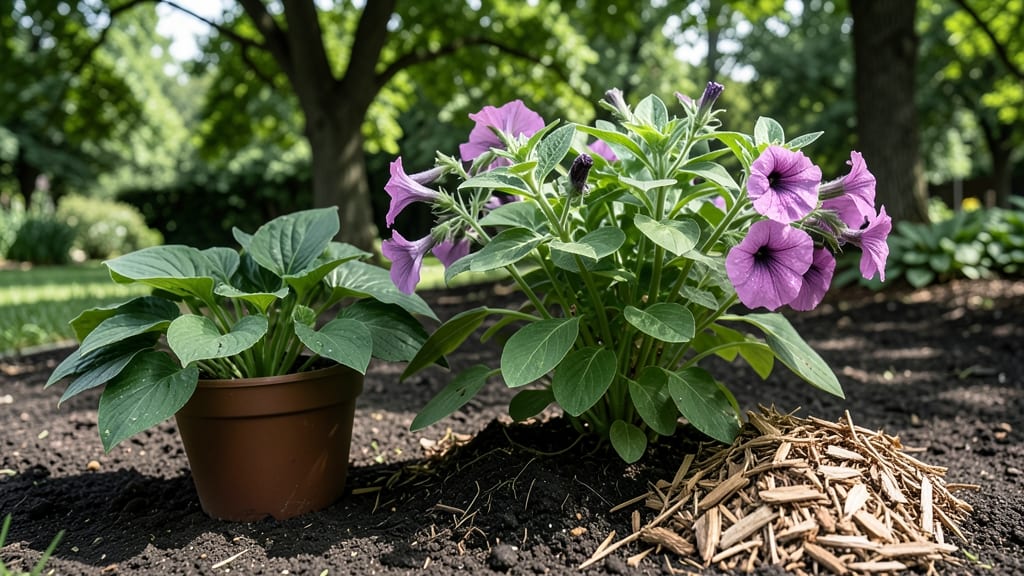
Petunias actually have specific light needs that go beyond just "shade tolerance." 🌿 The key is balancing their morning sun exposure with afternoon shade—morning light boosts photosynthesis, while afternoon shade prevents heat stress. I've seen petunias in full shade struggle to produce flowers, often growing leggy with sparse blooms.
For containers or shaded garden beds, consider adding a light-colored mulch to reflect extra sunlight onto the plants.
When selecting varieties, look for those bred for shade tolerance—they often have darker foliage to absorb more light. Regular pruning also helps redirect energy toward blooming rather than excessive leaf growth. If your garden has limited sunlight, try placing petunias near taller plants that won't block their morning sun access.
💡 In This Article
- How Light Levels Affect Petunia Growth and Flowering
- Best Petunia Varieties for Shady Gardens and Care Tips
How light levels affect petunia growth and flowering
Petunias rely on photosynthesis efficiency, which peaks with 4-6 hours of direct morning sunlight—this is when light intensity is highest and temperatures are cooler, allowing chlorophyll to absorb energy without overheating.
The process works like a solar panel: morning light triggers optimal sugar production in leaves, fueling both growth and flower development.
Without this morning boost, petunias produce fewer blooms and develop weak stems that flop over time. 🌞 In contrast, afternoon sun (especially after 2:00 PM) delivers intense UV rays that can scorch leaves, causing a condition called "sunburn" where edges turn crispy and white.
Shade reduces photosynthesis by 30-50% depending on how dense the shade is. For example, dappled shade from nearby trees provides 10-30% light penetration, while dense shade (like under a thick canopy) drops to 5-15%.
This light deprivation forces petunias to stretch toward any available light—a phenomenon called "etiolation"—resulting in tall, spindly stems with sparse flowers. The worst offenders? Full shade gardens where petunias receive less than 2 hours of indirect light daily.
In these conditions, plants may grow 2-3 feet tall with minimal blooms, while their counterparts in partial shade stay compact and vibrant.
Morning sun matters more than afternoon light because cooler temperatures (65-75°F) create ideal conditions for photosynthesis. Afternoon heat (often exceeding 85°F) stresses petunias, causing them to close stomata (pores) to conserve water, which halts growth.
This is why shade-cloth (providing 30-50% shade) works wonders in hot climates—it filters harsh afternoon rays while allowing beneficial morning light to pass through. I've seen petunias in containers with shade-cloth produce 50% more flowers than those in full sun during summer afternoons.
Color plays a role too: darker petunia varieties (like deep purples or blacks) absorb more light than pastel colors, making them slightly more shade-tolerant. However, even these need some direct light to trigger flowering hormones.
The science gets interesting here—petunias produce florigen, a flowering hormone, only when they receive sufficient light.
In full shade, florigen production drops by up to 70%, leading to fewer and smaller blooms. 🌸 This explains why shade-tolerant varieties like 'Wave Blue' or 'Supertunia Vista Bubblegum' thrive in partial shade—they've been bred to produce florigen more efficiently under lower light conditions.
One common misconception is that all shade is equal. In reality, east-facing gardens (where morning sun dominates) create ideal conditions for petunias, while west-facing spots (with intense afternoon sun) require extra shade protection.
For example, placing petunias near a north-facing wall can block afternoon sun while still allowing morning light to reach them. This strategic positioning can extend their blooming season by 3-4 weeks compared to full-shade placements.
Consider this comparison: A petunia in 6 hours of morning sun + 2 hours of afternoon shade produces twice as many flowers as one in full shade. The difference comes down to energy balance—morning light fuels growth, while afternoon shade prevents stress.
This is why gardeners in hot climates often use reflective mulches** (like white gravel) to bounce extra light onto petunias during their critical morning window.