
Light Requirements
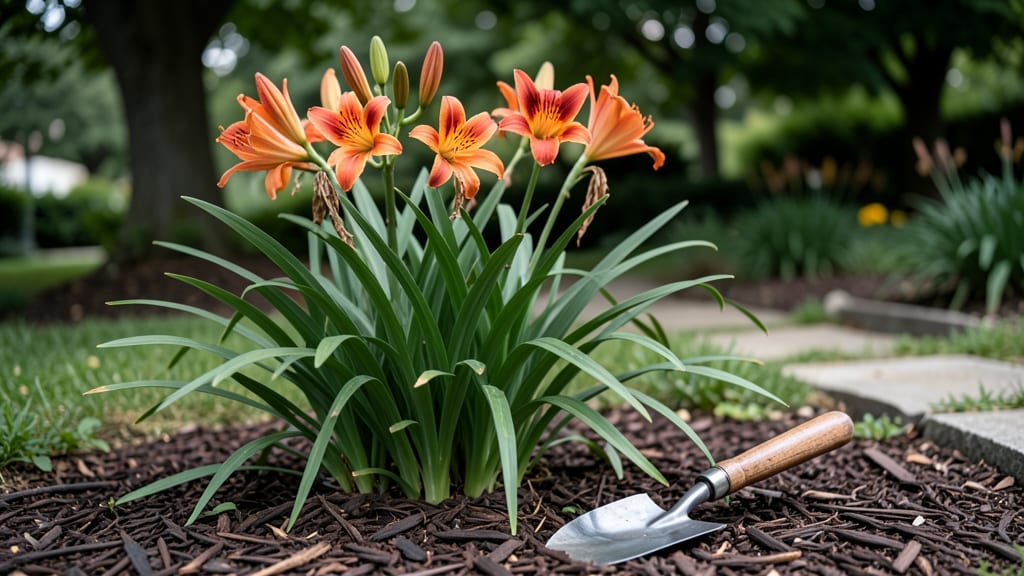
Day lilies can grow in shade, though they thrive best in partial shade to full sun, producing fewer blooms in deep shade while still maintaining foliage. Choose shade-tolerant varieties like 'Stella de Oro' for better adaptation to low-light conditions.
Day lilies are surprisingly adaptable to lower light conditions, but their performance depends heavily on shade intensity. 🌿 In deep shade, they may survive but focus energy on leaf growth rather than flowering, often producing only a fraction of the vibrant blooms you'd see in sunnier spots.
The key is finding that sweet spot—partial shade with morning sun and afternoon relief—where they can still photosynthesize efficiently while avoiding stress from intense afternoon rays.
For gardeners working with limited sunlight, selecting the right cultivar makes all the difference. Varieties like 'Happy Returns' and 'Pardon Me' are specifically bred to handle lower light conditions better than standard types.
I've found that amending the soil with compost before planting gives these shade-adapted lilies an extra boost, helping their roots access nutrients more efficiently in less-than-ideal light situations.
💡 In This Article
- How Shade Affects Day Lily Growth and Flowering
- Best Shade-Tolerant Day Lily Varieties for Low-Light Gardens
How shade affects day lily growth and flowering
Day lilies rely on photosynthesis to convert light into energy, but their response to shade isn't all-or-nothing—it's a spectrum. In dappled shade (filtered light through trees), they'll produce about 60-70% of the blooms they would in full sun, with leaves that are slightly broader and darker green.
The reason? Partial shade reduces water loss through transpiration, allowing the plant to allocate more energy to leaf expansion rather than flower production. 🌿 This trade-off explains why you might see lush foliage but fewer blooms in shaded spots.
The real challenge comes with deep shade (less than 3 hours of direct light daily). Here, day lilies enter survival mode, prioritizing root and leaf growth to capture whatever light they can.
Studies show that in these conditions, bloom production drops to 20-30% of full-sun levels, and stems may become thinner and more spindly. The plant's chlorophyll content decreases by about 15-20% compared to sun-exposed counterparts, which is why the leaves often look paler and less vibrant.
This is also when you'll notice the classic "shade stretch"—long, weak stems reaching toward any available light.
Temperature plays a hidden role here. Day lilies in shade experience cooler soil temperatures, which slows root growth and nutrient uptake. The ideal soil temp for root development is 65-75°F, but shaded areas often stay 10-15°F cooler than sunlit spots.
This chilling effect reduces the plant's ability to absorb phosphorus and potassium—two critical nutrients for flowering. That's why shade-grown day lilies often need extra phosphorus-rich fertilizer (like bone meal) to compensate. 💡 The good news?
Their foliage remains dense and attractive, making them excellent ground covers even when blooms are sparse.
Not all shade is created equal. Morning sun with afternoon shade is the goldilocks scenario—it provides enough light for photosynthesis early in the day when temperatures are cooler, while protecting the plants from the drying effects of hot afternoon rays.
In contrast, afternoon shade only can lead to "sunburn" on the upper leaves when morning light hits unprotected foliage. The key is observing your garden's microclimates: a north-facing wall might offer perfect morning light, while an east-facing area could get too hot in summer afternoons.
What most gardeners don't realize is how shade affects the bloom timing of day lilies. In low-light conditions, flowers tend to open later in the season (often 2-3 weeks delayed) and may have shorter vase life. The reason?
Reduced light exposure slows the plant's internal clock (circadian rhythms), which regulates flowering cycles. This is particularly noticeable with varieties like 'Stella de Oro,' which normally bloom prolifically in spring but may produce a second, weaker flush in late summer when light levels drop.
For those working with shade gardens, consider this practical insight: day lilies will always prioritize survival over spectacle. That means their first energy goes to maintaining healthy roots and leaves, with flowering becoming a secondary concern.
The trade-off is why shade-tolerant varieties like 'Happy Returns' (which blooms on shorter stems) outperform standard types in low-light conditions—their genetic makeup makes them more efficient at capturing limited light for both foliage and flowers. 🌸