
Planting
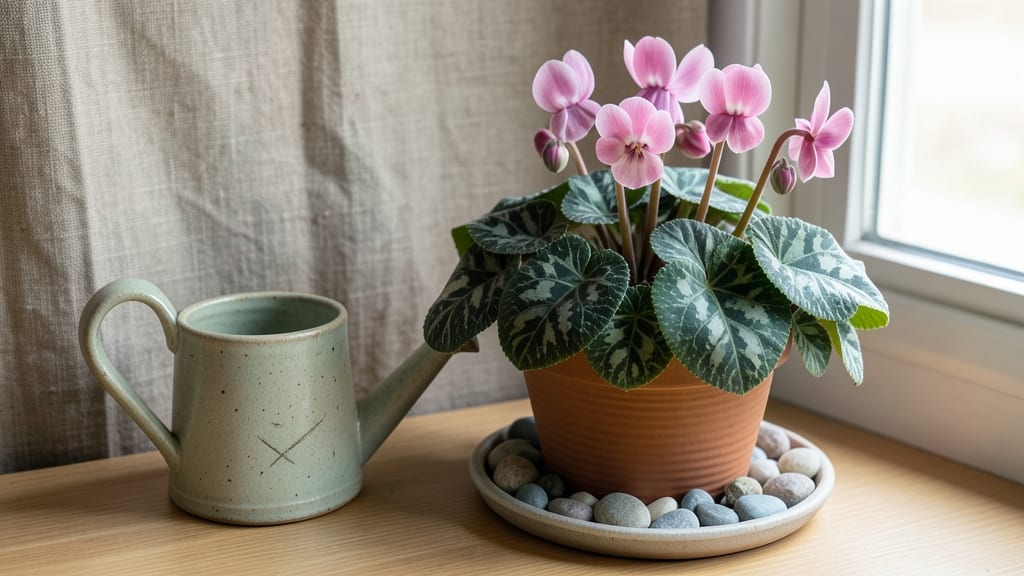
Whether your garden offers full sun or shade, a cyclamen plant thrives in bright, indirect light—the key to keeping those delicate blooms vibrant all season.
Struggling to keep your cyclamen blooming year-round? The battle between sun and shade might be the secret weapon you’ve overlooked—discover how to master light exposure for vibrant, long-lasting flowers.
These Mediterranean natives prefer dappled shade, mimicking their natural woodland habitat. Too much direct sun scorches the leaves, while too little dims the blooms. The trick is finding that sweet spot where they get enough light to flower but stay cool enough to thrive.
Below, I’ll break down the perfect light conditions for your cyclamen, whether you’re growing them indoors by a north-facing window or outdoors under the shade of a tree. You’ll learn how to spot signs of improper lighting and adjust care to keep your plants happy and blooming.
 Best Window Placement
Ideal sunlight conditions for cyclamen: balancing brightness and bloom cycles
Cyclamen plants thrive on a delicate balance of light—too much sun scorches their leaves, while too little shade stunts their blooming potential. Native to Mediterranean woodlands, these beauties evolved to bask in dappled sunlight, where filtered rays create the perfect growing environment.
Understanding their light needs unlocks the secret to year-round blooms and lush foliage, whether you're growing them indoors or outdoors.
Most cyclamen varieties prefer bright indirect light, mimicking their natural habitat under forest canopies. This means placing them near east-facing windows or under sheer curtains where sunlight is diffused. The key is avoiding harsh afternoon rays, which can cause leaf burn and bleached spots on delicate petals.
Think of it as giving your cyclamen a sunbath with SPF protection!
| Light Condition | Daily Exposure | Bloom Impact | Ideal Location |
|---|---|---|---|
| Direct Sunlight | 2+ hours | ❌ Scorched leaves, faded blooms | Avoid outdoors in peak sun |
| Bright Indirect | 4-6 hours | ✅ Optimal blooms, healthy growth | East/west windows, under trees |
| Low Light | <2 hours | ⚠️ Leggy stems, sparse flowers | North windows, deep shade |
| Seasonal Adjustments | Spring-Fall | ✅ Rotate pot for even light | Outdoor shade (50% coverage) |
Seasonal changes demand adjustments to your cyclamen's light exposure. During spring and fall, when sunlight is gentler, you can gradually introduce them to outdoor shade gardens under trees or on patios with afternoon shade.
In summer's intense heat, move them indoors or provide afternoon shade cloth (30-50% coverage) to prevent leaf burn. Winter's low light triggers dormancy, so reduce watering and keep them in the brightest indoor spot available.
The science behind cyclamen's light love story lies in photosynthesis efficiency. Their broad leaves contain high concentrations of chlorophyll b, which excels at capturing diffused light. When deprived of adequate light, they stretch toward sources—a condition called etiolation—resulting in weak stems and fewer blooms.
Think of it as your plant's way of saying, "I need more light to fuel my flowering energy!"
To identify the perfect spot, observe your cyclamen's behavior. Healthy leaves should be deep green with no yellowing, while blooms should open fully and last 4-6 weeks. If you notice leaves turning yellow or stems elongating excessively, it's a cry for more bright indirect light.
Conversely, if leaves develop crispy edges or brown spots, you're likely overdoing the sun exposure. The goal is that sweet spot where growth is balanced and blooms are abundant.
For indoor growers, north-facing windows are ideal as they provide consistent light without harsh rays. If that's not an option, place your cyclamen 3-5 feet from east or west windows where morning or late afternoon sun is gentler.
Rotate the pot quarter-turns weekly to ensure even growth and prevent leaning. This simple habit keeps your plant upright and symmetrical, maximizing its aesthetic appeal.
Outdoor cyclamen lovers can create microclimates using reflective surfaces like white gravel or light-colored walls to bounce extra light onto shaded areas. Pair this with dappled shade structures, such as lattice screens or sheer fabric canopies, to mimic their woodland origins.
Remember, cyclamen's roots prefer cooler temperatures, so mulch heavily around outdoor plants to protect them from heat stress during summer months.
Pro tip: Use a light meter app (like Lux Light Meter) to measure light levels in potential spots. Aim for 1,000-3,000 lux of light—this range perfectly mimics their natural habitat.
If your space falls short, consider supplementing with LED grow lights (12-15 watts per plant) for 6-8 hours daily during winter months when natural light is scarce.
Mastering cyclamen's light needs transforms them from temperamental divas to reliable bloomers. With the right balance of brightness and shade, your plants will reward you with vibrant flowers that seem to last forever. Start experimenting with different light conditions today—your cyclamen's future blooms depend on it! 🌸
Shade-loving cyclamen varieties: best types for low-light spaces and their care
If your home has dim corners or shady garden spots, don't despair—cyclamen thrive in low-light conditions with the right variety selection and care adjustments. Two standout cultivars, Cyclamen persicum and Cyclamen hederifolium, excel in shade, each offering unique foliage patterns and bloom colors.
While C. persicum (the classic florist cyclamen) prefers bright indirect light, its woodland cousin, C. hederifolium, handles deep shade like a pro. Let’s explore which type suits your space best.
For indoor growers with east-facing windows or under-tree gardeners, these shade-tolerant cyclamen deliver year-round color with minimal fuss. The key lies in matching the plant’s natural habitat—C. hederifolium mimics Mediterranean woodland floors, while C. persicum adapts to filtered forest light.
Both avoid harsh afternoon sun, but their light thresholds differ slightly. Let’s break down their pros and cons for your specific conditions.
🌿 Shade-Loving Cyclamen Comparison
✅ Cyclamen hederifolium (Hardy Cyclamen)
- ✔ Thrives in deep shade (20-40% light)
- ✔ Native to woodland floors—perfect for understory planting
- ✔ Evergreen foliage year-round (silver-marked leaves)
- ✔ Cold-hardy to USDA Zone 5 (outdoor planting possible)
- ✔ Blooms fall to spring (pink, white, or purple flowers)
❌ Cyclamen persicum (Florist Cyclamen)
- ✖ Needs bright indirect light (40-60% light)
- ✖ Struggles in deep shade—leggy growth, sparse blooms
- ✖ Seasonal bloomer (winter to early spring)
- ✖ Non-hardy—best for indoor pots only
- ✖ Dormant in summer—requires dry rest period
💡 Best For:
🌳 C. hederifolium: Shady gardens, woodland borders, outdoor containers
🏠 C. persicum: Bright bathrooms, north-facing windows, indoor winter displays
When choosing Cyclamen hederifolium for shade, prioritize well-draining soil to prevent root rot—a common issue in low-light conditions. Mix peat moss or orchid bark into potting soil to improve aeration.
For outdoor planting, site your cyclamen where dappled shade occurs, like beneath deciduous trees that filter sunlight. Avoid evergreen shade, which blocks all light and stunts growth.
If you opt for Cyclamen persicum in dimmer spaces, supplement with a grow light (12 hours/day) to prevent etiolation—the leggy, weak-stemmed growth caused by light deprivation. Place your plant 6-12 inches from the bulb to mimic natural bright indirect light.
Rotate the pot weekly so all sides receive even exposure. During winter blooming, a south- or east-facing window can work, but avoid hot afternoon sun, which scorches delicate leaves.
Both varieties reward consistent moisture without soggy soil. Water at the soil level (never overhead) to keep heart-shaped leaves crisp and blooms vibrant. Reduce watering in winter dormancy (for C. persicum) or during summer heat (for C. hederifolium).
A pebble tray under pots increases humidity, mimicking their natural shady, moist environments. With these adjustments, your shade-loving cyclamen will bloom prolifically for seasons to come.
Pro tip: Fertilize lightly in early spring (March) with a balanced 10-10-10 formula to encourage new foliage and flower buds. Skip fertilizing in summer or fall, as cyclamen enter dormancy.
For reblooming, deadhead spent flowers and move pots to a slightly brighter spot in late summer to trigger fall regrowth.