
Light Requirements
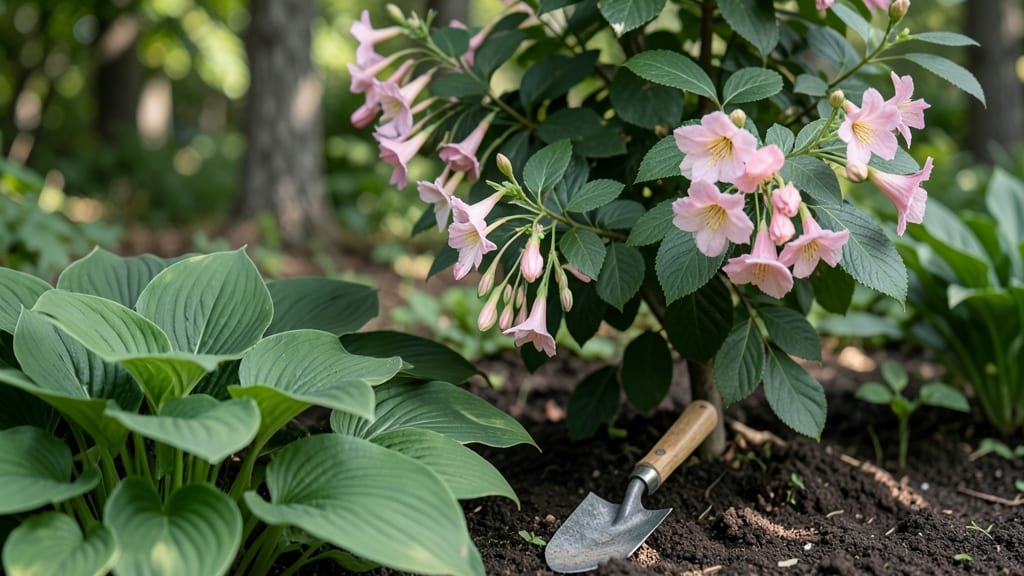
Weigela can grow in shade, though it thrives best with partial shade to full sun, especially varieties like Weigela florida or Weigela middendorffiana. In deep shade, expect slower growth and fewer blooms, but proper soil and care can still support healthy plants.
Weigela plants are surprisingly adaptable to lower light conditions, but their performance depends heavily on the intensity of the shade. 🌿 In areas with filtered light—like under tall trees or on north-facing walls—they’ll still produce flowers, though the blooms may be smaller and less vibrant.
The key is ensuring the soil stays consistently moist and rich in organic matter, as shade can limit the plant’s ability to photosynthesize efficiently. For container-grown weigelas in indoor spaces, supplemental grow lights during winter months can make a noticeable difference in both foliage and bloom production.
What sets shade-tolerant weigela varieties apart is their ability to balance energy use between leaf growth and flowering. For example, Weigela florida handles partial shade better than Weigela colorata, which prefers brighter conditions.
If you’re working with limited light, focus on well-draining soil with added compost and avoid over-pruning, as new growth requires energy the plant may struggle to generate in dim environments.
💡 In This Article
- How Light Affects Weigela Flowering and Growth
- Shade-Tolerant Weigela Varieties and Care Tips
How light affects Weigela flowering and growth
Weigela plants rely on photosynthesis to convert light energy into sugars for growth and flowering, but their efficiency drops significantly in deep shade. In low-light conditions, the chlorophyll in leaves absorbs less sunlight, reducing energy production by up to 40% compared to full sun.
This energy deficit forces the plant to prioritize leaf growth over flower production, often resulting in fewer and smaller blooms. The intensity of shade matters—dappled shade (filtered light) allows for moderate growth, while dense shade (near walls or under thick canopies) can stunt development entirely.
Different weigela varieties exhibit varying tolerances due to genetic adaptations. For instance, Weigela florida thrives in partial shade with just 3-4 hours of direct sunlight daily, while Weigela colorata requires at least 6 hours for optimal flowering.
The contrast lies in their native habitats: florida originates from shaded forest edges, while colorata prefers open meadows. Seasonal light shifts also play a role—spring and summer provide more natural light, boosting bloom potential, whereas winter’s reduced sunlight can weaken shade-grown plants without supplemental care.
Light quality isn’t just about intensity; it’s also about spectrum. Shade often filters out blue light (critical for photosynthesis), while red light (essential for flowering) may be diminished.
This imbalance explains why shade-grown weigelas produce fewer vibrant blooms—they lack the energy to synthesize enough anthocyanins, the pigments responsible for red and purple hues.
To compensate, gardeners can use reflective surfaces (like white walls) to bounce extra light onto the plant or apply a thin layer of compost tea to boost root energy uptake.
Pruning decisions in shade also differ from sun-exposed plants. Since growth is slower, aggressive pruning can stress the plant further by removing energy reserves. Instead, focus on selective trimming—removing only dead or crossing branches—to maintain an open canopy that maximizes light absorption.
In containers, rotate pots every 2-3 weeks to ensure even light exposure, preventing one-sided growth that’s common in indoor shade settings.
Consider the soil’s role in light adaptation. Shade-grown weigelas need well-aerated, moisture-retentive soil to compensate for reduced photosynthesis. Amend heavy clay with perlite or sand to improve drainage, while adding aged compost provides nutrients without overwhelming the plant’s limited energy.
Mulching with wood chips helps retain soil moisture and regulates temperature, creating a more stable environment for growth.
For indoor weigelas, artificial lighting can bridge the gap. A full-spectrum LED grow light placed 12-18 inches above the plant for 12-14 hours daily mimics natural sunlight, supporting both foliage and blooms. Even a simple fluorescent bulb can extend the growing season indoors, though it won’t replace direct sunlight entirely.
The goal is to supplement, not replace, natural light—think of it as giving your weigela a gentle energy boost during its dimmest months.